Tupper, Henry Allen (1828–1902)
Baptist Minister
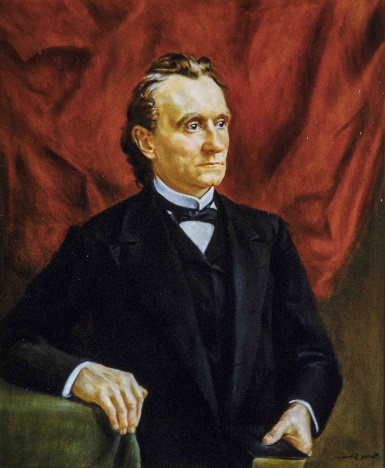
Parents: Tristram Tupper (1789–1865) and Elizabeth Yoer (1800–1887). Married: Nancy Johnstone Boyce (1829–1888). Children: Amanda Boyce Tupper (1850–1915), Richard Furman Tupper (1852–1887), Kerr Boyce Tupper (1854–1941), Tristram Tupper (1855–1897), Henry Allen Tupper Jr. (1856–1927), Paul Yoer Tupper (1858–1928), Annie Guernsey Tupper (1859–1944), Mary Caldwell Tupper (1860–1949), Charlotte Rebecca Tupper (1865–1950), Frederick Lee Tupper (1868–1899), and Kate Boyce Tupper (1873–1873). Kinship: Husband of the second great-grandaunt of the post–World War II Smith generation.
Early Life and Education Henry Allen Tupper was educated under Dr. Dyer Ball, his schoolteacher and Sunday-school instructor, who later became a missionary to the East. Tupper was a spirited student, equally drawn to scholarship and outdoor pursuits such as running, swimming, and riding. His closest friend was Henry Timrod, later the poet of the Confederacy, whose literary sensibility deeply impressed him.
Religious Awakening and Conversion During his studies at Madison College, Tupper was briefly drawn to the skeptical thought of the period. A powerful series of revival sermons by Dr. Richard Fuller of Charleston in 1837 awakened his conscience. Tupper later recorded his spiritual struggle in detail, recalling nights spent reading The Anxious Inquirer and the moment of conversion when Dr. Fuller reassured him: “If you go to hell I will go with you and we shall preach Jesus there until they turn us out, and then where will we go?” The experience determined his lifelong vocation.
Marriage and Early Ministry Tupper courted Nancy Johnstone Boyce, whom he married on November 1, 1849, at Kalmia, the Boyce estate near Graniteville, South Carolina. She was the daughter of Ker Boyce and sister of Rev. James Petigru Boyce. In 1850 he was ordained and called to the pastorate of the Baptist church at Graniteville, where his father-in-law was a principal investor in the new mill town.
Washington, Georgia Pastorate In 1853 he accepted a call to the First Baptist Church of Washington, Georgia, where he served for nearly two decades. The Boyce family purchased for the Tuppers a fine Greek Revival house (built 1832), to which Henry added a colonnade in 1860. There he became a prominent figure in both church and Confederate life.
Civil War Service An ardent supporter of the Confederacy, Tupper preached in 1862 a “Thanksgiving Discourse” denouncing “northern rapacity” and celebrating the South’s deliverance from “an unnatural and destructive union.” He was appointed chaplain to the Georgia Ninth Regiment by Jefferson Davis and shared the privations of camp life. His letters from the front record with vivid realism the marches, storms, and spiritual struggles of soldiers in Virginia.
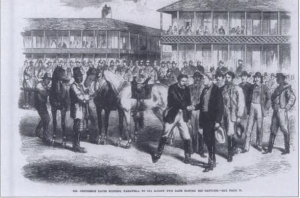
On May 4, 1865, as Jefferson Davis dissolved the Confederate government at Washington, Georgia, Tupper shook his hand (below) and heard him declare, “Though He slay me, yet will I trust in Him.” This moment became a lasting symbol of Tupper’s Confederate loyalty and Christian resignation.
Henry Allen Tupper shaking the hand of Jefferson Davis
Post-War Years and Mission Leadership After the war his congregation was impoverished; the church’s Confederate investments left only five dollars in its treasury. In 1872 Tupper was called to Richmond as Corresponding Secretary of the Board of Foreign Missions of the Southern Baptist Convention, a position he held until 1893. His correspondence with missionary Charlotte “Lottie” Moon helped inspire the creation of the Lottie Moon Christmas Offering, which has since raised more than a billion dollars for foreign missions. He also oversaw the foundation of the Convention’s mission to Mexico, an initiative that later shaped the careers of his descendants.
Later Life and Death Tupper retired in 1893 and lived at 1002 Capitol Street, Richmond, a house built by Governor Edmund Randolph. He died there in 1902 and was remembered as a devout minister, eloquent preacher, and link between antebellum piety and modern Baptist missions.