Boyce, James Petigru (1827–1888)
Baptist Minister
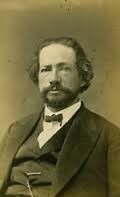
Parents: Ker Boyce (1787–1855) and Amanda Jane Caroline Johnston (1806–1837).
Spouse: Elizabeth Llewellyn Ficklen (1828–1894), married December 20, 1848.
Children: Frances Wingfield Boyce (1852–1940), Elizabeth Ficklen Boyce (1855–1935), and Lucy Garnsey Boyce (1865–1958).
Kinship: Second great-uncle of the post–World War II Smith generation.
Early Life and Family Background
James Petigru Boyce was born in Charleston, South Carolina, in 1827, the son of the financier Ker Boyce and Amanda Jane Caroline Johnston. He was named for Ker’s political friend James Louis Petigru, a Unionist Democrat noted for his wit and moderation. The Boyces were of Presbyterian heritage, but when Ker married Amanda, his late wife’s sister, the Presbyterians refused to recognize the marriage, and the Baptists—more lenient in such matters—performed the ceremony. Though Ker never joined the Baptist church, he was sympathetic to its teaching, and Amanda became a devout Baptist after hearing a sermon by Basil Manly, Sr., which he gave on the death of her child.
Ker Boyce became the wealthiest man in South Carolina, and James grew up in comfort, receiving an excellent education and cultivating refined artistic and literary tastes. Heavy in build, he was unable to participate in vigorous sports but excelled at chess, archery, and billiards. A gifted humorist, he was also known for his fondness for practical jokes.
Education and Religious Formation
As a teenager, Boyce worked in his father’s dry goods business, gaining practical experience in commerce. In May 1845, though not yet a church member, he attended the Augusta, Georgia convention that organized the Southern Baptist Convention after a split with Northern Baptists over slavery. The meeting left a deep impression on him.
Boyce entered Charleston College in 1843 and then transferred to Brown University, a Baptist institution under President Francis Wayland, noted for both its piety and its opposition to slavery. During a sea voyage home to Charleston in the spring of 1846, Boyce read the Bible and came under conviction of sin. He was baptized on April 22, 1846, and on returning to Brown, worked for revival among the students. He graduated in 1847, determined to become a minister.
In 1848 he became editor of The Southern Baptist, and that December he married Elizabeth Llewellyn Ficklen, whom he had met at a wedding in Washington, Georgia. From 1849 to 1851 he studied theology at Princeton Seminary under Charles Hodge, whose Calvinist teaching would profoundly shape his thought.
Ministry and Theological Work
Boyce was ordained in 1851 and called as pastor of the Baptist Church of Columbia, South Carolina. There he introduced a melodeon and choir to the service—innovations that aroused controversy among traditionalists. His father died in 1854 while visiting him, and Boyce became executor of the large estate. He resigned his pastorate to become professor at Furman University (1855–1857) but continued to assist the Columbia church, donating $10,000 for a new sanctuary. At its dedication, he urged that the building be used solely for worship, “for the sake of religious taste and the sacredness of Christian worship.”
The Founding of the Southern Baptist Theological Seminary
Boyce’s enduring achievement was the creation of the Southern Baptist Theological Seminary in Greenville, South Carolina, in 1859. He envisioned a seminary that combined theological orthodoxy with academic rigor and offered two tracks of study: one practical and one scholarly.
In 1858, Boyce, Basil Manly Sr. and Jr., and John Broadus drafted the Abstract of Principles, the first formal confession of faith adopted by Southern Baptists. The first article affirmed the divine inspiration and authority of Scripture; the fifth addressed election as God’s eternal choice “not because of foreseen merit…but of His mere mercy in Christ.” The document’s Calvinist tone reflected Boyce’s conviction that God’s sovereignty and human evangelism were complementary truths.
The seminary prospered briefly but was forced to close in 1862 when its students were conscripted into the Confederate Army.
The War and Reconstruction
Boyce owned twenty-three slaves and defended slavery as a legitimate institution provided masters gave moral and religious instruction and preserved family bonds. Yet he later acknowledged that the South’s sins in this regard had invited divine judgment. Writing to his brother-in-law Henry Allen Tupper, he said: “I believe I see in all this the end of slavery…our sins as to this institution have cursed us…God is going to sweep it away.”
He served six months as a Confederate chaplain and was elected to the South Carolina legislature in 1862 and 1864. His wartime correspondence reveals growing disillusionment with slavery and a theological acceptance of its demise.
At war’s end, Union soldiers ransacked his home in Greenville, sparing his life only after he refused, under threat, to reveal where his valuables had been sent for safekeeping.
Theological Positions
Boyce’s theology was deeply Calvinist yet balanced. In his Abstract of Systematic Theology (1887), he rejected both the rigid determinism of hyper-Calvinism and the human-centered optimism of Arminianism. “God’s own nature,” he wrote, “is to Him the law of what He does, as well as what He wills and what He is.” God, he maintained, “is not just and holy because He wills to be so, but He wills to be just and holy because He is so.”
He upheld the liberty of conscience and the separation of church and state: “God alone is Lord of the conscience…civil magistrates being ordained of God, subjection in all lawful things commanded by them ought to be yielded.”
Rebuilding the Seminary
After the war, Boyce worked tirelessly to reestablish the seminary, moving it to Louisville, Kentucky, where it ultimately thrived. Though impoverished by the collapse of his family’s fortune, he raised funds and secured the school’s survival. His struggle with higher criticism came to a head in 1879 when C. H. Toy, a close friend, resigned after teaching Darwinism and nonliteral interpretations of Scripture. Boyce accepted the resignation with sorrow, valuing truth and friendship equally but refusing compromise.
Later Years and Death
In failing health, Boyce traveled to Europe in 1886 but did not recover. He died in Pau, France, on December 28, 1888.
Legacy and Continuing Influence
Boyce’s model of theological education, combining scholarship with evangelism, continues to define Southern Baptist training. The Abstract of Principles remains the seminary’s doctrinal standard, reaffirmed during the 1990s conservative resurgence under President R. Albert Mohler Jr. Boyce’s concern to preserve orthodoxy while avoiding anti-intellectualism helped Southern Baptists resist both modernism and fundamentalism.
A cultured man who valued beauty in worship, Boyce also raised aesthetic standards in Baptist church architecture and music. In recognition of his influence, the seminary’s liberal arts college bears his name—Boyce College.