Townsend, Solomon (1746–1811)
Captain
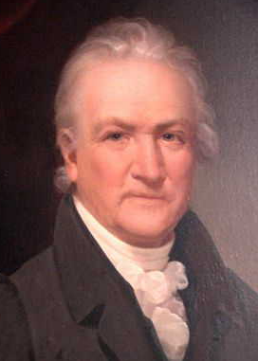
Parents: Samuel Townsend (1717–1790) and Sarah Stoddard (1730–1800). Married: Anne Townsend (1761–1823). Children: Anne Townsend (1782–1845), Hannah Townsend (1784–1854), Mary Townsend (1789–1849), Jacob Townsend (1793–1830), Peter Solomon Townsend (1795–1849), Phoebe Townsend (1796–1884), and Solomon Townsend (1805–1880). Kinship: Fifth great-grandfather of the post–World War II Smith generation.
Early Life and Maritime Career: Solomon Townsend was born in Oyster Bay, New York, the son of Samuel Townsend, merchant and member of the New York Provincial Congress, and Sarah Stoddard Townsend. The Townsends were already a prominent Oyster Bay family whose mercantile ventures connected Long Island to the Atlantic trade. Because of its deep harbor, Oyster Bay had become a thriving port by the mid-eighteenth century, and Samuel Townsend owned several merchant vessels.
At age twenty, Solomon began his career as a ship’s captain under his father’s direction, commanding one of the family’s brigs in the coastal and transatlantic trade. For the next decade he sailed between New York, the West Indies, and Europe, managing cargoes of iron, timber, and produce.
Impressment and Exile When the American Revolution broke out, Townsend was captain of the Glasgow, a merchant vessel owned by his father’s Loyalist business partner, Thomas Buchanan. While transporting Scottish refugees to America, Townsend’s ship was seized by the British, and he and his crew were impressed into the Royal Navy to carry military supplies between London and New York. Unwilling to serve, Townsend resigned his position on reaching London and made his way to Paris, where he met Benjamin Franklin, then serving as American commissioner to France.
Franklin arranged for Townsend’s repatriation and issued him a formal certificate of allegiance, dated June 27, 1778, at Passy:
“I certify to whom it may concern, that Captain Solomon Townsend, of New York, mariner, hath this day appeared voluntarily before me and taken the oath of allegiance to the United States of America, according to the resolution of Congress, thereby acknowledging himself a subject of the United States.”
Townsend returned to Boston in November 1778. Though commissioned a midshipman in the Continental Navy, there is no evidence that he resumed sea service. His maritime career effectively ended with this voyage.
Iron Manufacturing and Political Career: Unable to return to British-occupied Oyster Bay, Townsend traveled north to Newburgh, New York, where his cousin Peter Townsend operated the Stirling Iron Works—famous for producing the Great Chain stretched across the Hudson River to block British navigation. Solomon married Peter’s daughter Anne Townsend, thus joining two influential branches of the family.
After the war, Solomon and Anne briefly returned to Raynham Hall in Oyster Bay before purchasing property near his father-in-law’s holdings in Orange County. There, he established the Augusta Forge at Tuxedo Park, manufacturing bar and pig iron in connection with the Stirling works. The region’s newly developed ore reserves made it one of New York’s most productive iron districts.
Despite early promise, Townsend’s ventures were overextended. Heavy borrowing and market fluctuations led to financial distress, forcing him at times to remain in New York City to avoid creditors, even during family crises. Nonetheless, he continued to manage his affairs and maintained a modest prosperity through additional operations, including an ironworks on the Peconic River near Riverhead, Long Island.
Public Service: Townsend’s civic engagement paralleled his business pursuits. He participated in the New York Constitutional Convention of 1801, which sought to clarify points of the state’s 1777 constitution. He later served multiple terms in the New York State Assembly, representing New York County in the sessions of 1804, 1804–05, 1808, 1808–09, 1810, and 1811. His tenure reflected his continuing reputation as a capable legislator and respected merchant despite earlier reverses.
Death and Legacy: Solomon Townsend died during the Assembly session of March 27, 1811. His career spanned the transformation of New York from a colonial mercantile province to an industrializing state. As sea captain, iron manufacturer, and legislator, he embodied the entrepreneurial and patriotic spirit of the Townsend family in the early Republic. His descendants continued in both industry and public service, extending the family’s influence well into the nineteenth century.