Townsend, Peter Solomon (1795–1849)
M.D.
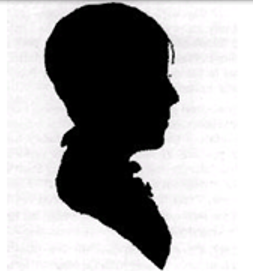
Parents: Samuel Townsend (1746-1811) ) and Anne Hawkhurst Townsend (1761–1823). Married: Adaline Emma Dunham (1808–1882).
Children: None recorded. Kinship: Fourth great-granduncle of the post–World War II Smith generation.
Early Life and Education Peter Solomon Townsend was born in Oyster Bay, Long Island, in 1795, a descendant of the family whose several branches had helped shape both the political and industrial life of New York since the colonial period. He attended the Oyster Bay Academy from 1804 to 1808 and entered Columbia College, where he graduated in 1812. Interested in medicine, he studied under the celebrated physician and botanist Dr. David Hosack and earned the M.D. degree from the College of Physicians and Surgeons in 1816.
Medical Career and Scientific Contributions In 1817 Townsend joined several young New York physicians in founding the Lyceum of Natural History, an institution that later became the New York Academy of Sciences. He was also a founding fellow of the New York Academy of Medicine. Throughout his career he combined medical practice with research, publishing widely on diseases of public concern, especially yellow fever.
His pioneering investigations argued that yellow fever was a contagious disease and could be mitigated through quarantine—an advanced position for its day. His writings reflected a growing movement toward empirical, observation-based medicine in early nineteenth-century America.
European Studies and Observations Townsend undertook a medical tour of Europe soon after completing his degree. In Paris and London he observed hospital practice and the introduction of new instruments and restraints for the mentally ill. He reported seeing the “camisole,” or strait-jacket, then a novel device, and the recently invented stethoscope, which was revolutionizing diagnosis of chest diseases.
Public Service and Writings Returning to New York, Townsend combined scientific work with civic duty. He served on the New York City Common Council from 1829 to 1831, participating in public-health and sanitation initiatives. He also maintained a large private practice and contributed to the intellectual life of the city’s medical community.
His published works include: • A Dissertation on the Influence of the Passions in the Production and Modification of Disease (1816) • An Account of the Yellow Fever as it Prevailed in the City of New York in the Summer and Autumn of 1822 (1823) • A Memoir on the Topography, Weather, and Diseases of the Bahama Islands (1826)
His clinical notes, preserved as his Casebook, 1817–1819 in the Archives and Special Collections of Columbia University’s Health Sciences Library, provide an important record of early American medical practice.
Genealogical Research and Legacy: Beyond medicine, Townsend was deeply interested in his family’s history and compiled one of the earliest known genealogical records of the Townsend line, material later used by nineteenth-century historians of Long Island. His career reflected both intellectual curiosity and civic conscience—qualities that marked the best of the early New York professional class. He died in 1849, leaving a legacy as physician, public servant, and family chronicler.