Townsend, Mary (“Molly”) (1828–1868)
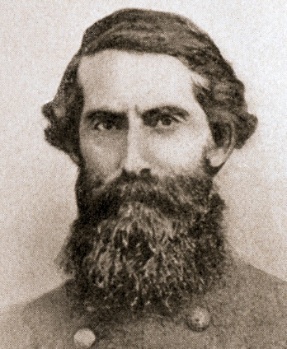
Marriage to Lieutenant William H. T. Walker: Fifteen years before the Civil War, Mary Townsend met a young U.S. Army officer, Lieutenant William Henry Talbot Walker, stationed at the nearby Watervliet Arsenal. He was a Georgian by birth, educated at West Point, and already a veteran of the Seminole Wars. Their brief courtship culminated in marriage at Albany’s First Presbyterian Church on May 9, 1846, shortly before Walker’s deployment to the Mexican War. Mary accompanied him south to his native Augusta, Georgia, where she adapted to the social world of a Southern officer’s wife.
The Walker Family and Military Career: William Henry Talbot Walker, known among soldiers as “Shot Pouch” because of his numerous wounds, served gallantly in the Seminole and Mexican Wars. He later became commandant of cadets at West Point, a post he held until the secession crisis of 1860. On December 20 of that year—the very day South Carolina left the Union—he resigned his commission to offer his services to his home state of Georgia.
Walker first served as a brigadier general in the Georgia Militia, then entered Confederate service in 1863. He distinguished himself during the Vicksburg Campaign and commanded a corps at the Battle of Chickamauga, one of the South’s most significant victories. His reputation was that of a brave, volatile, and honor-obsessed officer, respected for his courage if not for his temper. He was killed in action on July 22, 1864, at the Battle of Atlanta.
Civil War Divisions and Family Loyalties: Molly’s marriage to a Confederate general must have created tension within her Albany family, whose sympathies and service were overwhelmingly Unionist—her brothers Frederick and Robert fought for the Union, and Franklin served as Adjutant General of New York. No surviving letters reveal her thoughts about the divided loyalties that must have strained her family ties. Whether she inwardly struggled with her Northern upbringing or came to embrace the Southern cause, her husband’s letters reveal his expectations: she was to remain loyal to the Confederacy and, if the South were defeated, to take their children abroad. He exhorted her to raise them “hating the Yankees more and more every day” and forbade any renewed intimacy with “Northern kin.”
Widowhood and Later Life: After Walker’s death in 1864, Molly remained in Augusta with her four children, declining to return to Albany. The postwar years were marked by hardship but also by quiet resilience. She never remarried and died in 1868 at the age of forty-two. She was buried beside her husband in the Walker family plot on the grounds of what is now Augusta State University.
Legacy: Mary Townsend Walker’s life embodied the tragic divisions of the Civil War era. A Northern woman married to a Confederate general, she bridged two worlds that became bitterly opposed. Her story, and the survival of her children in postwar Georgia, link the Townsend family’s Northern industrial and civic tradition with the complex social landscape of the defeated South.