Schieffelin, William Henry (1836–1895)
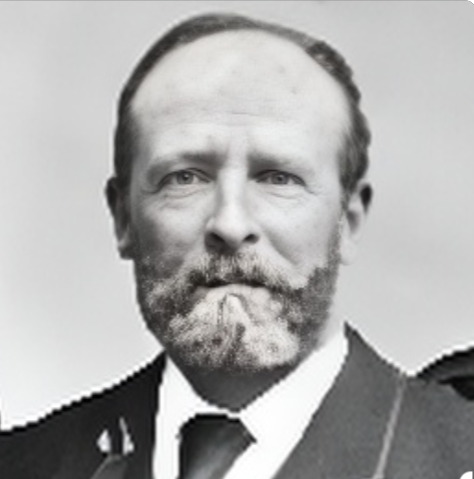
Early Life
William Henry Schieffelin was born in New York City on August 20, 1836, the eldest surviving son of Samuel Bradhurst Schieffelin, a prominent evangelical philanthropist, and his first wife, Lucretia Hazard. He grew up in the family’s long-established mercantile environment and received a private education in New York. From an early age he displayed an interest in chemistry and the pharmaceutical trade, which prepared him for his later role in the family firm.
Career
In 1860, at the age of twenty-four, William entered Schieffelin & Co., the wholesale drug house founded by his great-grandfather Jacob Schieffelin. After the Civil War, when his father retired in 1865, he became head of the reorganized firm W. H. Schieffelin & Co., a name it carried until 1894.
Under his leadership the company became a major national distributor of new synthetic medicines. In the 1880s it introduced into the American market phenacetin, sulfonmethane, and aspirin, and in 1882 William established a modern chemical and pharmaceutical laboratory that placed the firm at the forefront of drug-purity standards in the United States. His work helped advance the broader movement for scientific control of pharmaceuticals that culminated in the Pure Food and Drug Act of 1906.
Military Service
During the Civil War, William served first with the 7th New York Infantry Regiment, being drafted to the front in 1862. He was soon commissioned Major of the 1st New York Mounted Rifles, a unit of more than four hundred men under his command. He served in the Department of Virginia under General John E. Wool during the 1863 siege of Suffolk and in numerous mounted engagements in the surrounding region. His Civil War experience shaped both his later public-health concerns and his enduring loyalty to the 7th Regiment veterans’ organizations.
Residences
William and Mary lived in Manhattan at 242 East 15th Street on Stuyvesant Square, close to both the family firm and St. George’s Church, where they were active parishioners. Summers were spent at the Jay family estate in Bedford, New York, now preserved as the John Jay Homestead.
Civic Engagement
He served as a vestryman of St. George’s Church on Stuyvesant Square, was an early member of the Union League Club, a charter member of the City Club of New York, and a member of the Century Association from 1887 to 1893. He also belonged to the Veterans’ Association of the 7th New York Infantry, the South Side Club of Oakdale, Long Island, and the Fisher Island Sportsman’s Club, reflecting his interests in hunting, fishing, and the social world of post-war New York.
Personal Life
William married Mary Jay in 1863, linking the Schieffelins with one of America’s most distinguished founding families. Their children carried names honoring both the Jay and Schieffelin lines. William was remembered as strikingly handsome, an excellent horseman, a spirited marksman, and a gifted amateur singer. His son William Jay Schieffelin preserved many of his character traits and recollections in a long oral-history memoir recorded at Columbia University in 1949.
William Henry Schieffelin died in New York City on June 21, 1895.