Bedford
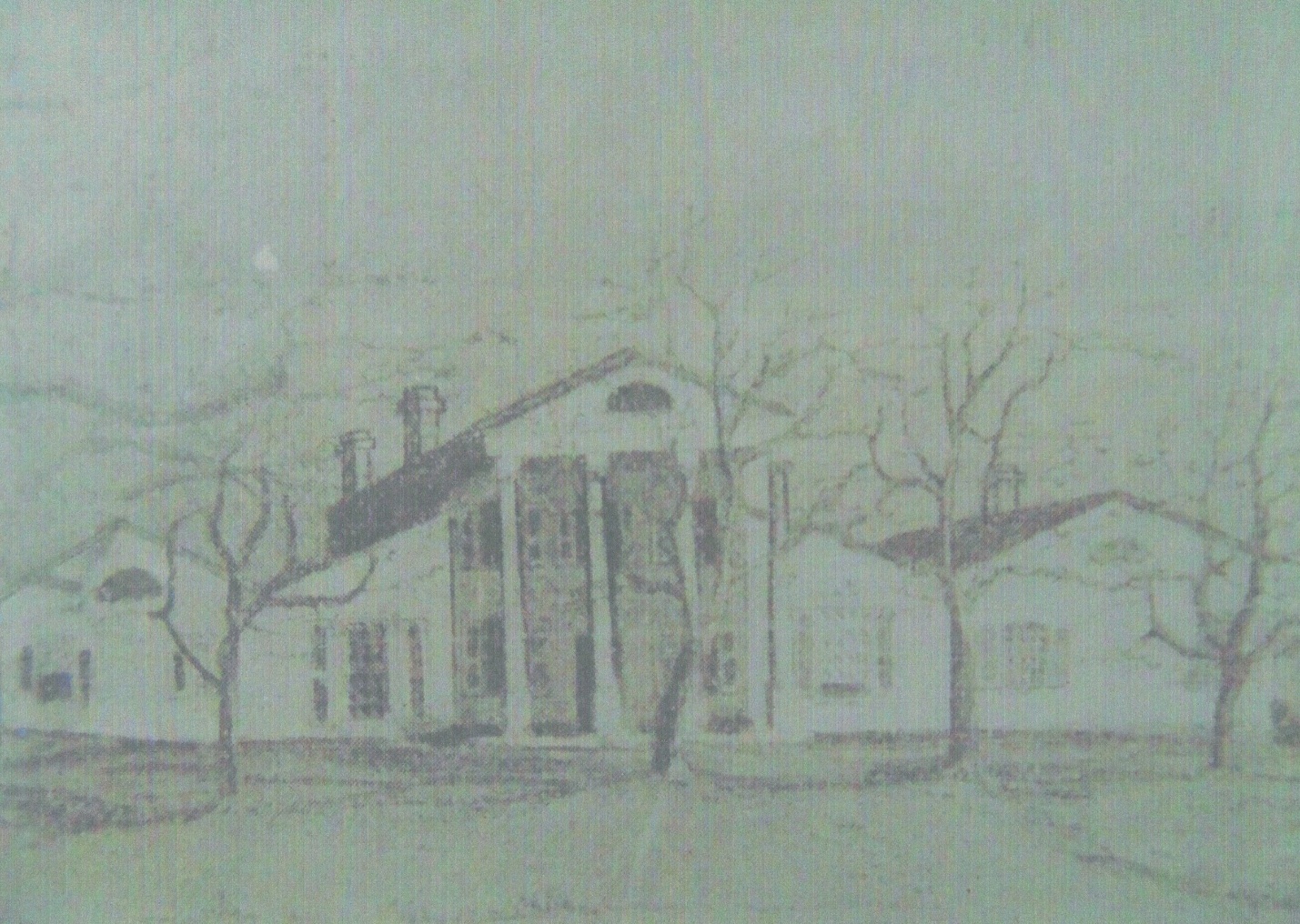
Architectural Description
It was described as “a large and handsome old colonial mansion, built of brick, with stuccoed walls.” It featured “a splendid portico, supported by four large wooden pillars which were said to have been made from the masts of the famous revolutionary ship, the ‘Constition”.
History
The house known as Bedford was built around 1799–1801 by Daniel Bedinger (c. 1761–1818) and his wife, Sarah (Sally) Rutherford Bedinger. It was constructed on or near the site of an earlier family home/property. Daniel Bedinger was a Revolutionary War veteran (served as a young prisoner of war, later rose in rank) who settled in the area after the war. He died at Bedford in 1818, and it was described as a place of hospitality.
The Burning of Bedford
The burning of Bedford, the historic Bedinger/Lee family estate near Shepherdstown, West Virginia (then Virginia), on July 19, 1864, stands as one of the most poignant episodes of Union General David Hunter's scorched-earth campaign in the Shenandoah Valley. Hunter, commanding Federal forces under instructions from Lieutenant General Ulysses S. Grant to devastate the region's agricultural resources—"eat out Virginia clear and clean" so thoroughly that even crows would need to carry their own provisions—interpreted his orders aggressively. While Grant specified that houses should not be burned but provisions and livestock removed, Hunter exceeded these bounds, targeting civilian homes of prominent Confederate sympathizers as retaliatory measures against a population he viewed as hostile. This approach followed earlier acts like the destruction of the Virginia Military Institute and Governor John Letcher's home in Lexington, and came amid Confederate reprisals, such as Jubal Early's forces burning Postmaster General Montgomery Blair's Maryland residence.
Hunter's orders escalated in mid-July from his Harpers Ferry headquarters. On July 17, via Special Orders No. 128, he dispatched Captain Franklin G. Martindale of the 1st New York (Lincoln) Cavalry with 15 men to burn homes in the Charlestown area, including that of Andrew Hunter (a distant cousin and Virginia senator). Two days later, Martindale received fresh directives to proceed to the Shepherdstown vicinity, targeting Fountain Rock (home of former Confederate Congressman Alexander R. Boteler) and Bedford (residence of Edmund Jennings Lee, a cousin of Robert E. Lee, though Edmund himself was not in active Confederate service). Martindale, described as a dutiful officer who never shirked unpleasant tasks—even as many under Hunter deplored such destruction—proved an apt choice for the grim work.
At Bedford that evening, the household included Henrietta Bedinger Lee (age 54, in frail health), her children Netta (about 20) and Harry, and servants like Peggy and Margaret; Edmund was absent. The family had just finished supper (including ice cream Harry made) when alarms spread from the visible flames at nearby Fountain Rock. Henrietta, defying her illness, prepared to aid the Boteler women but was halted by news that Bedford was next. She directed the family to prioritize saving Edmund's papers (per his standing command), hiding them in the garden before grabbing what else they could. Martindale arrived, presented Hunter's orders to burn the house, contents, and all outbuildings (allowing only basic clothing), and curtly dismissed Henrietta's pleas. She protested that the home—built by her Revolutionary War veteran father, Daniel Bedinger, with portico pillars reputedly from the USS Constitution's masts—deserved protection as a symbol of patriotic heritage. Martindale retorted harshly, calling her a "fool" and vowing to execute orders "to the letter." Soldiers piled furniture, doused it with coal oil and straw, and ignited the blaze; the large brick colonial mansion with stuccoed walls and its seven outbuildings burned swiftly, leaving the family to watch helplessly as heirlooms and history vanished. No physical harm came to the occupants, but the devastation was total.
Henrietta's defiance peaked in a dramatic confrontation. As Martindale offered pity before departing, she scornfully rejected it, pointing to a crumbling column and decrying how the Union honored her father's revolutionary service by rendering his daughter and grandchildren homeless. She commanded him to leave, declaring she scorned his pity and defied him to do worse; witnesses noted Martindale "quailed" and slunk away "like a whipped dog." The next day, July 20, from Shepherdstown, Henrietta penned a searing letter to Hunter himself—published later in the Southern Historical Society Papers—condemning the act as infamous vandalism, questioning why a "helpless woman" and children were targeted instead of armed foes, and accusing him of earning eternal infamy alongside contempt for his military record. She highlighted the irony of Hunter's own niece once being kindly hosted at Bedford. The letter circulated widely in Confederate circles as proof of Union atrocities.
The family refugeed in Clarke County, Virginia, enduring further wartime hardships; Netta, in particular, recorded ongoing bitterness and readiness to defend herself. Bedford's destruction exemplified the civilian toll of Hunter's "hard war" tactics in the 1864 Valley Campaign, leaving no physical remnants of the grand estate but a lasting legacy of protest through Henrietta's words and the family's recollections.
The destruction of Bedford in July 1864 occurred during one of the most severe phases of the Civil War in the Shenandoah Valley, when Union forces under Major General David Hunter conducted a campaign intended to cripple the Confederacy’s agricultural base and punish prominent Southern sympathizers. Acting under instructions from Lieutenant General Ulysses S. Grant, who commanded all United States forces, Hunter was directed to devastate the Valley so thoroughly that it would no longer sustain Confederate armies. Grant famously urged him “to eat out Virginia clear and clean as far as they go, so that crows flying over it for the balance of this season will have to carry their provender with them.” Although Grant specifically instructed that houses were not to be burned, Hunter’s campaign increasingly moved beyond the destruction of crops, livestock, and supplies toward punitive actions against civilian property belonging to prominent Confederate supporters.
By the summer of 1864 Hunter had already earned notoriety in the Valley. Earlier that June, Union forces under his command had burned the Virginia Military Institute in Lexington and destroyed the home of Virginia’s governor, John Letcher. Confederate forces retaliated when General Jubal Early later invaded Maryland and burned the home of U.S. Postmaster General Montgomery Blair. In the midst of this escalating cycle of reprisals, Hunter adopted a policy of targeting the residences of leading Virginia figures associated with the Confederacy. His biographer, Edward A. Miller, observed that Hunter believed he was operating among a hostile population and felt compelled to demonstrate firm authority and intolerance toward any perceived Confederate sympathy.
On July 17, 1864, Hunter issued Special Orders No. 128 from his headquarters at Harpers Ferry. These orders directed Captain Franklin G. Martindale of the 1st New York (Lincoln) Cavalry to ride with a small detachment to Charlestown and burn the home of Andrew Hunter, a Virginia senator and distant relative of the Union general. Martindale was also instructed to destroy the residence of Charles Faulkner in nearby Martinsburg. Andrew Hunter’s house was burned as ordered, though Faulkner’s home was ultimately spared. Two days later Hunter issued further instructions sending Martindale south toward Shepherdstown. His targets this time were Fountain Rock, the home of former Confederate congressman Alexander R. Boteler, and Bedford, the residence of Edmund Jennings Lee, a cousin of General Robert E. Lee.
Martindale and his fifteen cavalrymen first arrived at Fountain Rock shortly after dinner on July 19. There they encountered Boteler’s daughters, Tippe and Lizzie, along with Lizzie’s young children. Without ceremony Martindale handed the women the written order from Hunter directing him “to burn everything under cover on both places with their contents.” The soldiers immediately began piling furniture and applying camphene and other accelerants. Within minutes the house was engulfed in flames. The barn, servants’ quarters, library, and many valuable papers and historical documents were destroyed. Only a few minor outbuildings were spared.
That evening Martindale continued down the road toward Shepherdstown to carry out the second part of his orders at Bedford. The house, built around the turn of the nineteenth century by Revolutionary War veteran Daniel Bedinger, was a large and elegant brick mansion with stuccoed walls and a prominent portico supported by massive wooden columns said to have been fashioned from masts of the famous frigate Constitution. At the time Edmund Jennings Lee was absent from home, leaving his wife Henrietta Bedinger Lee, their children Netta and Harry, and several household servants at the estate.
As news of the burning of Fountain Rock spread, alarm reached Bedford. Henrietta Lee, who had been ill for several days, rose from her bed and ordered the household to save what they could—especially the family papers, which her husband had always instructed should be preserved in case of fire. These documents were hurriedly carried into the garden. Soon afterward Martindale and his men arrived. Entering the house, the captain confronted Mrs. Lee and informed her that he had orders from General Hunter to burn the house and all its outbuildings. She protested vigorously, reminding him that the house had been built by her father, a veteran of the Revolution, and demanding to know what offense she or her family had committed. Martindale curtly replied that he would execute his orders “to the letter.”
Despite the family’s efforts to remove possessions, Martindale ordered civilians and servants to put down the items they attempted to save. Soldiers piled furniture in the dining room, packed straw beneath it, poured coal oil over the heap, and set it alight. Flames quickly spread through the structure. One by one the great columns of the portico collapsed as the house was consumed. Seven outbuildings were also destroyed. The family watched helplessly as their home and most of its contents were reduced to ashes.
Before departing, Martindale attempted to offer Mrs. Lee his sympathy, but she angrily rejected it. Pointing to one of the remaining columns, she reminded him that it had been fashioned from a mast of the American frigate Constitution and that her father, who had served his country in the Revolutionary War, had built the house after that conflict. Now, she declared, his daughter and grandchildren had been turned out of their home by soldiers of the very nation he had helped to establish. Her rebuke left the officer visibly shaken as he withdrew.
The following day, July 20, 1864, Henrietta Bedinger Lee wrote a blistering letter to General Hunter condemning the destruction of her home. Addressing him from Shepherdstown, she denounced the act as infamous and cowardly, accusing him of waging war not against soldiers but against defenseless women and children. The letter circulated widely and became one of the most famous civilian protests of the war in the Shenandoah Valley. For the Lee family the loss was devastating: their home, furnishings, heirlooms, and much of their property had been destroyed. The burning of Bedford became one of the most controversial incidents of Hunter’s Valley campaign and a powerful symbol of the harsh civilian impact of the Civil War.