Schieffelin, Eugene (1827–1906)
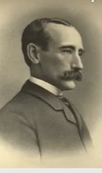
Early Life and Family Background
Eugene Schieffelin was born in New York City on 29 January 1827, the seventh son of Henry Hamilton Schieffelin, attorney and partner in the longstanding pharmaceutical firm of Schieffelin Brothers, and Maria Theresa Bradhurst of the venerable Bradhurst family. The Schieffelins were by the mid-nineteenth century one of Manhattan’s most established families, with deep ties to the Lispenard, Hall, and Tonnele clans. Eugene grew up within a prosperous, culturally minded household that favored refinement, philanthropy, and natural science.
Career and Natural-History Interests
Although he maintained a connection with the family firm, Eugene was best known for his natural-history interests. He was a member of the New York Genealogical and Biographical Society, the New York Zoological Society, and several other cultural organizations. Most notably, by the 1870s he became the chairman of the American Acclimatization Society, an organization that sought to enrich the North American environment by introducing foreign birds and animals—a practice then regarded as progressive and beneficial.
In 1890 he released sixty imported European starlings into Central Park, followed by another forty in 1891. These releases, part of a broader movement occurring nationwide in the 1870s–1890s, were at the time celebrated as scientific experiments. His efforts to introduce other European songbirds—among them the bullfinch, chaffinch, nightingale, and skylark—proved unsuccessful.
William Cullen Bryant admired the Schieffelins and wrote his poem “The Olde-World Sparrow” after spending an evening with the William Henry Schieffelin, who had just released a shipment of sparrows into his yard, but some suspect it was Eugene who did it or at least inspired it.
We hear the note of a stranger bird
That ne'er till now in our land was heard.
A winged settler has taken his place
With Teutons and men of Celtic race;
He has followed their path to our hemisphere
The Old-World Sparrow at last is here.
He meets not here, as beyond the main,
The fowler's snare and poisoned grain,
But snug-built homes on the friendly tree;
And crumbs for his chirping family
Are strewn when the winter fields are drear,
For the Old-World Sparrow is welcome here.
The insects legions that sting our fruit
And strip the leaves from the growing shoot,
A swarming, skulking, ravenous tribe,
Which Harris and Flint so well describe
But cannot destroy, may quail with fear,
For the Old-World Sparrow, their bane, is here.
The apricot, in the summer ray,
May ripen now on the loaded spray,
And the nectarine, by the garden-walk,
Keep firm its hold on the parent stalk,
And the plum its fragrant fruitage rear,
For the Old-World Sparrow, their friend is here.
That pest of gardens, the little Turk
Who signs, with the crescent, his wicked work,
And causes the half-grown fruit to fall,
Shall be seized and swallowed, in spite of all
His sly devices of cunning and fear,
For the Old-World Sparrow, his foe, is here.
And the army-worm and the Hessian fly
And the dreaded canker-worm shall die,
And the thrip and slug and fruit-moth seek,
In vain, to escape that busy beak,
And fairer harvests shall crown the year,
For the Old-World Sparrow at last is here.
The starlings flourished and spread rapidly across the continent, ultimately displacing native cavity-nesting birds and affecting agriculture. These ecological consequences became apparent only decades after his death.
Very quickly sparrows wore out their welcome. In 1881 Fred Mather versified:
The Poet may sing in the sparrow’s praise, But our great ornithologist, Dr. Coues, says, In language of truth and very plain prose, That the sparrow’s a nuisance and the sooner he goes, The better we’re off, so to me it’s quite clear, That the Old World sparrow is not needed here.
He defiles our porches, there’s no denying that; He has ruined my wife’s dress and spoiled my best hat. He hangs round the bird cage to pilfer the seed, And gives the canary a foul insect breed. He never eats worms, let us tell it abroad, This Old World sparrow is a terrible fraud**.**
The Shakespeare Myth
A persistent legend, first appearing only in the 1940s, claimed that Schieffelin introduced starlings in order to populate America with every bird mentioned by Shakespeare. No nineteenth-century document supports this story. The acclimatization movement’s own literature records economic, aesthetic, and pest-control motives, but no Shakespearean motivation. Historians now regard the Shakespeare tale as a modern myth layered onto Schieffelin’s actual acclimatization work.
Personal Life
In 1858 Eugene married Catherine Tonnelé Hall, member of a prominent New York mercantile and landowning family. The Halls were related to the Tonnelé merchants and, through Valentine Hall Jr., to the family of Eleanor Roosevelt. The marriage was socially distinguished but childless. Eugene and Catherine divided their time between New York and Newport, where they participated in the city’s summer cultural life.
Death
Eugene Schieffelin died on 15 August 1906 at Hartshorn Villa in Newport, Rhode Island. Though later remembered chiefly for his role in the starling introduction, his contemporaries regarded him as a genial patron of natural science, music, and civic organizations. His widow survived him until 1910.