Cranmer Hall
Architectural Description
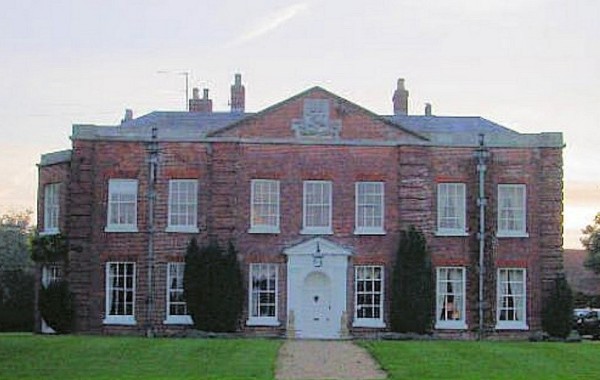
Cranmer Hall is a substantial early eighteenth-century country house set at the center of a small estate in rural North Norfolk. Constructed primarily of red brick with a slate roof, the house presents a restrained Georgian façade softened by later alterations. The principal front is seven bays wide, with a central three-bay pedimented section articulated by doubled rusticated brick quoins, flanked by outer bays with single rusticated quoins. Although originally three storeys, the house was later reduced to two.
The entrance is marked by an elegant Roman Doric wooden doorcase of the later eighteenth century, with pilasters, entablature, and pediment. The windows are timber sash windows with glazing bars set beneath flat rubbed-brick arches. A prominent south-facing, three-sided bay window of two storeys was added in the later eighteenth century, providing light and views over the grounds.
To the west stands a two-storey, three-bay wing in a consciously neo–seventeenth-century classical style, attributed to Philip Webb. The house is surrounded by lawns and ancillary buildings, including a mid-eighteenth-century barn and formal entrance gates and piers, all contributing to the estate’s architectural coherence.
Interior
Philip Webb, one of the most important figures of the Arts and Crafts movement, carried out additions and alterations around 1880. His work at Cranmer Hall includes the west wing and interior elements executed in a restrained neo–seventeenth-century idiom, emphasizing craftsmanship, proportion, and continuity with earlier English domestic architecture.
Interior features include a north-facing paneled room of relatively plain character; a west-side staircase with paneled dado and detailing characteristic of Webb’s historical revival style; and a first-floor south-facing room that echoes ground-floor proportions through its chimney breast and cornice treatment.
History
The main house dates to about 1721 and was likely built for Robert Donne. In 1751 it passed to the Jones family, who made Cranmer Hall their seat. The estate remained in the possession of the Jones family—and later the Lawrence-Jones family—until 1945.
Cranmer Hall is best known through the memoirs of Sir Lawrence Evelyn Lawrence Jones, who grew up there in the later nineteenth century. In A Victorian Boyhood (1955) and Edwardian Youth, Jones offers a bleak and unsentimental account of life at the hall. Rather than nostalgia, his recollections emphasize emotional austerity, social stagnation, and the pervasive effects of rural decline. His writings situate Cranmer Hall within the broader context of the prolonged agricultural depression that afflicted rural England from the late 1840s until recovery began during the Second World War.
He wrote: “Norfolk is bursting with local memoirists insisting ‘we was poor but we was happy.’ “Jones (who was knighted for his legal work) looks back with some horror at his childhood world - a place of miserable poverty for most, genteel poverty for him, and numbing complacency. It is often forgotten that, from the late 1840s, rural England was gripped by chronic recession, an agricultural depression that took vast areas of land out of cultivation and reduced people to desperation: Recovery only began with the Second World War. Idyllic it was not.”
A recent commentator said: “There is a definite atmosphere at Cramner. The house is at the centre of a small estate with traces of Roman occupation: there is a curious claustrophobia about it - an incestuous sense of over-ripe decay and neglect. Jones makes it apparent that this was not really a happy house - and I think one can feel it.”
The master of the house was Sir Lawrence Evelyn Lawrence Jones, the president of the Society for Psychical Research in 1928-1929.
The Jones family’s tenure ended in 1945, closing nearly two centuries of continuous occupation.