Jones, Sir Willoughby, 3rd Baronet (1820–1884)
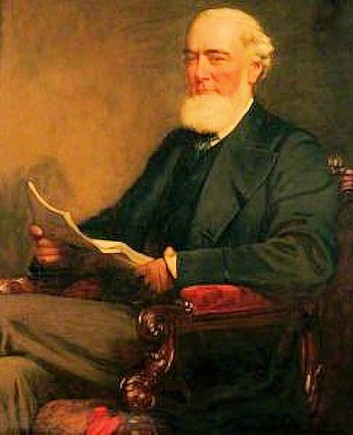
Education and Early Life Willoughby Jones was educated at Eton College and Trinity College, Cambridge, where he earned his B.A. in 1843. He succeeded his elder brother, Sir Lawrence Jones, 2nd Baronet, in 1845 after the latter’s death in Turkey.
Political Career In July 1847 Jones was elected Member of Parliament for the Cheltenham constituency as a Conservative, defeating the sitting Liberal member by 108 votes. His election was overturned in May 1848 following a petition that questioned electoral procedures. Although his parliamentary career was brief, he continued to support Conservative causes in Norfolk and was regarded as an influential local landowner.
He was appointed High Sheriff of Norfolk in 1851, and after 1848 joined the Canterbury Association, an organization that promoted British settlement in New Zealand under the patronage of Edward Gibbon Wakefield and Bishop Selwyn.
Estate and Local Affairs Jones lived at Cranmer Hall, near Fakenham, Norfolk. The estate had been associated with his family since the time of his grandfather, and it was under his stewardship that the Bale Oak, a great hollow oak tree on his property and local landmark, was ordered felled in 1860 for safety reasons—a decision that caused public regret but was widely reported in the Norfolk papers.
Marriage and Family: On 15 April 1856 he married his cousin Emily Taylor-Jones, daughter of Henry Taylor-Jones (1790–1860), his father’s half-brother. Their union strengthened the Cranmer Hall line’s connection with other Norfolk gentry families.
One of their daughters, Maud Jones, was born deaf and became the subject of early linguistic and educational studies by Alexander Graham Bell, whose work on the telephone was partly motivated by research into speech transmission for the deaf. In a letter of 17 February 1894, Bell wrote:
“Helen Keller is a notable case in point — with which every one is familiar; and I may also cite the case of Miss Maud Jones, of England (daughter of Sir Willoughby Jones), because she was deaf from birth. Her letters, as well as her conversation, show that she has acquired as complete a mastery of the English language as that possessed by any hearing person.”
Maud Jones was educated for ten years by Mary Hatch True, who had previously taught Mabel Gardiner Hubbard, later Mrs. Alexander Graham Bell. Bell’s correspondence with True and other educators frequently cited Maud as an exemplar of the linguistic potential of congenitally deaf children.
Later Life Sir Willoughby Jones continued to manage the family estate and serve in county affairs until his death in 1884. He was succeeded by his eldest son, Sir Lawrence John Jones, 4th Baronet (1857–1954).