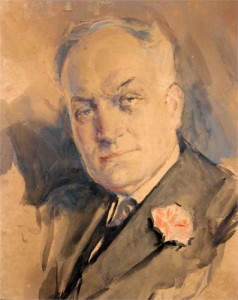
Breese, James Lawrence (1854–1934)
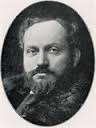
Early Life and Career
James Lawrence Breese, known to family and friends as “Jim” or “Jimmy,” was born into a prominent New York family descended from the Breeses of Trinity Churchyard and related to the Lawrences and the Sidneys. He studied engineering at Rensselaer Polytechnic Institute but soon turned to finance, founding the brokerage firm Breese and Smith. Between 1909 and 1916 he reportedly earned over $2,000,000—equivalent to roughly $50 million in modern terms. His firm’s discretion in business affairs contrasted sharply with his notoriety in private life.
The Carbon Studio and Photography
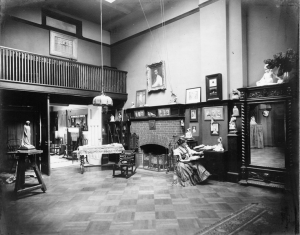
Breese was a passionate amateur photographer who mastered the difficult and exacting carbon printing process, producing richly pigmented, archival photographic images. His work was of sufficient technical and artistic quality to attract serious attention: he collaborated with Rudolf Eickemeyer and was one of only two Americans—along with Alfred Stieglitz—invited to exhibit at the Vienna International Photographic Exhibition of 1893, where he won first prize.
At his New York home at 5 East 16th Street, Breese built an elaborate studio, dubbed The Carbon Studio (right), where he photographed New York’s fashionable society and theatrical figures. He was among the earliest amateurs to experiment with color photography. His studio also became infamous for its after-hours entertainments and erotic photography.
The Photographs
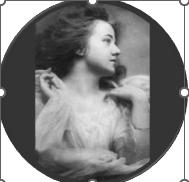
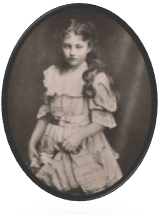
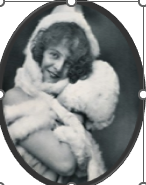
Breese photographed adults but preferred young girls, both as models and perhaps as more than models.
Costumes
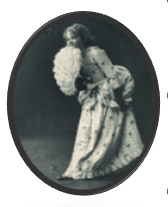
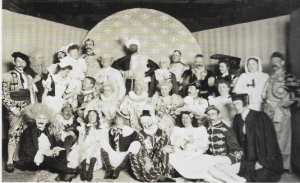
Costume parties were favored by the moneyed classes. It enabled them to dress outlandishly, and Breese loved nothing more than to be outlandish.
0
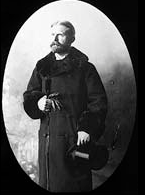
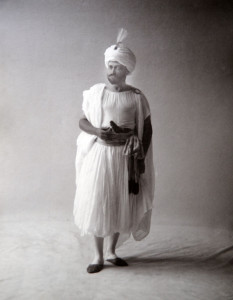
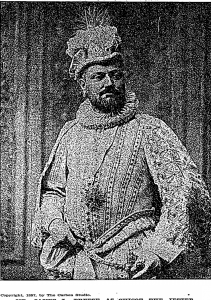
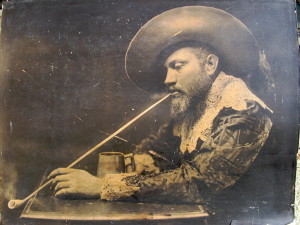
One nearly ended in disaster. A descendant of James Breese, Otto Dittenhoffer, wrote; “Perhaps the most celebrated of the “1001 Nights” costume parties took place on December 17, 1896. It involved a pyrotechnic mishap that captured the attention of the press and the public at large.
In the words of a society columnist of the day: “The host received his guests in the costume of an Arab sheik. He is a man of commanding presence, with a dark beard and looked the part very well, indeed. Mrs. Breese, made up as a Spanish dancing girl, helped him to welcome the guests.
“They were a gay and a picturesque horde who invaded the studio as the clock struck twelve. James J. Van Alen and Hermann Oelrichs impersonated Dutch burghers; Winthrop Chanler and Miss Wilmerding posed as members of the Salvation Army and rattled their tambourines incessantly; James Gerard, Jr. was a handsome Hungarian hussar: Craig Wadsworth and Willie Tiffany were court jesters; Miss ‘Birdie’ Fair wore the ruff of Folly; Cooper Hewitt and Whitney Warren were turbaned Turks; Creighton Webb’s well-known legs were displayed to advantage beneath a long Spanish cloak; Dickie Peters was as proud of his appearance in a suit of pajamas and a high hat as if he had uttered an epigram ….
“The presence of so many costumed guests provided Breese with an opportunity to take individuals aside and pose them for a portrait….
“On this particular December night, the cold winter wind may have been blowing outside, but within the sanctum of the Breese studio, a good time was being had by all. Then things began to go awry. The gaiety had kicked into high gear when Mrs. Clinch Smith, wearing a loud plaid calico dress and a huge hat, unrecognizable in cork ‘black face,’ commanded center stage with her spirited version of a ‘cakewalk.’ Mrs. Cadwalader, wearing loose, loud checked trousers, big shoes, and a red necktie, took the part of Sambo. The two otherwise reserved and proper ladies brought down the house to the accompaniment of a group of ‘genuine negro banjo players.’
“Somewhere along the way a mischievous guest began tossing lit matches in a negligent manner. Suddenly Mrs. George B. de Forest, who was dressed in a light and gauzy Oriental costume, began to scream as flames lept from her attire. No water being readily available, a quick thinking guest seized a champagne bottle from an ice bucket, knocked off its neck against the wall, and sprayed the contents onto the flaming dress. Several other champagne bottles were similarly employed.
“Sobbing and trembling, with her charred skirts clinging to her body, Mrs. de Forest was led to Mrs. Breese’s apartments to ‘recover her composure.’”
The “1001 Nights” Parties
Breese’s Wednesday-night gatherings, known as the “One of 1001 Nights” parties, drew artists, architects, actors, and members of the Gilded Age elite, including John Singer Sargent, Louis Saint-Gaudens, Dana Gibson, and his intimate friend Stanford White. Guests appeared in elaborate costume, drank champagne from silver buckets, and mingled amid what one reporter described as “a bacchanal of bohemian New York.”
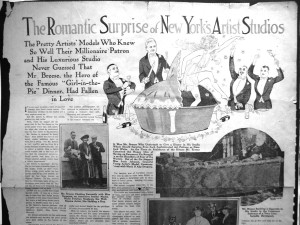
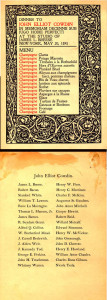
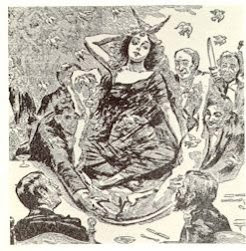
The parties reached their scandalous height on December 17, 1896, when a pyrotechnic mishap nearly burned one of the guests alive, and again with the notorious “Pie Girl Dinner.”
At that event, held near dawn in the Carbon Studio, four Black servants carried in an enormous papier-mâché pie, from which emerged a fifteen-year-old girl draped in black gauze, releasing live canaries as the orchestra struck up “Sing a Song of Sixpence.” Stanford White lifted the girl from the pie—an episode later woven into the Thaw–White murder case when Harry K. Thaw shot White atop Madison Square Garden in 1906.
The young girl, a model, then 15 years old, lived with her mother, but on the night of the banquet she disappeared, and remained in hiding for two years. Efforts of the police to find her were unsuccessful. At last she returned, to tell a story of revolting mistreatment and desertion by the man who met his death at the hands of Harry Thaw. “When I was lifted from the pie to a seat at the table I found myself queen of the revel,” she said. “It was dazzling at first,” she said, “but in the end it became a sad queendom. “Mr. White was kind for a time, but when he went to Europe he instructed his clerks to get rid of me with as little trouble as possible. I never saw him again.” Turned into the street to live as she might, this girl, not yet 18, finally married, but her husband, when he learned of her part in the “pie” banquet, brooded over the affair, and deserted his girl wife without attempting to avenge her wrongs. She died soon afterward. (see ). Some say she committed suicide.
Newspapers like Joseph Pulitzer’s World denounced the event as “a bacchanalian revel,” accusing Breese and his circle of corrupting young women. Others, such as the painter Edward Simmons, sought to minimize the scandal as “very moral and dignified”—a claim few believed. The affair shattered reputations, and most of those involved, including Breese, left New York temporarily to avoid further scrutiny.
Another way James Breese sought thrills was through the new sport of automobile racing.
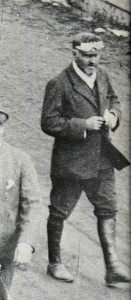
At the 1904 Vanderbilt Cup Race, James Breese walking on the Jericho Turnpike Course (left)
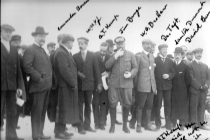
James Breese, William K. Vanderbilt, Jr., and other participants of the 1904 Daytona-Ormond Beach Automobile Races. (above)
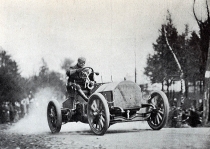
James Breese at the Eagle Rock Hill Climb
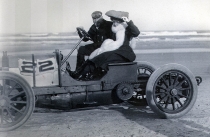
James Breese at the 1905 Daytona-Ormond Automobile Races.
On August 9, 1904 at 2 P.M. James Breese arrived at St. Louis for the World’s Fair. He had driven his forty-horsepower touring car from Buffalo to St. Louis in 36 hours, averaging 25 mph. His son James Breese Jr., his valet, and a machinist accompanied him. The others in the race arrived a day later.
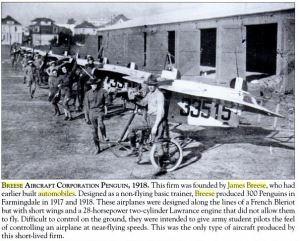
James also used his engineering knowledge to experiment with the manufacture of planes.
Penguin (right) was a non-flying trainer.
Residences
In addition to his houses The Breezes and The Orchards, James had an apartment at the Hotel des Artistes in Manhattan: “The living room is 60 feet by 30 feet. Its furniture includes some enormous pieces of old English silver. Venetian columns of red, blue, and gold lend indescribable richness to the walls. Mr. Breese finds comfort on a divan covered with old Spanish brocade. One of his many fancies is to “have his fire screen decorated with live smilax, fresh every day, all year ’round.
The Last Act
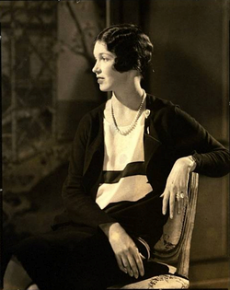
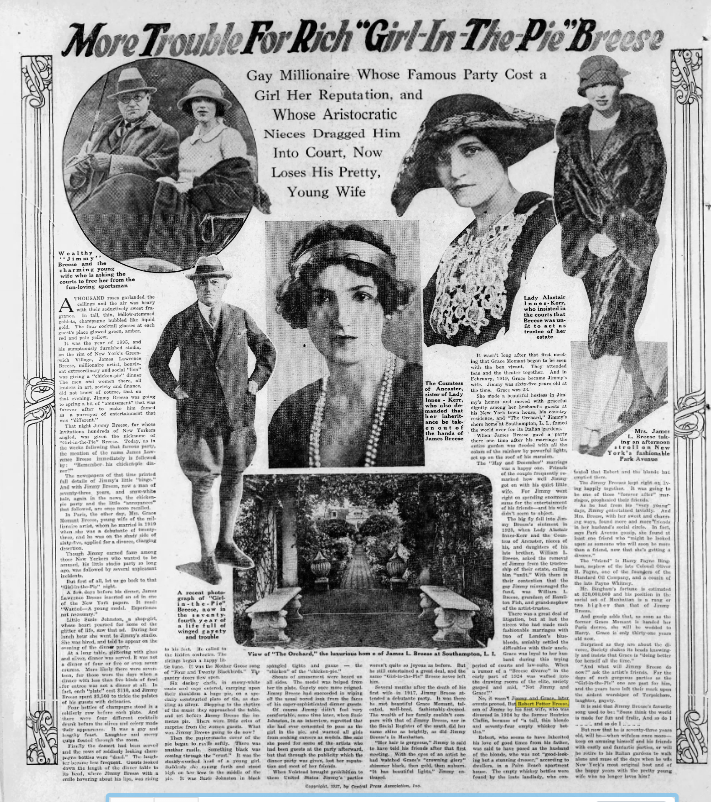
After his first wife died, at age 64 he married the Southern belle Grace Lucile Momand (1894-1946), who was 23. They married in 1919; she divorced him in 1927 and immediately became the second of the three wives of Harry Payne Bingham.
Breese provided endless copy for the scandal sheets.
The Denouement
James’s daughter Frances reminisces: “In 1935 [actually, 1934] he lost his last fortune, and The Orchard, our summer home in Southampton, was sold to Charles Merrill. Papa took an around the world trip by steamer, became a short-wave radio enthusiast, and on his return built a two-bedroom house that he called “Breese In” on Hill Street, next to his former home. He did much of his own cooking, and old Mrs. Raccosta, who had been with our family for many years, cleaned house for him. Even though Papa was in his late seventies, the change in circumstances did not phase him. He was still attractive to women, and, when he could no longer drive a car, he acquired a beautiful young companion-housekeeper-chauffeur and toured the country with her. When he died at the age of eighty, she committed suicide.”
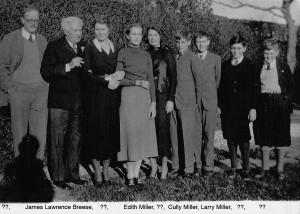
James Breese and his grandchildren