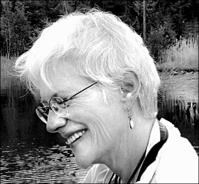
Breese, Gretchen Elizabeth (1954–2016)
Education
Gretchen Breese’s education reflected her broad and integrative intellectual curiosity. She earned her B.A. in Art from the University of California’s College of Creative Studies in Santa Barbara in 1976, followed by an M.F.A. in Sculpture from the Rhode Island School of Design in 1984.
Pursuing her growing interest in the relationship between art, philosophy, and architecture, she earned a Master’s in Environmental Design in architectural theory from Yale University’s School of Architecture in 1987, where she held a full fellowship.
At Yale, she also received a second fellowship to pursue doctoral studies in Religious Studies. She completed the coursework for her Ph.D., focusing on theological aesthetics, Neoplatonism, and comparative mysticism, before devoting herself fully to teaching and creative practice.
Academic and Artistic Career
Gretchen Breese’s career spanned both the visual arts and philosophy. As a sculptor, she exhibited her work in numerous solo and group shows on both coasts of the United States, exploring the intersections of form, material, and metaphysical symbolism. In 1986 she received a National Endowment for the Arts (NEA) grant for her innovative work in architectural theory—a rare recognition for a sculptor-philosopher whose work bridged the disciplines of fine art and design.
Her academic interests were wide-ranging, encompassing Buddhist and feminist philosophy, Neoplatonism, and theological aesthetics. She taught philosophy at Ripon College from 1994 to 1998. In 1998, she joined the faculty of the New England Conservatory in Boston, where she taught liberal arts courses in philosophy, sculpture, and film studies. Her classes were known for their depth, intellectual rigor, and personal engagement. Gretchen believed that studying philosophy could transform lives, and she sought to cultivate in her students both critical thought and humane understanding.
Illness and Final Years
In 2013 Gretchen was forced to retire due to the debilitating effects of cancer and its treatment. True to her philosophical temperament, she refused to frame her illness as a battle or moral contest. Instead, she regarded it as a natural biological process—morally neutral, to be studied and understood. She applied her characteristic curiosity to learning everything she could about the biochemistry and genetics of her disease, actively collaborating with her physicians and the Dana-Farber Cancer Institute research team in shaping her treatment.
Legacy
Gretchen Breese died on June 9, 2016, at the age of 61. She was remembered as a rare figure of intellectual intensity and creative generosity—a teacher who inspired thought, a sculptor who sought meaning in form, and a philosopher who found beauty in inquiry. Her life embodied the unity of art and contemplation, intellect and compassion, and she left behind a legacy of teaching and art that continues to influence those who studied with her and knew her work.