Tonetti, Anne Elizabeth (1903–1990)
Early Life and Family Background Anne Elizabeth Tonetti, sometimes listed as Ann or Annette, was born on March 15, 1903, at 136 East 40th Street, New York City. She was raised in a vibrant artistic environment, both her parents being noted sculptors of the American Renaissance period. Her father, François Tonetti, had studied under Augustus Saint-Gaudens and collaborated on several public monuments; her mother, Mary Trimble Lawrence Tonetti, came from the distinguished Lawrence family of New York and was a pupil and later partner of Saint-Gaudens.
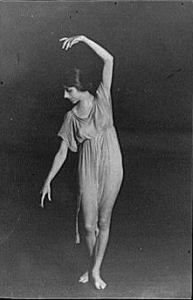
Anne spent her childhood between the Tonetti home and studio in Manhattan and the family’s retreat at Snedens Landing on the Hudson River, an artists’ enclave that attracted sculptors, painters, actors, and musicians. The household was frequented by leading figures in the arts, and the atmosphere was one of freedom and creative experimentation.
Dance and Early Career Anne’s early passion was dance. Her mother introduced her to Isadora Duncan’s performances at the Metropolitan Opera, and Anne resolved to study with Duncan’s sister Elisabeth at the School of the Dance. There she was exposed to a circle that included Maurice Sterne, Pablo Casals, Mabel Dodge Luhan, and Gertrude Stein. In her teens she joined Isadora Duncan’s troupe and toured Europe with “the Isadorables,” taking a leave from Miss Chapin’s School in New York to do so.
Stage Career After returning to New York, Anne pursued acting. She appeared in a number of Broadway productions during the 1920s and 1930s, including Roadside, Between Two Worlds, The Road to Yesterday, Saturday’s Children (as Anne, the boardinghouse keeper), Mrs. Partridge Presents, The Green Hat (as Sister Clothilde), Tea for Three, He Who Gets Slapped, Lady Christalinda, Cyrano de Bergerac (as the Duenna), Street Scene (as a gossiping neighbor with “Queenie” the dog), and The Constant Sinner with Mae West. She was admired for her character acting and comedic timing, and for the vivid personality she brought to secondary roles.
European Tour and Social Adventures In 1929 Anne joined a cultural delegation touring the Soviet Union, where her behavior caught the attention of the press. An Associated Press report from Kislovodsk described the party of American travelers—among them Alice De Laar, Janet Breed, Mary Van Rensselaer Coghill, and Anne Tonetti—lounging in Japanese silk pajamas in railway dining cars, to the astonishment of Soviet onlookers. The episode typified Anne’s exuberant, bohemian flair and sense of humor.
Marriage to Eric Gugler Architect Eric Gugler, a classicist trained at Columbia and the American Academy in Rome, rented a house opposite the Tonetti studio on East 40th Street. Through this proximity he met Anne, and their shared aesthetic sensibilities drew them together. They were married in 1931 in a private ceremony officiated by Judge Benjamin Cardozo. Gugler later became well known for his design of the White House West Wing and the Roosevelt Oval Office.
Later Life and Stewardship Anne lived much of her later life between New York City and Snedens Landing. She managed the family’s affairs through difficult years of the Depression, when her mother’s generous but impractical habit of renting houses to artists at nominal rates brought financial strain. Anne’s patience and pragmatism preserved the family properties through the 1930s and beyond.
She and her husband remained close to the theatrical and artistic worlds, maintaining friendships with Katherine Cornell, Helen Hayes, and other Hudson River artists. She later became active in preservation efforts at Snedens Landing. In 1979 she donated “The Cascade,” a natural waterfall on the family’s property, to the Palisades Interstate Park Commission.
Anne also contributed to the Metropolitan Museum of Art, presenting two bronze sculptures by Augustus Saint-Gaudens, including Mrs. Stanford White (Bessie Springs Smith), cast in 1893, in memory of her family’s long association with Saint-Gaudens and the sculptural revival of the Gilded Age.
Character and Legacy Anne Tonetti Gugler embodied the creative spirit of her lineage—artistic, independent, cosmopolitan, and committed to cultural continuity. Her life bridged the classical traditions of her parents’ generation and the modern sensibility of the twentieth century.