Schieffelin, Richard Lawrence (1801–1889)
Brigadier General, New York State Infantry
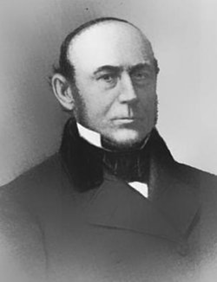
Parents: Jacob Schieffelin II (1757–1835) and Hannah Lawrence (1758–1838). Spouse: Margaret Helen McKay (1813–1892). Children: Sarah Sophia Schieffelin (1834–1886), George Richard Schieffelin (1836–1910), Hannah Lawrence Schieffelin (1840–1935), and Helen Margaret Schieffelin (1841–1895). Kin****ship: First cousin five times removed of the post–World War II Smith generation.
Early Life and Education Richard Lawrence Schieffelin was born into a distinguished New York family whose roots combined the mercantile and civic traditions of both the Schieffelins and the Lawrences. He graduated from Columbia College in 1819 at only eighteen years of age. He then read law with his brother-in-law Benjamin Ferris and began a legal practice in New York City.
Military Service At eighteen he also entered military service, rising rapidly in the New York State Militia. He was eventually commissioned brigadier general, with command of the 82nd, 197th, 236th, and 274th regiments of the New York State Infantry—a position that reflected both his administrative ability and his family’s longstanding civic prominence.
Marriage and Family Background In 1833 he married Margaret Helen McKay, the only surviving child of George Knox McKay (1791–1814), a Long Island-born artillery captain who died during the War of 1812. Margaret’s mother, Sarah Frothingham, descended from the proprietors of the New York Argus, the leading newspaper of the Democratic-Republican Party in the early nineteenth century. Through this marriage Richard was connected to a family steeped in journalism, politics, and early American nationalism.
Legal and Business Career Schieffelin practiced law until 1843, when he retired from the bar to devote himself to managing his extensive real-estate and corporate interests. His holdings, largely in Manhattan and on the Hudson, were substantial. For the next four decades he functioned as a gentleman-capitalist of the old New York type—active in civic affairs, protective of public morals as he understood them, and proudly independent of machine politics.
Political Opinions and Public Reform Richard was an outspoken opponent of Tammany Hall. He regarded the organization as a “secret oligarchy” that corrupted municipal government, degraded public virtue, and exploited immigrants for political gain. His anti-Tammany letters and articles, signed and unsigned, appeared frequently in the New York press. He championed transparent municipal governance, fiscal restraint, and a civic culture grounded in Protestant moral values. Although elected to the New York City Common Council in 1843—where he served as president—he later declined a Congressional nomination, preferring to remain an independent voice rather than accept the compromises of partisan politics.
His voice was magnified by his family connections. Margaret Helen was the only child of George Knox McKay (1791–1814) from Long Island, captain of the US artillery, who died young during the War of 1812. Margaret Helen's mother was Sarah Frothingham, and her grandparents owned New York’s Argus newspaper, the leading Democratic-Republican Party’s journal at that time.
Residences and Estates The Schieffelin family maintained townhouses at 18 East 22nd Street and later at 12 East 48th Street in Manhattan. Their country estate stood on the Hudson River at 92nd Street, then still a semi-rural enclave where they spent summers. In 1881, Margaret Helen McKay Schieffelin purchased land on the east side of Lake Agawam in Southampton. The following year a large summer residence named Bonnie Brae (“pleasant hill”) was constructed. Richard played a notable role in the early development of Southampton as a resort colony, participating in the transformation of the village into a fashionable seasonal enclave.
Religious Life Schieffelin was deeply committed to the Protestant Episcopal Church. He was among the earliest members of the Church of St. Mary in Manhattanville—founded by his father—and served as its senior warden at the time of his death. For more than sixty years he represented the parish at diocesan conventions. He was also closely connected to Grace Church in Manhattan, maintaining an active role in the life of the Episcopal community.
Later Years and Death In his later life Schieffelin continued to manage his properties and remained active in civic and church affairs. His death in 1889 marked the passing of a figure emblematic of old New York’s patrician order—cultured, reform-minded, resistant to political machines, and influential in the city’s religious and social institutions.