Lawrence, Hannah (1758–1838)
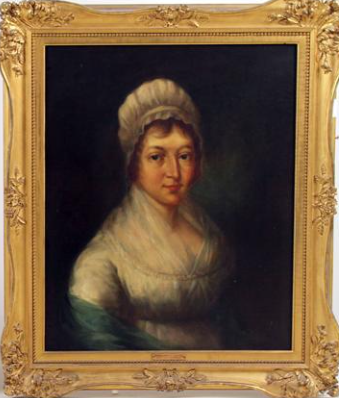
Early Life and Family Background
Hannah Lawrence was born in New York City into two deeply rooted colonial families. Her father, John Lawrence, came of the Flushing Quaker line that had long been associated with civic leadership, trade, and the early settlement of Manhattan and Long Island. Her mother, Ann Burling, was of a prominent Quaker family whose members were active in mercantile, civic, and religious life. Hannah was raised within the disciplined culture of the Society of Friends, among relations who valued modesty, plain living, and obedience to the Meetings that governed Quaker conduct.
In the years before the American Revolution, the Lawrences maintained a position of influence in New York’s affairs, and many of their kin enjoyed social standing in the city and in the rural estates across the East River. Hannah was given an education above the ordinary scope of young women of her day, and she early displayed a literary gift which her family encouraged, though always within the bounds of propriety expected of Friends.
A Quaker Upbringing in Troubled Times
The Revolution presented a severe trial to Quaker families. Friends, committed to peace and to obedience to lawful authority, sought to remain neutral. Yet in New York, where the British occupied the city from 1776 to 1783, neutrality itself appeared suspicious. Members of the extended Lawrence and Burling families responded in differing ways: some adhered strictly to peace testimony; others leaned toward the Patriot cause; and a few, particularly among the younger men, joined militias or engaged in acts that strained or violated Quaker discipline.
Hannah’s sympathies lay unmistakably with the American cause. Though she remained outwardly within the Society, her writings reveal a patriotic feeling and a critical eye toward the occupation of New York by British troops. Her verses, shared privately among trusted friends, showed a wit and boldness unusual in a young Quaker woman of her station.
Courtship
It was amid this tense and divided atmosphere that Hannah met Jacob Schieffelin, a young officer in the British service. Born in Germany and raised in Montréal, Jacob had been serving as a lieutenant in the British Army when he was captured by American forces. His escape to New York brought him into the circle of Loyalist households, and it was likely in such company that he first saw the young Quaker poet whose reputation for charm and intelligence had already attracted notice.
Jacob was smitten. He contrived to be billeted near the Lawrence home; then, with a boldness equal to his affection, he sought an introduction. Hannah was cautious. She noted in her journal, written with candor under the name “Lavinia,” her struggle between feeling and duty. But affection deepened quickly. “Opportunity almost hourly of discovering new merits,” she confessed, and her reserve yielded to attachment.
Yet her family, and the Society of Friends still more, would consider any union with a British officer not merely imprudent, but a breach of religious and communal duty. Hannah foresaw the storm that would follow. “The World, the world will condemn me for imprudence,” she wrote—a line that reveals at once her awareness of the consequences and her resolve to follow her heart.
A Secret Marriage and Its Consequences
Unable to secure her family’s consent, and knowing that Friends’ Meetings would not sanction a marriage to a British officer, Hannah chose the only course open to her conscience and affection: she married Jacob secretly at a friend’s house on July 29, 1780.
When the marriage became known, the reaction was swift and severe. Two days later, Hannah was formally disowned by the Meeting. For Friends, disownment was not an act of cruelty, but of discipline intended to preserve the unity and testimony of the Society. Yet in this instance, given the political passions of the time, the censure was particularly sharp. To many Friends, any alignment with the military—British or American—was a violation of the peace testimony. To marry a British officer in occupied New York, where Friends were already under scrutiny, was judged a grievous breach.
“The World Will Condemn Me”: Disownment and Departure
The disownment did not lessen Jacob’s devotion, nor did it diminish Hannah’s resolve. She had surrendered the approval of her family and Meeting for the sake of a union she believed right. Jacob, having obtained military orders to return to Canada, carried his bride with him. Their journey northward was difficult and sometimes perilous, for travel in wartime was uncertain, and Loyalist movements drew suspicion on both sides. Yet their marriage, begun in controversy, was strengthened by adversity.
In later years Hannah looked back upon this episode not with regret, but with a serene consciousness that she had acted according to her heart and judgment, though at a cost. Her writings after this period reflect a maturity of tone, in which affection, principle, and reflection are blended with a sure command of language.
Journey to Canada
The newly married couple travelled first to Montréal and Québec, then onward to Niagara, where Jacob received a post. Hannah kept a journal of the journey, written with a vividness and descriptive power that reveal her as a gifted observer of natural scenery. Her account of Niagara Falls, then little known to Europeans or Americans, is one of the earliest extended descriptions by an American woman.
A Passage from her Niagara Journal (c. 1780)
“A considerable River first appeared, rolling down a gradual descent, and forming with the rapidity of its motion over the broken rocks, as we approached nearer the bank which had been worn away to an amazing depth, we were struck with motionless astonishment at the stupendous object that met our view, neither our surprize nor the deafening noise we heard, would admit of exclamation, we therefore stood gazing in silent awe and admiration. The whole River rushing abruptly down a terrific precipice, and rebounding in shattered particles, from the violence of its fall on said rocks, to nearly the height from whence it had precipitated itself. The earth seemed to tremble at the shock, and our sinking hearts corresponded with the idea.”
Her reflections blend the sensibility of the 18th-century traveler with a personal spirituality that saw in natural grandeur a manifestation of divine power. The journal, still preserved among descendants, shows a cultivated mind capable of picturesque description and moral sentiment.
Among the British and Their Indigenous Allies
During their travels, Hannah encountered not only Loyalist society but also the Indigenous allies of the British, including the celebrated Mohawk leader Molly Brant (Konwatsi'tsiaienni), sister of Sir William Johnson’s consort, and a formidable figure in her own right. Hannah’s record of meeting Indigenous families reveals both her curiosity and her surprise at customs unfamiliar to a young Quaker woman raised amid the refinement of New York.
She described one evening scene by a wilderness fire:
“Their heads were shaved and painted, and their appearance altogether savage, but their manners were not at all so — I was shocked to see a scalp dangling by my side from one of their ears; it was the size of a dollar, and fixed in a wooden ring, while a lock of beautiful dark hair hang on his horrid shoulder. On my observing it, he pointed to his head and pronounced the word ‘Yankee.’”
The frankness of her account reflects the complex moral and cultural world of the northern frontier during the war, where European loyalties, Indigenous alliances, and American resistance were entangled.
A Poet Revealed
Only after her marriage—and after her removal from New York—did it become widely known among her intimates that before her elopement Hannah had been the anonymous author of several satirical verses sharply criticizing the conduct of British officers quartered in the city. These poems, circulated privately in manuscript and occasionally dropped in the streets near Trinity Church, displayed a talent for pointed wit.
The following verse, “Address’d to a Canary Bird,” though not political, is characteristic of her style: graceful, observant, and touched with moral reflection.
Address’d to a Canary Bird⟨/center⟩ ––––––––––––
Pensive warbler cease thy fear Charmer there’s no danger near Rest contented, quite secure From the Ills thy race endure. If you wing the open air Ah! what woes await you there! … Lovly warbler, rest content, All those cruel Ills prevent.
(The spelling and punctuation are preserved as written in the original manuscript.)
Her most daring poem, “On the Purpose to which the Avenue Adjoining Trinity Church has of late been dedicated, 1779,” lampooned the airs and idle behavior of British officers in occupied New York, and especially their habit of using the cemetery walk of Trinity Church as a fashionable promenade. The satire was bold for a young female Friend in wartime, and though she concealed her authorship under the name “Mathilda,” her verses were whispered about with admiration.
From “On the Purpose to which the Avenue Adjoining Trinity Church has of late been dedicated, 1779” ––––––––––––
This is the scene of gay resort,
Here Vice and Folly hold their court,
Here all the Martial band parade,
To vanquish — some unguarded Maid.
Here ambles many a dauntless chief
Who can — oh great ! beyond belief,
Who can — as sage Historians say,
Defeat — whole bottles in array!
Heavens! shall a mean, inglorious train,
The mansions of our dead profane?
A herd of undistinguish’d things.
That shrink beneath the power of Kings!
Sons of the brave immortal band
Who led fair Freedom to this land,
Say — shall a lawless race presume
To violate the sacred Tomb?
And calmly, you, the insult bear —
Even wildest rage were virtue here.
Shades of our Sires, indignant rise,
Oh arm! to vengeance, arm the skies.
Oh rise! for no degenerate son
Bids impious blood the guilt atone,
By thunder from the ethereal plains.
Avenge your own dishonored Manes,
And guardian lightnings flash around,
And vindicate the hallow’d ground!
Her poems circulated widely enough that, had her authorship been known at the time, she might have drawn unwelcome attention from British authorities — and stronger censure from Friends.
Return to New York
At the close of the war, Hannah and Jacob returned to New York, where Jacob entered mercantile life and, in conjunction with his brothers-in-law, developed property north of the settled city. The Lawrences, Schieffelins, and Buckleys were among the early planners of the area later known as Manhattanville. There the couple established a country residence, and Hannah resumed a more settled domestic life, though not again within the Society of Friends. She had forfeited membership in the Meeting, but not her moral standing among many who respected her character, talents, and devotion to family.
The Schieffelins became leading figures in the social, commercial, and civic life of New York. Jacob prospered in the pharmaceutical trade (later known as Schieffelin & Co.), and the family remained identified with culture, philanthropy, and refinement. Hannah’s literary inclination, awakened in youth, survived in her children and descendants.
Later Life and Legacy
Hannah lived to the age of eighty, retaining to the last a cultivated mind and affectionate nature. Though the boldness of her early life—her secret marriage, her disownment, and her satirical verses—might have seemed to foreshadow a restless career, hers was in fact a life of domestic fidelity, maternal care, and quiet influence. Her writings, when read today, reveal not only a lively poetic gift but also the inner world of an American woman of sensibility living through revolution and exile.
Her descendants preserved her poems and journals, and they provide a rare female voice from the Revolutionary era: tender, spirited, observant, and morally reflective. Hannah’s Niagara account is valued as one of the earliest American women’s descriptions of the Falls, and her poem on Trinity Church yard remains a vivid lampoon of British occupation manners.
She occupies an unusual place within the Lawrence family: a woman of Quaker upbringing who, for love, defied her Meeting and cast her lot with a soldier of the opposing side; a poet who wrote patriotic satire while living under British rule; and a traveler who recorded, with freshness and awe, the grandeur of the American wilderness before it was widely known.
Assessment
Hannah Lawrence Schieffelin stands as one of the most compelling women of her generation within the Lawrence family. Her life illustrates the tension between Quaker discipline and personal conviction during the Revolution, and her writings enrich American literary and social history. She was a figure of sensibility, courage, and originality, whose voice—once private—now offers a window into the emotional and moral landscape of the era.
Modern scholars regard Hannah Lawrence Schieffelin as a figure of uncommon interest among Revolutionary-era American women. Her writings offer a rare female perspective on occupied New York, Loyalist exile, and the moral dilemmas that divided Quaker families during the war. Her Niagara journal is now recognized as one of the earliest descriptive accounts of the Falls by an American woman, notable for its blend of picturesque observation and spiritual reflection. Her satirical verses, privately circulated under a pseudonym, reveal that women could participate in political expression not through arms but through wit and moral protest. For historians of women’s history, Quaker studies, and early American literature, her life and work illuminate the tensions between faith, family loyalty, personal conscience, and national upheaval.