Keene, Foxhall Parker (1867–1941)
Early Life
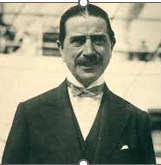
Foxhall Parker Keene, known as “Foxie,” was born in San Francisco, where his father James R. Keene had made a fortune in the Nevada Comstock silver mines. The Keenes were symbols of Gilded Age wealth and volatility—James making and losing vast fortunes through speculation. By 1874 the family had moved east, buying a grand house on Bellevue Avenue in Newport, Rhode Island, only to lose it to fire and financial ruin.
Foxhall’s youth was already marked by risk-taking. At thirteen he won a pigeon-shooting contest in Babylon, Long Island, turning a five-dollar wager into $565—a sign of his lifelong taste for competition and gambling. He was educated privately and at Harvard, where he cultivated sportsmanship and notoriety in equal measure.
Harvard and “Bloody Monday”
At Harvard, Foxhall’s impulsive temperament got the better of him. He was suspended after organizing a riotous “Bloody Monday” party, a traditional brawl-turned-drinking-festival between freshmen and sophomores. The Boston Evening Transcript in 1891 lamented that wealthy “roistering newcomers” like Keene gave “punches” to all comers in both senses of the word.
After reinstatement, Keene joined the football team but ruptured a kidney during practice. Undeterred, he trained for Harvard’s lightweight boxing championship, befriending his classmate Jack Lawrence of Flushing, Long Island—his first link to the Lawrence family. A bout of measles kept him from the ring, and he soon left Harvard altogether.
Career and Sporting Life
Foxhall Keene’s athletic career was astonishingly diverse. He became one of America’s leading polo players, representing the United States in 1887 against England and winning Olympic gold. He also competed in the U.S. Open golf championship, raced thoroughbreds, drove in early automobile competitions for the Gordon Bennett Cup, and helped found the National Steeplechase Association.
In his memoir Full Tilt, Keene recounted countless mishaps with characteristic bravado—falls from horses, polo injuries, concussions, and near drownings. The press chronicled his accidents with grim enthusiasm: “Foxhall Keene Hurt,” “Foxhall Keene Badly Injured,” “Foxhall Keene Breaks Collarbone,” and “Foxhall Keene Injured Seriously While Hunting.” In 1913 a newspaper summarized: “He has twice been carried from the polo field for dead, blown up from an automobile, nearly drowned on a sinking yacht, dragged by runaway horses and bitten by dogs.”
Marriage and Separation
On December 11, 1892, Keene married Mary Lawrence, widow of Frank Worth White, in a quiet ceremony at her father Newbold Lawrence’s home on Twenty-Second Street in Manhattan. The couple soon sailed for England, where they lived among the hunting set in Leicestershire. Keene hunted with the Meath in Ireland and endured a near-fatal fall that left him bloodied and half-conscious, but still managed to ride eight miles home.
The marriage, however, could not endure his relentless risk-taking. Mary had to face endless headlines like these:
Keene Hurt
Foxhall Keene Hurt
Foxhall Keene Badly Hurt
Foxhall Keene Dangerously Hurt
Foxhall Keene Hurt When Thrown by Horse
Foxhall Keene Hurt Again in Polo Game
Foxhall P. Keene Hurt during a Hunt Meeting
Foxhall Keene Sustains Concussion of Brain
Foxhall Keene Injured
Foxhall Keene Injured Seriously While Hunting
Foxhall Keene Injured when Pony Stumbles
Foxhall Keene Badly Injured May Never Ride Again
Foxhall Keene Noted Horseman is Injured
Foxhall Keene Breaks Collarbone
Foxhall Keene Breaks Ankle
Foxhall Keene in Crash
By 1904 Mary had returned to her father’s house in Bayside, Long Island, and in 1909 obtained a discreet divorce on the grounds of abandonment. Friends attributed their separation to “a difference of temperament.” Mary, horse-loving and steady, had grown weary of a husband who treated every day as a new test of courage.
Character and Context
Foxhall Keene embodied the Edwardian cult of masculine daring celebrated by Theodore Roosevelt’s “strenuous life.” At a time when social critics fretted over effete men and “neurasthenia,” Keene’s fearless physicality seemed a tonic of virility. Yet his constant need for challenge also reflected a deeper anxiety—what he once called the “compulsion to prove oneself alive.” He was both a product and a victim of an age that equated manhood with peril.
Legacy
Despite his follies, Foxhall Keene was universally acknowledged as one of the greatest all-around amateurs in American sport. The New York Times called him “the most accomplished sportsman in the world.” He won an Olympic gold medal in polo, bred and raced thoroughbreds, and shaped the culture of equestrian competition on both sides of the Atlantic.
He died in 1941, leaving behind no descendants but an enduring legend—of courage verging on recklessness, elegance shadowed by obsession, and the eternal quest of men like him to be noticed, tested, and never forgotten.
Postscript in Maryland
“In 1920, American sportsman Foxhall P. Keene threw a party for 700 guests at his Monkton home on the eve of the first Foxhall Farm Trophy Team Chase. Keene created the race, held on the grounds of his home, Foxhall Farm, to encourage participation in timber racing.
On a March evening 86 years later, Taylor and Laura Pickett, the current owners of Foxhall Farm— now called Andor Farm— celebrated the 2006 race by throwing a party that sought to replicate Keene’s inaugural festivity.
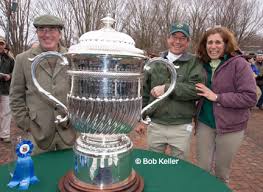
Laura Pickett called on Brian Boston, executive chef at The Milton Inn, and Carol Westerlund, owner of Larkspur Floral Design, to create a glamorous, Gatsby-esque atmosphere that would allow guests to “walk up the path and through the door and feel that they were back in the 1920s,” says Westerlund, who bedecked the Pickett home with roses, carnations and calla lilies. Female guests were given gardenia corsages at the door, while male guests donned white carnations. “It was a decadent time. We were trying to convey that,” says Boston, who baked a Lady Baltimore cake, among other fare, for the occasion. The original sterling silver Foxhall Cup was on display next to a photo album illustrating the history of the race.
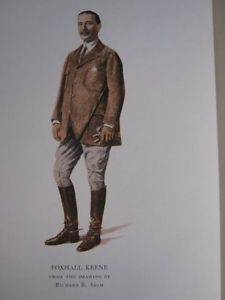
Full Tilt: The Sporting Memoirs of Foxhall Keene.
The Derrydale Press, 1938.