Foxhall Farms (also known as Loafer’s Lodge and Andor Farms)
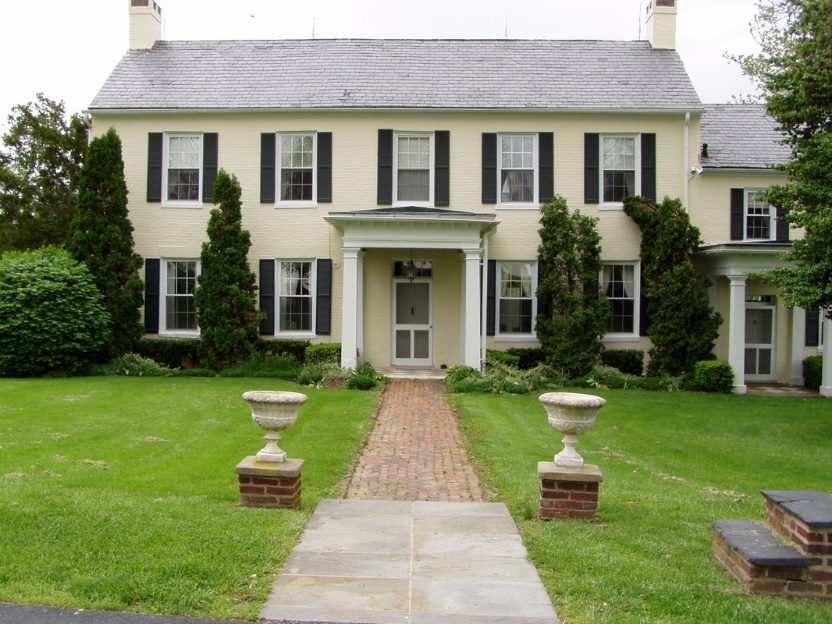
Exterior and Interior
The house at Foxhall Farms (now Andor Farm) is a substantial early-20th-century country residence, sober and classical in character rather than ostentatious, well suited to Maryland hunt country. The exterior presents a long, symmetrical façade with a central entrance, restrained classical detailing, and a low, spreading roofline that emphasizes horizontality and permanence. Set within rolling pastureland, the house was designed to look outward toward the hunt country, functioning as a commanding yet comfortable sporting seat rather than a showplace mansion.
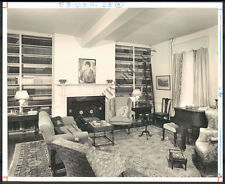
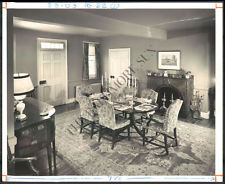
The interior was planned for hospitality and large gatherings, with generous public rooms, high ceilings, and fireplaces that made the house equally suitable for winter hunt weekends and large entertainments. Period photographs show spacious living and dining rooms furnished in a conservative country-house style, emphasizing comfort, durability, and sociability over formality. These interiors supported Foxhall P. Keene’s legendary house parties and race-day gatherings, reinforcing the house’s role as both a domestic residence and the social heart of the Foxhall Farm sporting world.
History
In 1919 the estate was purchased by Foxhall Parker Keene (1867–1941), one of the most celebrated American sportsmen of the late Gilded Age and early twentieth century. Keene was an eight-time national polo champion, an Olympic gold medalist in polo at the 1900 Paris Games, a Thoroughbred owner and breeder, an accomplished foxhunter, and an international sporting figure who maintained residences in England (notably near Melton Mowbray) as well as in the United States. He named the Monkton property Foxhall Farms after himself and developed it as a country house devoted primarily to equestrian pursuits rather than agricultural production alone.
The house functioned as a social and sporting center. Keene was known for large house parties and lavish hospitality; on one occasion, when the house caught fire while he was entertaining twenty-eight guests, the guests themselves reportedly helped extinguish the blaze. The estate became emblematic of the Edwardian sporting lifestyle transplanted to Maryland hunt country, blending elite leisure, horses, and spectacle.
After Keene’s active ownership period, the property passed through several hands and acquired the informal name Loafer’s Lodge, reflecting the recreational and sporting culture of the area. In the later twentieth century it became known as Andor Farm, a name attributed to owners Barbara and Henry Obre (derived, humorously, from checks made out to “Barbara and/or Henry Obre”). In the twenty-first century the property has operated as Andor Farm LLC, a working equestrian facility focused on breeding, training, and hunt-country sport, with long associations to Maryland horse families and trainers, including the Pickett family. The historic house and landscape remain integral to the identity of the farm amid continued equestrian use.
The Foxhall Farm Cup Team Chase
Foxhall Farms achieved national sporting renown through the creation of the Foxhall Farm Trophy Team Chase, inaugurated by Foxhall P. Keene in 1920. Conceived as a timber race run over natural hunt country, the event was intended to promote foxhunting skills, encourage point-to-point participation, and develop both horses and riders in true hunt fashion. Unlike conventional races, it was a team chase, with hunt teams starting together and galloping over a long cross-country course of roughly four to four-and-a-half miles, negotiating numerous stout timber fences.
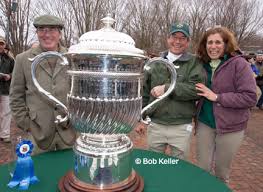
The inaugural running was a major social event. Keene hosted a party for approximately 700 guests on the eve of the race, underscoring the blend of sport and spectacle that characterized the occasion. Thousands attended the race itself, which drew teams from recognized hunt clubs and was described as thrilling, chaotic, and distinctly amateur in spirit. Central to the event was the Foxhall Farm Cup, a massive sterling silver trophy—one of the largest in American sport—holding approximately 82 quarts and weighing around 50 pounds, engraved over time with the names of winning teams.
After its early prominence, the race lapsed for decades, becoming part of hunt-country legend rather than an annual fixture. Its revival in the modern era reaffirmed its cultural importance. In 2006, the race was celebrated again at the property—by then known as Andor Farm—accompanied by a consciously historical, Gatsby-era themed party hosted by the contemporary owners, evoking Keene’s original festivities. The original Foxhall Cup was displayed alongside historical photographs documenting the race’s origins.
Since its revival, the Foxhall Farm Cup Team Chase has been held periodically, often as an early-season highlight in Maryland’s timber racing calendar. It is closely associated with the Elkridge-Harford Hunt and draws teams from Maryland, Pennsylvania, Virginia, and beyond. Recent runnings have featured courses of approximately four miles with twenty-six or more timber fences, and the event is widely regarded as a living survival of Gilded Age steeplechasing traditions—hunt-oriented, amateur, and communal—distinct from more formal fixtures such as the Maryland Hunt Cup.
Today, while Andor Farm functions as a modern working horse farm, the Foxhall Farm Cup endures as a symbolic link between contemporary Maryland hunt country and the grand sporting culture established there by Foxhall Parker Keene in the early twentieth century.