Lawrence, Sarah Ray “Dimple” (1884–1902)
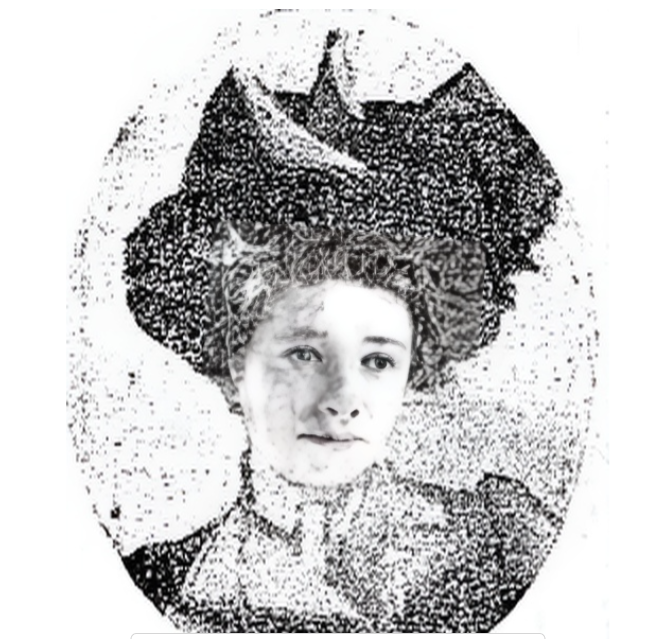
Kinship: the seventh cousin three times removed of the post-World War II Smith generation.
Sarah Ray Lawrence seems to be the only member of the extended family who was either an alleged victim or alleged perpetrator of a murder. Therefore, I am including a detailed analysis, almost hour by hour, of the case.
Early Life
Dimple was her childhood name which stayed with her. Dimp, as everyone knew her, grew up in Lawrence, Long Island, which had been founded by her relatives. Her family later lived in Hempstead. She briefly attended a convent school in Mount Vernon.
Her somewhat mysterious death led to a newspaper feeding frenzy and several thousand articles nationwide, because the principals were from New York Society (not really), and involved wild young things, sex, and maybe murder.
Criminis personae
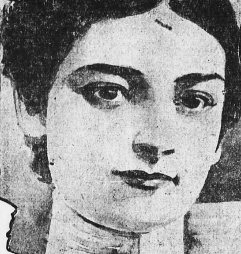
Sarah Ray “Dimple” Lawrence, 17. She was described as an “heiress,” and at home on the water. Her father at the trial said she was a good swimmer, although others said she could not swim.
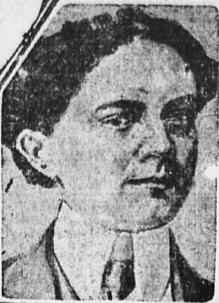
Clarence T. Foster, 23, lived in Center Moriches and in Good Ground in the summers. He was short, muscular, and dark, and an expert waterman, During the summers he sailed the house boats of local hotels. He was so expert that he was not allowed to compete in amateur yachting contests. He was a station agent and hotel clerk at Good Ground. He married Lelia Penney in March, 1902, over the strenuous objections of his bride’s parents.
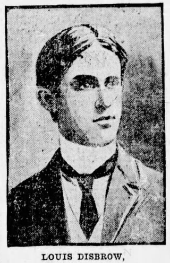
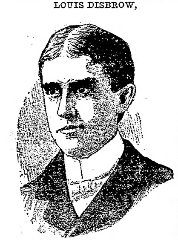
Louis A. Disbrow 25, was also “wealthy” but came from a non–old–money background. His father was a Fulton Market meat dealer and later a fertilizer manufacturer. He summered in Good Ground. There he met the sisters Edna and Jessie Evertt, whose father kept a livery stable in Jamaica. Around 1898 he married Jessie, who was then 15 years old. Disbrow had been working as a bookkeeper for Swift and Co., but quit his job when the couple went to live with her parents. They were soon separated when his father–in–law insisted that Disbrow find a job. Before he left the Everett household, he had an altercation with another man about his wife and shot the man in the arm. He spent summers in Good Ground, and he and his brothers raced bicycles on the Long Island roads.
Dr. John Nugent, Coroner in Good Ground
Livingston Smith, District Attorney for Southhampton
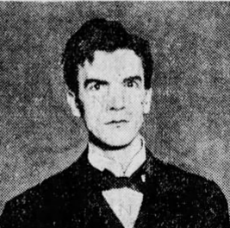
Rowland Miles, a political rival of Livingston Smith and the attorney for the accused Louis Disbrow
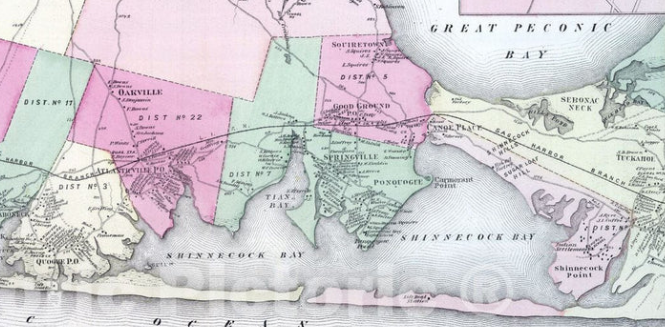
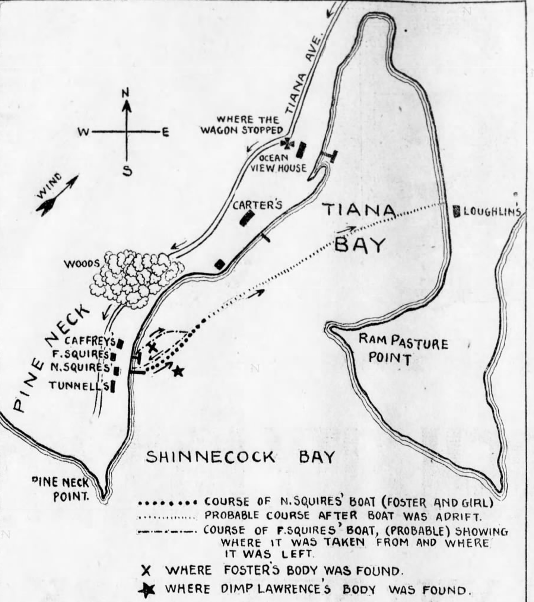
The Vicinity of the Two Deaths
Chronology
March 9, 1902. Clarence Foster married Leila B. Penney at the Methodist parsonage in Good Ground, Long Island. Her parents had strenuously opposed the marriage and did not learn of it until the witnesses told them.
Second week in May, 1902. Mrs. Lawrence and Dimp move into the Ocean View House in Good Ground, on Tianna Bay, an offshoot of Shinnecock Bay. They had spent summers here previously.
Nearby was the home of George Foster, to which Clarence Foster brought his bride for their honeymoon. But she was in poor health, and Clarence took many outings with Dimp.
End of May, 1902. Louis Disbrow arrives from Richmond Hill and took a room at Ternell’s Hotel. He too had been in the town in previous summers.
End of May, 1902. Dimp disappears from the hotel. Mrs. Lawrence summoned her husband from New York. His reply, it was said, was that he was tired of doing that sort of thing. Dimp returned and said she had been staying with relatives and friends. Foster was gone from Good Ground at the same time. It later turned out they were at Coney Island and Rockaway Beach, where they had their pictures taken together. One picture was found in Foster’s clothes after he was drowned. Desbrow was also a frequent visitor. Mr. Lawrence expressed strong disapproval of Desbrow.
Early June, 1902. Disbrow was staying at Ternell’s Hotel in Good Ground. Opposite his room was the room of Anna Pearsall. Another Pearsall was also in the same hotel
Sunday June 1, 1902. Miss Pearsall met Dimp at the hotel. Dimp had been out sailing and gotten soaked and asked to borrow a dry coat.
Monday, June 9, 1902. Foster arrived at the Ocean View Hotel and asked to take Dimp for a drive. Her mother initially said no, but eventually consented, if the Pearsalls went along. But the Pearsalls, mother and daughter, never went with them.
Foster and Dimp met Disbrow and dined with him the Hampton Pines Clubhouse, to which Disbrow had telegraphed several days previously to arrange a dinner for three.
Monday, June 9, around 11 PM. The three leave the Hampton Pines Clubhouse.
Tuesday, June 10, after midnight. The three drove from the Hampton Pines Clubhouse on Tiana Ave., which went past Ocean View House. Mrs. Lawrence heard a rig and went outside. She called out to her daughter, and she thought she saw her daughter and two men in the carriage, but without answering they drove swiftly by to Pine Neck Point, and went to Ternell’s Hotel, where Disbrow had a room.
Tuesday, June 10, small hours. Miss Pearsall about 2–3 AM heard Dimp’s voice and the familiar voice of Disbrow and another male voice. That voice said
“Well, Lou, I guess I’ll say goodbye.”
Disbrow responded: “All right, Clarence, tell ‘Dimp’ goodbye for me.”
Pearsall then heard a woman’s voice in the room.
But within a few minutes, 15 at most, Foster returned, and the two men began speaking heatedly, then they argued, and then she heard a scuffle and breaking china. Then one man left and slammed the door.
Pearsall then heard a man and woman talking, and heard the word boat and then heard the woman say, “All right, I’ll go if Lou goes too.” Pearsall watched the two men and the girl walk to the bayside. The girl seemed cheerful and there was no evidence of compulsion. The landing where the rowboat was kept was about 100 yards from the hotel. It was about a mile’s walk from Ternell’s Hotel to the Ocean View Hotel. There was no breeze on the bay; the wind did not pick up until 5:00 A.M.
Tuesday, June 10, 4:30 AM. John Carter, 19, who slept in a house 20 yards from where the skiff he was using was moored, later said he got up to go to work and found the boat gone. He saw “footprints on the sand near where the boat had been, these footprints indicating that there had been a violent conflict on the beach that night. He also observed that the footprints of a woman were intermingled with those of the men.” Carter said the skiff was leaky and could not have lasted half an hour with two people in it.
Tuesday, June 10, dawn. Pearsall was awakened by the front door of the hotel opening and heard Disbrow greet her dog which was in the hallway.
Tuesday, June 10, breakfast. Pearsall saw Disbrow at breakfast. He seemed nervous.
Tuesday, June 10, morning. Disbrow returned his horse and rig to the liveryman Wells and paid with a bad check, which he had been doing all over town. Wells mentioned to Disbrow that Mrs. Lawrence had reported her daughter missing. Disbrow said “I drove Clarence and Dimp to the Ocean View Hotel and there I left them. I drove this rig back to the Ternell House, and hitched the horse for the night.” Wells said that Disbrow looked normal and did not appear to have been in a fight.
Tuesday, June 10, 1902, 10:00 A.M. William Walton was at the station in Good Ground and expressing a wish to a friend that he could go to Quogue for the day but lacked the money. Disbrow came up and offered him the money for the fare. Foster was a station agent there; he had not shown up with the keys and the other agent Topping asked where Foster was. Disbrow told him that he had left Foster asleep after their party of the previous night.
Walton and Disbrow took a train to Quogue. There Disbrow passed another bad check to hire a rig to go to Eastport. There he sent a long telegram to Mrs. Lawrence : “I am sure that Dimp and Clarence are together, and I will not rest until I find them.”
Tuesday, June 10, morning. A flat–bottomed skiff belonging to the hotel was missing. It was later found adrift and half full of water. One broken oar was also found in it.
Tuesday, June 10, morning. There was another boat that had been beached near the missing skiff. Its owner, Frederick Squires, on Monday morning went to look for it, and discovered it had been moved to a dock near the Squires house. It had been beached only slightly and the footprints of one man led away from it.
Tuesday, June 10, late morning. Walton later said that he and Disbrow took the train to Quogue; there Disbrow cashed a check for $20 (it was bad); they hired a buggy to Eastport. Disbrow went to the station and sent a message to his estranged wife Jessie to meet him. She and her sister Edna drove to the station. They later reported that “he looked terrible. His face was scratched up and bruised. His clothing torn and he looked like he had been in a regular fight.” Disbrow and his estranged wife went off for a conversation. The wife’s family said this was what happened, but refused to elaborate. However, the father later said that the report that his son’s face was scratched and it looked like he had been in a fight was false.
Tuesday, June 10, afternoon and evening. Walton and Disbrow drank together and then went to a boarding house where they shared a room for the night.
Wednesday, June 11, 1902, 3 A. M. Walton later reported that he was awakened by Disbrow’s pacing the room. Walton asked, “What’s the matter?’ Disbrow replied: “I’m heartbroken…Foster won my girl away from me.” Disbrow then related how at Ternell’s Hotel, Foster called him to come down. “We had a fight on the beach, and Foster choked me. He did me bad. He was too much for me. Then he and Dimp went off in a rowboat, leaving me there.”
Wednesday, June 11, 1902, during the day. Dimp’s cap and lap robe were found halfway between Ocean View and Ternell’s; also found was a bottle of whiskey.
Saturday, June 14, daybreak. John Caffrey of the Life Saving Station was surveying the shore to see any damage from the last night’s gale. Near the shore, about 300 yards from where the rowboat had been moored, he saw the body of a man. He retrieved it and recognized it as Foster; it was discolored and for severe abrasions above the left eye.
Saturday, June 14, 8:00 A.M. The Coroner, Dr. John Nugent arrived and looked at the body. He did not examine it carefully, he later explained, because of the state of decomposition. Dr. T. T. Chattle was asked by newspapermen to look at the body. He saw an abrasion over an eye which could have been due to natural causes, as drowned bodies frequently strike against obstructions.
Shortly after that, the body, still wearing the clothes it was found in, was interred in the Methodist cemetery in Good Ground.
Saturday, June 14, 1902, 10:00 A.M. Willis Wells, the liveryman, was driving a party along the shore and saw another body about 50 yards from where Foster’s body was found. He recognized it as Dimp’s; he said there was not a mark on the body. He dissuaded Mrs. Lawrence from viewing it and sent it to an undertaker’s. Coroner Nugent returned and said he could not make a determination of accident or murder, but wanted to question Disbrow.
Saturday, June 14, 1902. Coroner Nugent rules the deaths accidental drownings. Foster relatives claim the pair were murdered. Foster’s mother claimed that Disbrow had kept her son drunk for two weeks before the night of his death.
Saturday, June 15, 1902. A man resembling Disbrow committed suicide by jumping off the Brooklyn Bridge. It was some time before it was determined it was not Disbrow.
Monday, June 16, 1902. Disbrow and his brothers showed up briefly at his parents’ house, but Disbrow went off again.
Monday, June 16, 1902. William Walton, 25, a painter in Good Ground, told the Coroner Dr. Nugent that he had spoken to Disbrow at Eastport. Disbrow told him there was a violent fight on the beach over the girl Dimp and that he, Disbrow, was worsted. Walton had told this story to some of his friends on Saturday night. Nugent said the story was significant, but that he did not know who the local district attorney was or how to contact him.
Monday, June 16, 1902. Charles Fremont Foster the father of Clarence Foster made a formal request that his son’s body be exhumed and an autopsy performed.
District Attorney Livingston Smith decided the case needed investigation and turned it over to the Pinkertons
Wednesday June 18, 1902. The body of Clarence Foster was exhumed. Coroner Nugent and Dr. Benjamin performed an autopsy and said there was no evidence of foul play. But the advanced decomposition of the body would have obliterated any cuts or abrasions.
Disbrow was said to have issued a statement through a friend. He admitted he had quarreled with Foster on the beach over Dimp. They fought and Foster knocked him senseless. When he came to Foster and Dimp were gone; he assumed they had eloped. He returned to his hotel and thought he should leave town soon to escape the consequences of all the bad checks he had passed. The statement was not confirmed.
Miles, Disbrow’s lawyer, issued a statement that his client would not appear at an inquest unless legally compelled.
District Attorney Livingston said there was not enough evidence to have Disbrow arrested on suspicion of murder.
Disbrow’s father and his attorney Miles paid off all the bad checks that Disbrow had passed in Good Ground, removing a reason to arrest Disbrow.
Thursday, June 25, 1902. Disbrow’s wife tries to serve papers on him for divorce, but his attorney, Rowland Miles, returns them.
Friday, June 27, 1902. A warrant was issued for Disbrow on suspicion of murder.
Saturday, June 28, 1902. Miles agrees to produce Disbrow on Tuesday morning.
June 30, 1902. Newspapers report that Dr. Chattle had examined Foster’s body when it was found. Chattle discovered a wound over the left eye which could have caused a concussion. Newspapers reported that when Miss Lawrences body was discovered, her face but not the rest of her body was black; that might indicate she had been strangled. This supposed fact was never brought up in court.
Tuesday, July 1, 1902. Disbrow arrived in Southampton with his attorney Miles and surrendered himself. The court and the district attorney were unprepared.
September 25, 1902. The Grand Jury of Suffolk County indicted Disbrow on 6 counts of murder of Clarence Foster. He pled not guilty. He was jailed.
Monday, January 12, 1903. The trial of Disbrow began.
The prosecution’s case was:
Foster and Disbrow, both married men, were in love with Dimp Lawrence.
They quarreled over her in the hotel.
They fought over her on the beach.
Disbrow, Foster, and Dimp got into the leaky boat and rowed toward Dimp’s hotel.
They abandoned it and got into the second, better boat. (How?)
Only one man returned to shore.
Prosecution witness Dr. John H. Benjamin testified that the condition of the body indicated to him that Foster was dead when he entered the water.
Foster had a cut above his eye when his body was found.
Disbrow left town and behaved very strangely for several days.
There was testimony about the fight on land but no eyewitness testimony about what happened afterwards.
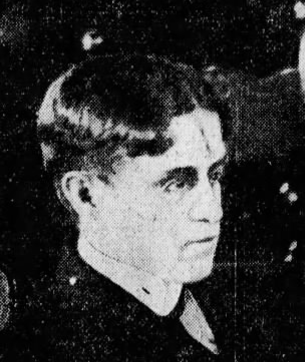
Disbrow in court
The defense responded:
Under cross examination Dr. Benjamin he also said that medical experts would differ on how to interpret the condition of Foster’s body.
Dr. William Scovill, the Disbrow family physician, testified that he had treated Disbrow on April 17 for a fractured arm, and in May for fractured ribs. When Scovill saw Disbrow on May 17, Disbrow was still disabled and could not raise his hand above his shoulder. It would take six months for his arm to heal. The accident was mentioned in a newspaper story of April 26, 1902.
Harold Squires testified he had a fight with Foster the day before his death and hit him above the eye.
Miles reminded the jury that this was a capital case and only circumstantial evidence tied Disbrow in any way to the two deaths, and that in such cases the laws of New York instructed the jury to give every benefit of the doubt to the defendant.
Miles also denounced the yellow press for circulating falsities.
Friday, January 16, 1903, afternoon. The jury deliberated 40 minutes and returned a verdict of Not Guilty. The town of Southampton had not had a conviction for murder in 266 years.
Saturday, July 26, 1902. Mrs. Disbrow is granted an annulment of her marriage to Louis. The grounds were that she was only fifteen years old at the time of the marriage, which is under the age of consent. She had already resumed her maiden name Everett and her son was known as Everett.
The case was kept in the public eye for a while because of a series of deaths of the persons involved in it.
January 31, 1903. Louis Foster, age 19, the brother of Clarence Foster, disappeared while oystering on Tiana Bay. His boat was laden with oysters and a gust apparently capsized it.
February 2, 1903. Louis Foster’s body was found in the bay. His boots were off, indicating that he had removed them and attempted to swim to shore.
February 2, 1903. Louis’s and Clarence’s grandfather, Edward H. Foster, age 88, already ailing, died of shock upon receiving the news of his grandson’s death.
March 31, 1903. Charles T. Bellows, a cousin of Clarence Foster, while oystering drowned in Tiana Bay within sight of his home.
April 1, 1903. John Smith Lawrence II, the father of Dimples Lawrence, had gone into a rapid decline after the death of his daughter; he died of asthma.
August 8, 1903. The widow of Clarence Foster, Lilia Belle Penny Foster, married George B. Brown in Bellport, Long Island.
December 17, 1904. Mrs. John Smith Lawrence (Sarah Ray Wynn), age 40, died in Philadelphia.
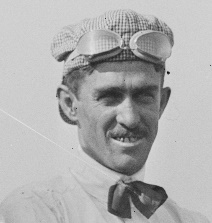
Louis Disbrow (1876–1939) after the trial was hired as a chauffeur mechanic for Joan Newton Cuneo, a race car driver. Disbrow became a professional race car driver and raced in four Indianapolis 500s. He married Mary Meighan and died at the age of 62 in 1939.
Misinformation c. 1900
There were thousands of articles all over the country about this sordid affair. These were the Gilded Youth of Society, maybe in a ménage à trois, misbehaving and even murdering.
The Brooklyn Eagle was a reputable paper, and on June 19 it decided it was necessary to preach a little.
\ “The first province of a newspaper is to print the news. This is a truism which, in these days of sensation–mongering, may be repeated definitely to the benefit of all and to the detriment of none. Nothing is gained by the distortion of fact or by the magnification of the unimportant.
“Certain newspapers … are more than anxious that the lamentable tragedy at Good Ground should turn out to have been a double murder.
“But supposing that Clarence Foster and Sarah Lawrence were murdered, what is the use of lending a fictitious interest to the case by misstatement. Foster has been described as an ‘amateur yachtsman’ of such extraordinary skill that he was invariably barred out of all club contests on Shinnecock Bay. Miss Lawrence was described as a ‘great beauty’ and an ‘heiress.’ Both were ‘fearless’ and ‘skillful’ swimmers; therefore they could not have been accidentally drowned, and so on until the unintelligent reader lost sight of the most obvious explanation of the miserable affair, that a drunken baymen afloat in a leaky boat was unable to save either himself or his companion from the effects of an unexpected capsize. Foster was not an ‘amateur yachtsman,’ with all the social status that the name implies. He made his living largely by sailing as the servant of others, and for this reason, and not because he was so expert at handling tiller or sheets, was he debarred from competitions limited to those who were amateurs within the accepted meaning of the term. He was just an ordinary swimmer, too, and Sarah Lawrence could not swim a stroke, so that death by drowning was quite possible, and, in fact, quite likely, under the known circumstances of the case. Miss Lawrence was not a beauty and she was not an heiress, and the attempt to make her either or both belongs to the category of misdirected effort mainly responsible for the delusion of that part of the public which daily invests faith and money in the purchase of yellow journals.”
The most egregious example was the story that got circulated about a supposed eyewitness: “A bayman named Otto Schwanecke later said that he was sleeping in a boat when he was awaked by the cries of men. From the cockpit of his catboat he saw two rowboats on the water. Each contained a man; they were fighting. One contained a woman; she was screaming for her companion to sit down before he capsized the boat, Schwanecke then saw an oar flash across the woman’s head and hit her companion on the forehead. He fell into the water. Schwanecke cowered from fear in the cockpit. When it was quiet he looked up and saw an empty boat floating. Shortly he saw a man rowing toward shore; he beached his boat and ran into the trees.”
There was no such person and no such catboat. The story is a total fabrication.
Disbrow was tried and acquitted after a 40–minute deliberation by the jury. His doctor testified that he had a serious arm injury and had difficulty moving that arm.
But he had been tried and convicted in the press, and the millions who had read it never got the truth, and probably assumed that Society had protected its own.
My Take
I suspect that on the night of the drownings, Disbrow knew that Foster and Dimps had died, and that he would be blamed for it, if only because of the fight that immediately preceded their deaths. Perhaps he saw the boat sink and heard cries for help; with only one good arm he could not row out to them.
Disbrow decided to get out of town before he was questioned. He met with Rowland Miles, his lawyer, who told him to say nothing, because any inconsistencies would be pounced upon; Miles also told him not to return to Good Ground unless he was legally compelled to do so.
Miles also told him not to testify at the trial: there was no need to, and it would only open him to cross examination.