Lawrence, John Smith (1818–1880)
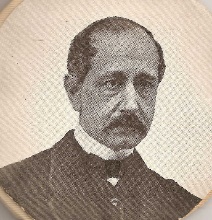
He died at his residence, 36 East 19th Street, New York City, in 1880.
Contemporary Obituary
JOHN S. LAWRENCE
Mr. John S. Lawrence, eldest brother of Judge Abraham R. Lawrence, of the Court of Common Pleas, died yesterday morning, at his late residence, No. 36 East Nineteenth-street, in the sixty-second year of his age. He was descended from the Commodore Lawrence who, in dying, uttered the famous command: “Don’t give up the ship!” His father, John L. Lawrence, was at one time Chargé d’Affaires, and subsequently United States Minister, at Sweden, and was a United States Senator at the time of his death. John S. Lawrence was born at the family country seat, Mastic, Long Island. He was educated at Columbia College, and afterward studied law. He began to practice in this City in his twenty-first year. For many years he was associated with his brother-in-law, Mr. Horn, in Wall-street. In 1864 the firm was dissolved, and Mr. Lawrence took offices where the Boreel Building now stands, afterward removing to No. 150 Broadway. His ability was recognized as very great, and of late years he has acted as Referee by consent in many cases of extreme importance. His decisions in these cases are scattered throughout the standard text-books as embodying the correct principles of law. It is only a few days since the Legislature appointed him one of the Commissioners to revise and review the local assessments for improvement, in conjunction with the Mayor and Controller. He was a member of the Bar Association, the State Bar Association, the Law Institute, the Medico-Legal Society, and other similar organizations. In politics he was a Democrat, but would never accept office. He was offered and refused the nomination for Judge of the Court of Common Pleas, now occupied by Judge Van Hoesen. He leaves two sons and two daughters. Two other brothers — Charles W. Lawrence, of the Controller’s office, and William T. Lawrence — survive him.”
Editorial Note on Obituary Claims: The obituary reflects how contemporaries viewed John Smith Lawrence and his family, but it contains two inaccuracies. The statement that he was descended from Commodore James Lawrence (1781–1813) of “Don’t give up the ship!” fame is incorrect; that branch of the Lawrence family was unrelated to the Newtown and Manhattanville Lawrences. In addition, his father, John Lawrence (1785–1849), served as U.S. Chargé d’Affaires to Sweden, but was not a United States Senator; he was a New York State Senator. The obituary is otherwise consistent with verified records of his education, legal career, and public reputation.