Lawrence Homestead I
Architectural Description
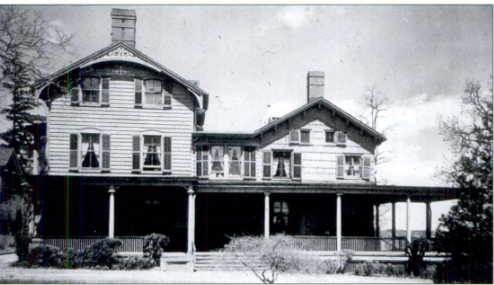
The Lawrence Homestead at Bayside, Queens, was a large, multi-period frame house reflecting more than three centuries of continuous adaptation. By the late nineteenth century, the surviving structure presented as a three-story manor house with two attics, containing approximately fourteen principal rooms, four full baths, additional service rooms and bath, front and rear living rooms, a dining room, and several principal bedrooms. Its scale and internal complexity distinguished it from later suburban houses and reflected its long use as a principal family seat rather than a single-generation dwelling.
The original house of 1645 was of heavy timber-frame construction, weatherproofed with axe-hewn wooden shingles and secured with hand-wrought iron nails. Thick, broad doors were specifically noted as a defensive feature. Later built-in bookcases lined the walls of many rooms. Franklin fireplaces were incorporated into the living and dining rooms, combining eighteenth-century technology with later domestic comfort. Interior furnishings included black walnut and mahogany furniture, some imported from England and preserved in use across generations.
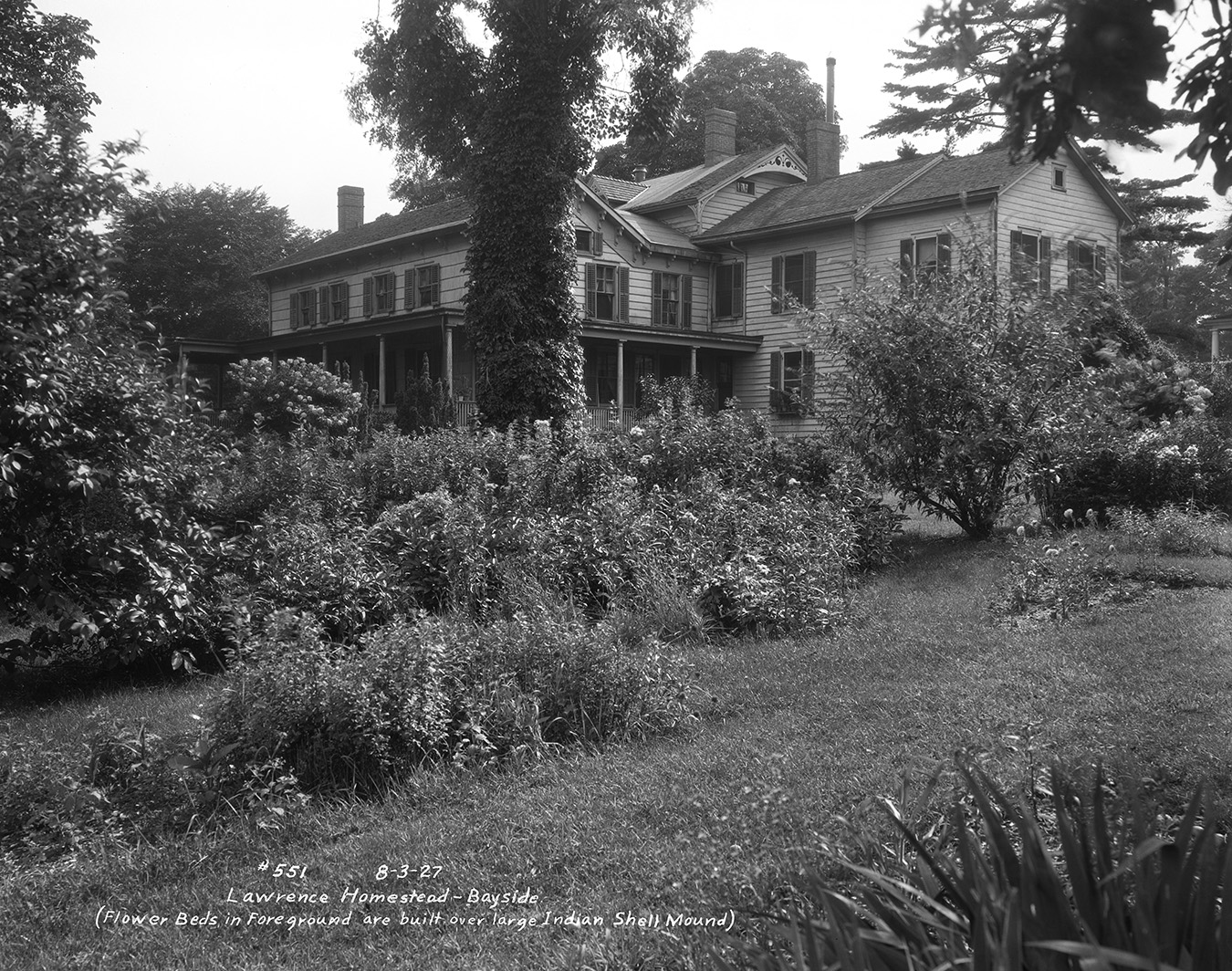
In 1878, a substantial addition was constructed, including a wrap-around porch that unified older sections of the house and gave the homestead the appearance seen in late nineteenth- and early twentieth-century photographs. This porch visually transformed the earlier core into a more expansive country manor while retaining its vernacular frame character. The grounds formed an integral part of the architectural ensemble, featuring mature elms, maples, fruit trees, locusts, planes, and weeping willows. A giant purple beech planted by a member of the Lawrence family more than seventy years earlier stood near the entrance, and a group of four horse-chestnut trees was repeatedly celebrated in contemporary accounts. A 1927 photograph records that formal flower beds were laid out over a large Indigenous shell mound, indicating the site’s pre-colonial occupation (below).
History
The Lawrence Homestead was the ancestral home of the Lawrence family for nine generations and dates to 1645, when William Lawrence is said to have built on the site. The property functioned as a continuous family domicile from the seventeenth century through the early twentieth century, making it one of the longest-held family properties on Long Island.
Originally, the house was substantially larger than its later form. In 1822, Effingham Lawrence partially dismantled earlier sections of the homestead in order to salvage heavy timbers for the construction of his nearby Stone House, a practice consistent with the reuse of valuable materials within extended family estates. Subsequent generations retained and adapted the remaining structure rather than replacing it, resulting in a layered building that embodied multiple architectural periods.
The homestead was closely associated with prominent members of the Lawrence family and their public roles. Tradition held that John Lawrence, Revolutionary-era judge advocate at the trial of Major John André and later a United States Senator and federal judge, resided there. The property was also tied to colonial governance through family tradition surrounding Elizabeth Smith Lawrence and Sir Philip Carteret, Colonial Governor of New Jersey, further enhancing its symbolic importance within Lawrence family memory.
By the late nineteenth century, the homestead served not only as a residence but also as a ceremonial family center. It was the setting for what was described as the final Lawrence wedding held at the ancestral home: the marriage of Dorothy Quincy Lawrence to George Hopper Fitch. Shortly thereafter, Dorothy’s grandmother, Mrs. Effingham Lawrence, offered to donate the house and approximately twenty acres of surrounding land to the City of New York, with the intention that it be preserved as an outdoor museum commemorating North Shore and colonial history.
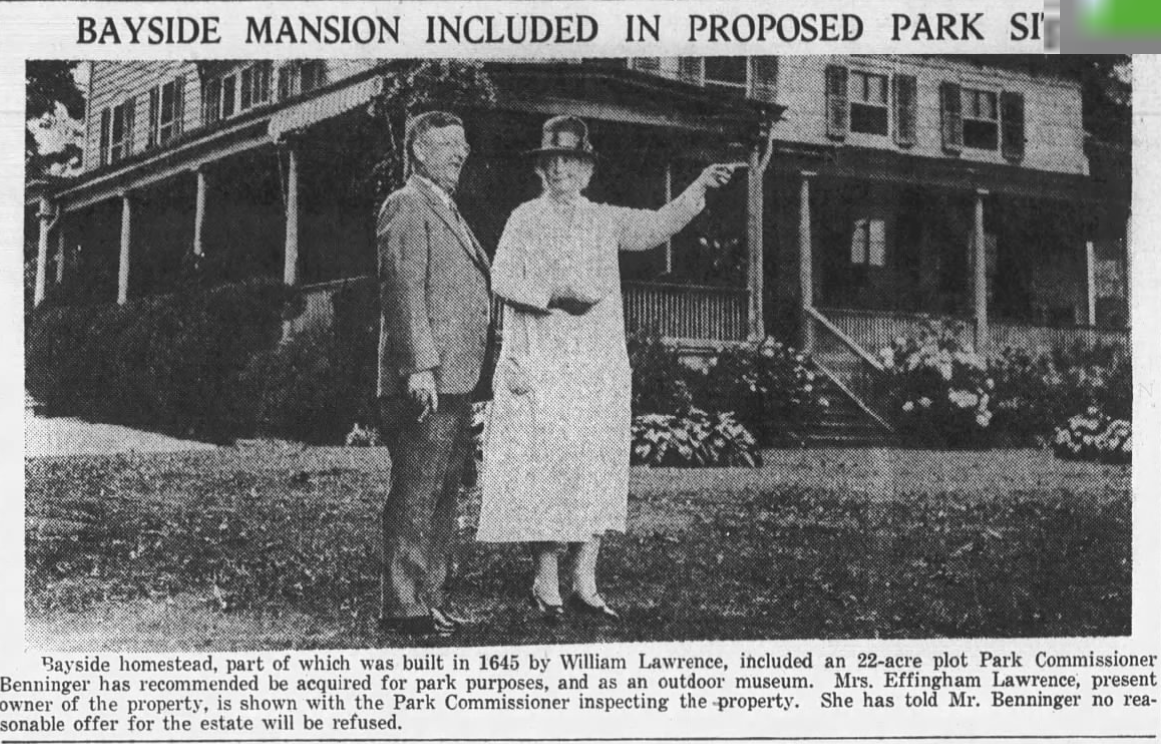
Although the house later suffered fire damage and the museum plan was not permanently realized, the Lawrence Homestead remained into the twentieth century a rare example of a continuously occupied colonial family house. Its long history of partial demolition, reuse, expansion, and preservation made it an unusually rich physical record of family continuity, architectural evolution, and early settlement patterns in northeastern Queens.