Lawrence, Henry Effingham (1829–1890)
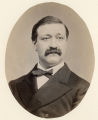
Early Life and Family Background
Henry Effingham Lawrence was born into a distinguished New York family whose influence in the city’s mercantile and financial life was considerable. His father, Joseph Lawrence, was one of the early presidents of the United States Trust Company and also served as president of the New York State Bank. His mother, Rosetta Townsend, belonged to the Townsend family of Oyster Bay, thereby reinforcing the long-standing web of kinship among the Lawrence, Townsend, and Underhill families of New York and Long Island.
Marriage
In 1850 Henry married Lydia Greene Underhill of a prominent Quaker family on Long Island. Lydia’s decision to marry outside the Society of Friends led to her being read out of meeting, a customary disciplinary measure imposed when a Friend married a non-Quaker. Despite the loss of formal membership, Lydia remained closely connected to her birth family and retained the gentle manners and moderated style associated with her upbringing.
They had four children: Edith, Joseph, Margaret, and Mary Trimble Lawrence. The youngest daughter was given the middle name Trimble in honor of Merritt Trimble, the husband of Lydia’s sister, Mary Underhill.
Career and Residences
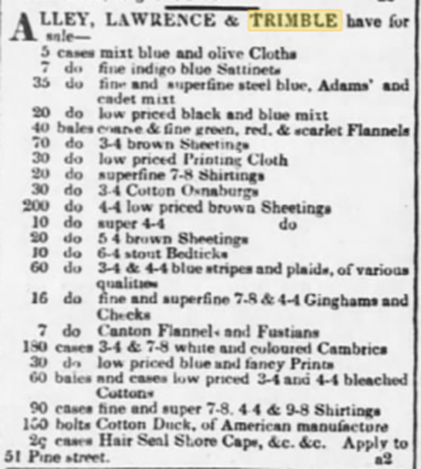
Henry was introduced into the dry-goods firm of Lawrence, Trimble & Co., in which his father was a partner. Following the tragic suicide of Daniel Trimble in 1850, the firm underwent several reorganizations and name changes, later known as Lawrence, Taylor & Co., with premises at 314 Broadway.
The Lawrences lived at 57 East 25th Street near Madison Square, an address then favored by prosperous New York families. Merritt Trimble resided next door, and other branches of the extended Lawrence kin occupied houses on the same block, illustrating the close residential clustering of the family in that period. The Lawrences worshipped at Grace Church, where they occupied a pew immediately behind that of the family of Edith Wharton, then Edith Jones—an indication of the social milieu in which they moved.
Henry died in 1890 at his residence known as “Cliffside.” His estate was divided with consideration and generosity: each of his four children received $30,000 (approximately $800,000 in 2015 values), with the remainder left to his widow.
Assessment
Henry Effingham Lawrence lived a life typical of many well-connected New York gentlemen of his era: educated within a network of influential families, introduced into an established mercantile house, and settled in a comfortable style near the city’s social and ecclesiastical centers. While not a public figure, he stands as a representative of the mid-19th-century Lawrence generation that maintained the family’s social position and continued the patterns of interrelated kinship that shaped New York’s mercantile elite.