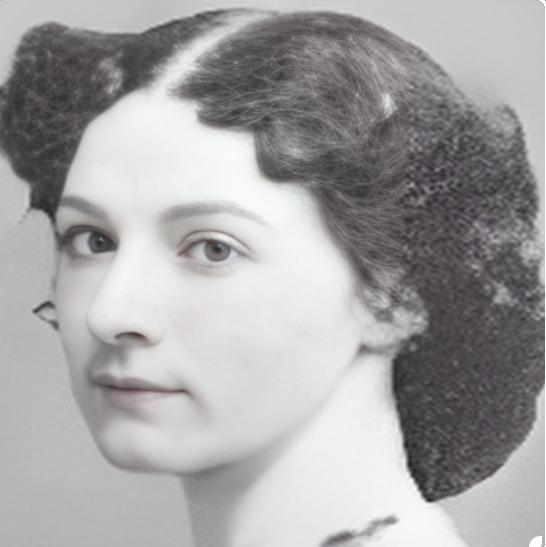
Lawrence, Caroline Bowne (1827–1869)
0
Parents: Rep. John Watson Lawrence (1800–1888) and Mary King Bowne (1808–1874). Spouse: Rep. Henry Rutherford Bedinger (1812–1858). Children: Mary Bedinger “Minnie” (1850–1896), Henry Bedinger (1853–1935), and Caroline Bedinger “Danske” (1854–1914). Kinship: Second cousin four times removed of the post–World War II Smith generation.
Early Life and Education Caroline was born in Flushing, Long Island, in the House Below the Hill, the historic Bowne property near the Friends Meeting House. She was named for her great-aunt, Caroline Bowne, who had raised her mother after infancy. Caroline attended the Priory School of New Rochelle. Because her father served in Congress, the family resided at times in Washington, D.C., where Caroline and her sister Lili were introduced to the social world surrounding Congress and visiting diplomatic circles.
Marriage and Diplomatic Life Caroline met the widower Henry Rutherford Bedinger when he was a member of the U.S. House of Representatives from Charles Town, Virginia. They married in 1847. In 1853 President Franklin Pierce appointed Bedinger as the first United States Minister to Denmark, and the family moved to Copenhagen. Caroline’s letters from Denmark, preserved at Smith College, provide a detailed view of mid-nineteenth-century American diplomatic life in Europe. She wrote of their adjustment to European customs, the formalities of diplomatic protocol, and the social world of Copenhagen, including court events at which she met Princess Anna of Prussia, Prince Frederick William of Hesse–Kassel, and Louise Christine Rasmussen, later Countess Danner.
Widowhood and Later Years Henry Bedinger died in 1858, and Caroline returned to the United States with her children, settling in Shepherdstown, then in Virginia. During the Civil War the town changed hands repeatedly. Her daughter Minnie later wrote vivid accounts of their wartime experiences, drawing on family memories and correspondence. Caroline fostered a strong literary and educational environment for her children; her youngest daughter, “Danske,” became a published American poet of note. Caroline died in 1869 at the age of 42.
Papers and Legacy Caroline’s surviving letters, especially those written from Copenhagen, are held in the Smith College Archives. They provide an uncommon first-hand record of the life of an American diplomatic family abroad, the cultural contrasts faced by Americans living in a European capital, and the social and domestic expectations placed upon a diplomat’s wife in the 1850s.