Bedinger, Caroline “Danske” (1854-1914)
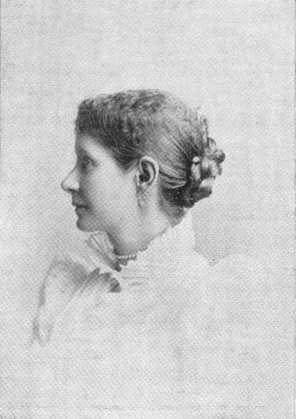
Parents: Henry Rutherford Bedinger (1812–1858) and Caroline Bowne Lawrence (1827–1869).
Spouse: Adam Stephen Dandridge (1844–1924).
Children: Serena Katherine “Violet” Dandridge (1878–1956), Stephen J. Dandridge (1878–1897), and Dorothea Spottiswoode Dandridge (1896–1907).
Kinship: Third cousin three times removed of post-World War II Smith generation.
Early Life and Family Background
Caroline “Danske” Bedinger was born on 19 November 1854 in Copenhagen, Denmark, where her father served as the first United States minister to Denmark, appointed by President James Buchanan. Her father was also a poet, publishing verse in The Southern Literary Messenger. Her mother, Caroline Lawrence Bedinger, was a granddaughter of Eliza Southgate Bowne, whose letters provide a vivid portrait of early nineteenth-century New England society.
Danske was brought to the United States in 1857, and the family lived in Flushing, Long Island near her Lawrence relatives. After her father’s death shortly before the Civil War, her mother returned with her three children to Shepherdstown, then in Virginia. There she purchased an estate called Poplar Grove, renaming it “Rose Brake,” and the household aided wounded soldiers during the Battle of Antietam. Following her mother’s early death, Danske and her siblings were taken into the care of their maternal grandfather, Hon. John Watson Lawrence, in Flushing.
Education and Literary Formation
Frail in health and sensitive in temperament, Danske began writing verse in childhood but withheld publication until she believed her work had matured. She cultivated a lifelong habit of singing and close attention to rhythm and sound, which shaped the musical quality of her poetry.
Marriage and Domestic Life
On 3 May 1877, she married Adam Stephen Dandridge, Jr., a member of a prominent Shepherdstown family. The couple settled there, living on a farm and relying on the income from her husband’s agricultural machinery business. Limited means, recurring illness, and isolation from literary centers shaped the conditions under which she worked, often without easy access to books or even a dictionary.
Poetic CareerDandridge resumed writing poetry in earnest in the early 1880s. Her first published poem, “Chrysanthemum,” appeared in Godey’s Lady’s Book in 1885. She soon followed with work in Lippincott’s Monthly Magazine, The New York Independent, and other periodicals, becoming a frequent contributor.
Her first collection, Joy, and Other Poems (1888), was widely praised for its delicacy, musicality, and sensitive treatment of nature. Reviewers emphasized her lightness of touch, lyrical grace, and imaginative refinement, while noting that her poetry avoided profundity or tragic weight. A second volume, Rose Brake (1890), named for her Shepherdstown home, confirmed her technical skill and nature imagery, though some critics felt it did not fully realize the promise of her debut.
Along with contemporaries Waitman T. Barbe and Thomas Dunn English, Dandridge came to be regarded as a leading poetic voice of late nineteenth-century West Virginia.
Garden Writing and Historical Work
From approximately 1891 to 1904, Danske largely set poetry aside to write more than two hundred garden essays for Forest and Stream, Garden and Forest, Gardening, and related journals. These pieces reflected both practical knowledge and literary sensitivity. In her later years, she turned to writing works of early American history.
Rose Brake and Daily Life
At Rose Brake, Dandridge created a notable garden, maintained with the assistance of Black gardeners Tom and Charity Devonshire. The garden became both a setting and a symbol of her inner life, and she frequently worked while resting in a hammock among its plantings.
Later Years and Death
The deaths of two of her three children deeply affected Danske and contributed to her increasing withdrawal. She died at her home in Shepherdstown on 3 June 1914. Contemporary speculation suggested suicide, but this was firmly denied by her family.
Legacy
Danske is remembered as a poet of refined lyricism and a significant literary figure in West Virginia’s cultural history, as well as an influential garden writer whose essays bridged literature and horticulture at the turn of the twentieth century.