Lake House, now the Fontainebleau Inn
History
The property now known as the Fontainebleau Inn, on the shore of Cayuta Lake in Schuyler County, New York, originated in the early nineteenth-century settlement of the lake by the Lawrence family. Following the Revolutionary War, the family acquired extensive lands around what was then commonly called Kayutah Lake, and several brothers established residences there, forming one of the area’s earliest and most enduring settlement clusters.
The earliest Lawrence residence associated with the site was built or occupied by Joseph Lawrence (1783–1817). His stay at Cayuta Lake was brief, owing to ill health, and he died young in 1817. Contemporary and later local accounts referred to his dwelling simply as the “Lake House,” a descriptive term that persisted in regional memory. This early house does not appear to have served as the principal family seat and underwent little subsequent development.
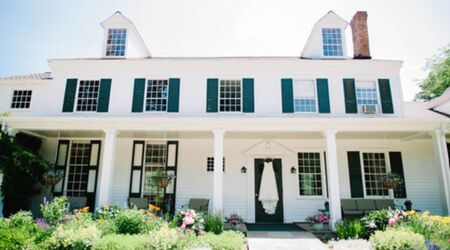
In 1814, Joseph’s elder brother Samuel Lawrence (1773–1837) constructed a more substantial lakeside house that became the primary Lawrence family residence on Cayuta Lake. Samuel settled permanently in the area with his wife Elizabeth and later served in the New York Assembly and the United States Congress. The house he built replaced or absorbed the earlier Lawrence occupation and emerged as the dominant family property on the lake.
During the later nineteenth century, the house passed through collateral lines of the Lawrence family. It was eventually inherited by Mrs. Henrietta Lawrence Butler, widow of Dr. George H. Butler, who received the property from her uncles Abraham Lawrence and Dr. Jonathan Lawrence, and from her aunt Jane Lawrence Campbell. This inheritance reflects the consolidation of Lawrence family holdings as the original Cayuta Lake generation died out.
As Cayuta Lake evolved from an early settlement landscape into a resort area, the Lawrence house transitioned from a private family residence to commercial hospitality use. Renamed the Fontainebleau Inn, it became a prominent lodging and social destination on the lake. Despite later adaptations, the building remains the surviving architectural expression of the Samuel Lawrence house of 1814, while preserving through name and tradition the memory of Joseph Lawrence’s earlier “Lake House.”