Jerome, Leonard Walter (1817–1891)
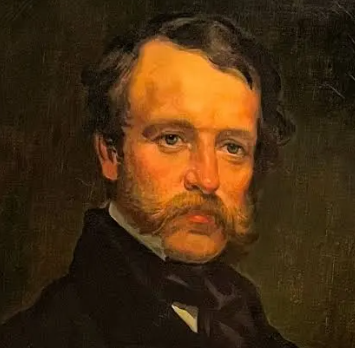
Early Life and Family Background Leonard Walter Jerome was born in 1817, one of the younger sons of Isaac Jerome and Aurora Murray. His upbringing in the Rochester–Syracuse region reflected the westward expansion and commercial ambition of several New York families after the Revolution. He received a legal education and was admitted to the bar, but soon turned his interests from law to finance and public life. His marriage in 1849 to Clarissa Hall, daughter of Ambrose Hall and Judith Cowles, connected him to another influential New York family with political and cultural ties.
Career in Finance and Speculation Jerome moved to New York City in the 1850s, where he quickly established himself as a daring and sometimes notorious stock speculator. His aggressive style during the Civil War era earned him the moniker “the King of Wall Street.” He was closely associated with Daniel Drew and other prominent financiers, and at times engaged in rivalries with Commodore Cornelius Vanderbilt. Newspapers of the period often depicted him as a brilliant but volatile figure who thrived on the risks and excitements of wartime finance. His fortunes rose and fell with the speculative markets, but he maintained a position in the city’s social world even during periods of reversal.
Promotion of Culture and Journalism Jerome was an active patron of the arts and helped to foster cultural institutions in New York. He supported opera companies, subsidized visiting performers, and invested in the Academy of Music during the mid-nineteenth century, believing that New York required a more refined public life to match its mercantile strength. He helped found newspapers, including the New York Times in its early years and later the New York Daily News, though his involvement was more financial than editorial. His activities in journalism strengthened his political connections and enhanced his reputation as a figure capable of influencing public opinion.
Equestrian Interests and Jerome Park One of Jerome’s lasting contributions was his development of organized horseracing in New York. He established the Jerome Park Racetrack in the Bronx, which opened in 1866 and quickly became a centerpiece of the city’s sporting culture. The track was notable for hosting the inaugural Belmont Stakes and for attracting both the financial elite and the public to a new kind of recreational enterprise. Jerome’s influence extended into racing associations, breeding operations, and the social world surrounding annual meets. Through these pursuits he helped shape the sporting institutions of Gilded Age New York.
Residences and Social Prominence Jerome’s personal style and hospitality became part of his public identity. He maintained a prominent Fifth Avenue residence, entertained diplomats and cultural figures, and cultivated a reputation for lavish spending, even during periods when his financial position was precarious. His daughters grew up in this cosmopolitan environment, marked by transatlantic travel, fashionable schooling, and exposure to the political and artistic life of New York and Paris.
Marriage Alliances and the Churchill Connection Jerome’s most significant legacy lies in the marriages of his daughters. The most famous, Jennie Jerome, married Lord Randolph Henry Spencer-Churchill in 1874, joining the family to one of Britain’s distinguished aristocratic houses. Her son, Winston Leonard Spencer Churchill, became Prime Minister of the United Kingdom during the Second World War and a central figure in twentieth-century political history. Through Jennie, Leonard Jerome became the progenitor of a major Anglo-American lineage linking early New York entrepreneurial families with British political leadership.
Death and Legacy Leonard Jerome died in Brighton, England, in 1891 and was buried in the country where his descendants had risen to prominence. His life embodied the ambition, volatility, cosmopolitanism, and social fluidity of mid-nineteenth-century New York. Though remembered today chiefly as Winston Churchill’s maternal grandfather, Jerome himself was an influential figure in finance, culture, journalism, and American sporting life. His story illustrates the reach of American families who, in the Gilded Age, helped shape both national and transatlantic worlds.