Boyce, Elizabeth Miller (1835–1894)
Southern Matriarch of Bayside
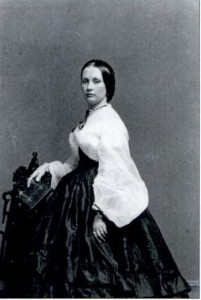
Parents: Ker Boyce (1787–1855) and Amanda Caroline Johnston (1806–1837). Spouse: Frederick Newbold Lawrence (1834–1916), married December6, 1855. Children: Lydia Ann Lawrence (1857–1920), Mary Lawrence (1860–1942), Elizabeth Boyce Lawrence (1862–1906), and Virginia Lee Lawrence (1864–1891). Kinship: Second great-grandmother of the post–World War II Smith generation.
Early Life and Family Background Elizabeth Miller Boyce was born in Charleston, South Carolina, in 1835, into one of the city’s most prominent mercantile and banking families. Her father, Ker Boyce, was a self-made financier who rose to great wealth through shipping, cotton brokerage, and railroad investment, and was instrumental in founding the Bank of Charleston and the South Carolina Railroad. The Boyces were of Scots-Irish ancestry and represented the new class of entrepreneurial Southerners who linked the region’s plantation economy to national and international markets.
Charleston in Elizabeth’s youth was a cosmopolitan port city, where trade with New York and Liverpool was constant. Although the Boyces were slaveholders, they also participated in the broader Atlantic commercial world, which connected Southern cotton with Northern finance and British industry. Elizabeth’s mother, Amanda Caroline Johnston, died when Elizabeth was still a child, and she grew up in a large blended family with several half-siblings from her father’s two marriages.
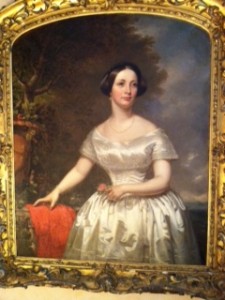
Marriage and Move to New York In the antebellum period, social and economic connections between Charleston and New York were exceptionally close. New York shipyards built vessels for the Southern trade, and Manhattan bankers and insurers underwrote much of the cotton and slave economy. It was through this commercial and social network that Elizabeth met Frederick Newbold Lawrence (1834–1916), a member of the old Quaker-descended Lawrence family of Flushing and Bayside, Queens. The Lawrence and Boyce wharves were adjacent on the Charleston waterfront.
They were married on December 6, 1855, and settled at Bayside, Queens, where the Lawrences maintained extensive estates. The marriage symbolized both the cultural interchange and the tensions between North and South on the eve of the Civil War.
Marriage portrait
Life in Bayside and Family Traditions The Lawrences were no longer strictly Quaker by the mid-nineteenth century, but they retained a deep family memory of the Society of Friends and its ethical traditions. While not abolitionists, some Lawrence relatives had supported manumission and were connected to families such as the Bownes and Murrays who were active in the Underground Railroad.
Family tradition preserves a story that when Elizabeth moved north, she brought with her a household servant who had been enslaved in Charleston. Under New York law, she was required to emancipate the woman, which she did, continuing to pay her wages. When the servant died, she reportedly left her savings to Elizabeth and asked to be buried at her mistress’s feet in the Lawrence family cemetery. The tale—though impossible to verify—reflects both the lingering human complexities of slavery and the personal relationships that sometimes bridged it.
Civil War and Reconstruction Era During the Civil War, the Boyce and Lawrence families stood on opposite sides. Elizabeth’s husband Frederick served as colonel of a New York state militia regiment based in Flushing, while her brothers fought for the Confederacy. Letters from the period show that family relations were strained but not broken, a circumstance mirrored in many interregional marriages of the time.
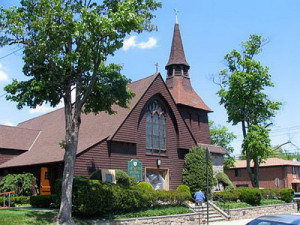
After the war, Elizabeth and Frederick continued to live at Bayside, where they became noted for their hospitality and philanthropy. In 1891, Elizabeth donated the land for All Saints Episcopal Church (left), which remains one of Bayside’s most enduring landmarks.
Death and Burial Elizabeth Miller Boyce Lawrence died on June 26, 1894. She was buried in the Lawrence family cemetery in Flushing, the traditional resting place of the extended Lawrence, Bowne, and Parsons families. Her life embodied the convergence of two powerful regional traditions—the mercantile aristocracy of Charleston and the civic-minded Quaker heritage of Long Island.