Bowne, Walter I (1770–1846)
Mayor of New York City
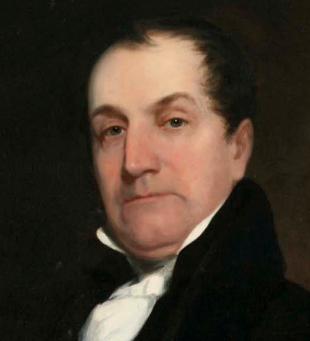
Parents: James Bowne (1728–1793) and Caroline Rodman (1734–1818)
Spouse: Elizabeth “Liza” Southgate (1783–1809).
Children: Walter Bowne II (1806–1877) and Mary King Bowne (1808–1874)
Kinship: Father-in-law of John Watson Lawrence (1800–1888), the first cousin five times removed of the post–World War II Smith generation
Early Life and Family
Walter Bowne I was born in Flushing, Queens, on September 26, 1770, the son of James Bowne and Caroline Rodman, descendants of early Quaker settlers of Long Island. In May 1803, he married Elizabeth Southgate, daughter of Dr. Robert Southgate of Scarborough, Maine, and Mary King. The marriage produced two children, Walter II and Mary King Bowne. His daughter Mary married John Watson Lawrence, uniting two prominent New York mercantile and Quaker-descended families.
Political Career
Bowne entered public life as a young man, first serving in the New York State Senate from 1816 to 1822 and again from 1823 to 1824. He was active in the Democratic Party and a member of the powerful Tammany Hall political organization. He was also a founder, in 1792, of the Union Engine Company No. 18 at John and Pearl Streets—nicknamed the “Shad Belly”—a volunteer fire company typical of civic-minded New Yorkers of the period.
In 1829, Bowne was elected mayor of New York City, serving four one-year terms until 1833, a period when the city’s population approached 200,000. His administration was marked by ambitious infrastructure and civic projects but also by the political patronage that characterized Jacksonian-era urban politics. Contemporary observers accused him of securing his second term through extensive bribery, a charge not unusual for Tammany politicians of the period.
Public Health and the Cholera Epidemic of 1832
One of the greatest challenges of Bowne’s mayoralty was the cholera epidemic of 1832, which struck New York with devastating force. Following prevailing medical theory, which attributed cholera to contagion through contact rather than to contaminated water, Bowne imposed strict quarantine measures. These proved tragically ineffective; more than 3,500 New Yorkers died. Although Bowne’s policies did little to stop the disease, his administration’s energetic, if misguided, response reflected the limited medical knowledge of the time.
Civic Improvements
Bowne was instrumental in overseeing several key urban projects. His administration widened downtown streets, renamed Marketfield Street as Battery Place, opened Jefferson Market, and erected Tompkins Market. He also oversaw the expansion of Union Square Park and supported the early construction of the New York and Harlem Railroad, which would become part of the modern Metro-North line.
Recognizing the city’s desperate need for a reliable water supply, Bowne advocated for a reservoir and aqueduct system, though the project proved beyond the city’s financial reach during his tenure. His successor—John Watson Lawrence’s relative—would see the project realized in the form of the Croton Aqueduct.
Bowne also continued the mayoral duty of acknowledging Manumission Certificates, formalizing the freedom of enslaved persons under New York’s gradual abolition laws, which reached full effect in 1827.
Death and Legacy
Walter Bowne retired from public life after his mayoralty and died on August 31, 1846. 1846. His home in Flushing, Bowne House, remained a symbol of the family’s civic service and Quaker heritage. Though his administration was often criticized for political corruption, his tenure as mayor bridged the Federalist and Jacksonian eras and reflected the growing complexity of urban governance in a rapidly expanding New York City.