Wheeler, William Lamont (1830–1887)
Early Life and Education
William Lamont Wheeler was born on the Wheeler family homestead in Mannsville, Jefferson County, New York, near the farm of Newton Mann, after whom Mannsville was named. The Wheelers were an established family of the region, their roots extending back to the early settlement of northern New York.
Wheeler was educated first in local schools and then at McGill University in Montreal, where he received an initial medical degree, followed by further medical studies at Columbia College in New York City. His training reflected a rare combination of Canadian and American academic medical traditions in the mid-nineteenth century. He held a position for three years at Bellevue Hospital, as well as a position at a smallpox hospital on Blackwell's Island.
Naval Surgeon in the Civil War
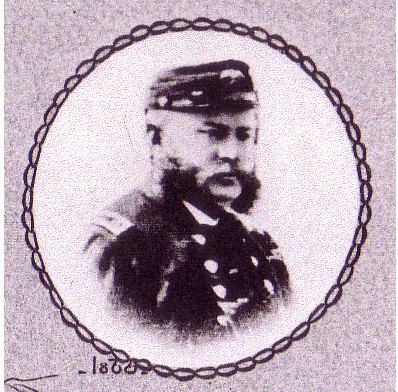
From his home in Newport, Rhode Island, Wheeler was appointed Assistant Naval Surgeon by President Abraham Lincoln at the outbreak of the Civil War. He was stationed at Fort Sumter, Charleston Harbor, during the Confederate bombardment that began the war in April 1861.
When the fort came under intense artillery fire, Wheeler continued to treat the wounded despite being struck himself. Contemporary accounts recall soldiers shouting, “Doctor, your own head is covered with blood!” Only after he had finished caring for others did Wheeler stitch his own wounds while a soldier held a mirror for him. The scars from that action remained visible for the rest of his life.
His conduct at Fort Sumter placed him among the first Union medical officers to experience combat in the Civil War and established his reputation for calm courage and professional devotion.
Marriage and Family Connections
In 1856, Wheeler married Esther Gracie Lawrence, a writer, playwright, and the daughter of William Beach Lawrence, Sr., a wealthy New York attorney and jurist who had served as Lieutenant Governor and Acting Governor of Rhode Island (1851–1852). The Lawrence family had developed the Ochre Point district of Newport, which later became home to its grand Gilded Age “cottages.” Through this marriage, Wheeler entered one of the most prominent intellectual and social circles in the state.
Later Career and Residences
Dr. Wheeler maintained a medical practice both in Newport and in Ithaca, New York. In 1882, the couple purchased an estate property in Newport, where they lived seasonally while maintaining professional ties to upstate New York. Wheeler’s practice in Ithaca made him one of the most respected physicians of the region, known for his diagnostic skill and his humane care for working families as well as summer visitors.
Final Journey and Death
In 1887, while on an extended holiday in Europe, Wheeler suffered a serious accident while hiking across a glacier at Le Mauvais Pas in the French Alps. He slipped, injured his ankle severely, and was carried out of the mountains by mule to seek medical treatment. The injury proved slow to heal and caused chronic pain that worsened over the following months.
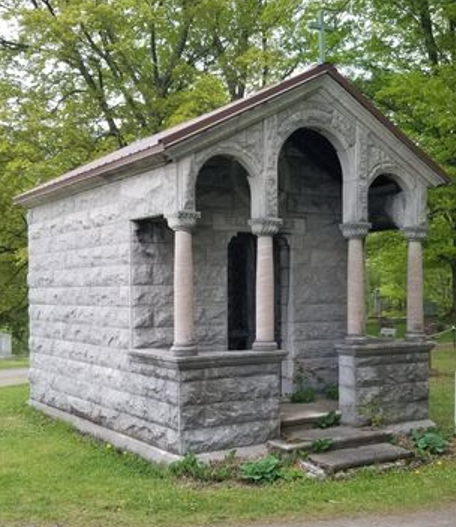
On September 9, 1887, at age 57, Wheeler died from a self-inflicted gunshot wound to the temple. Contemporary reports attributed the suicide to unrelieved physical suffering following the Alpine accident. His remains were returned to New York, where his widow commissioned a mausoleum in Maplewood Cemetery, Mannsville, as a lasting memorial.
The Wheeler Mausoleum and Memorial Chapel
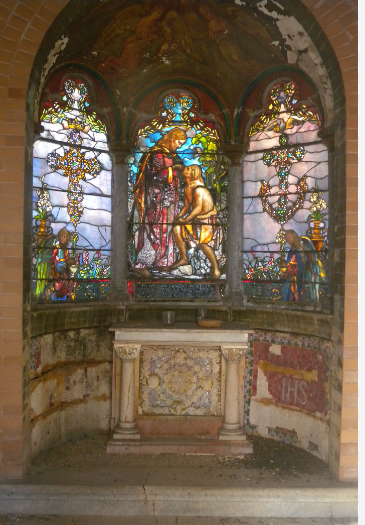
Esther Gracie Lawrence Wheeler erected a large stone mausoleum for her husband at Maplewood Cemetery, built of local stone and fitted with stained-glass windows and a small piano, reflecting both the couple’s aesthetic sensibilities and her grief. She later commissioned a memorial chapel designed by Mary Elizabeth Tillinghast, an artist and architect best known for her stained glass and ecclesiastical interiors.