Thébaud, Paul Gibert, Sr. (1866–1925)
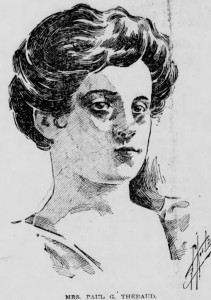
Kinship: Husband of the sister-in-law of the great-grandmother of the post–World War II Smith generation.
Marriage and Social Standing Paul Gibert Thébaud Sr. married Mathilde Eugénie Reynal on June 16, 1889, at the Church of St. Francis Xavier in New York. The wedding was among the most lavish of the Gilded Age. The New York Times described the white marble altar ablaze with candles, twenty priests and a hundred choristers in attendance, and Archbishop Corrigan performing the nuptial mass in vestments of white and gold. The bride’s procession of twelve ushers and twenty bridesmaids advanced to the strains of the Lohengrin wedding march performed by full orchestra and organ. Her dowry was reported at $1,000,000 (about $26 million in 2024), and she received more than 300 wedding gifts from 3,000 guests, including a dinner service in gold and silver.
Family Background and Business Paul Thébaud was a partner in the long-established firm of Paul G. & Paul L. Thébaud, descendants of the eighteenth-century merchant house Bouchard, Thébaud & Co., founded in 1789. The family were commission merchants with trading interests in Europe, the Caribbean, and Central America. Like other Thébauds, Paul maintained a grand townhouse on Madison Avenue and planned an estate in White Plains, New York, during the early 1900s.
The White Plains Jewel Robbery (1901–1902) While his country mansion was under construction, the Thébauds stayed with friends, Mr. and Mrs. Howard Willets, in White Plains. In December 1901, an elaborate robbery—one of the most sensational crimes of the era—shook the household.
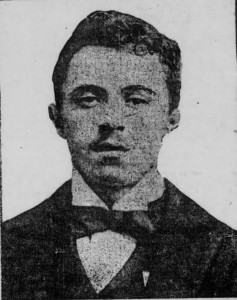
The family employed a Swiss couple, Mr. and Mrs. Edward Kern, Sr. Their son, Edward Kern Jr., visiting from Europe, impressed Paul Thébaud and was hired as valet. Unknown to the Thébauds, both father and son had criminal records: the elder Kern had served a year in the Tombs prison for fraud (1895–1896), while the younger had been convicted of forgery in Switzerland and again in the United States under an alias.
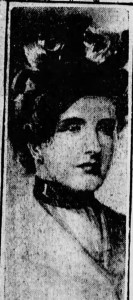
Kern Jr. (left)) was romantically involved with Madame Marie Pollion (right), the French wife of a New York waiter. The two plotted to steal the Thébaud jewels to finance their elopement. After accompanying the Thébauds to the Willets’ home on December 28, Kern returned to the city on the pretext of having forgotten his razors. He emptied the household strongbox, stealing 275 jeweled stickpins and other valuables, and hid them in a satchel before boarding the 11:30 P.M. train back to White Plains.
By chance, Paul Thébaud boarded the same train and saw his valet asleep with the satchel at his feet. In a moment of misplaced humor, he had a trainman hide the bag to “teach Kern a lesson.” When Kern awoke in panic, Thébaud returned the satchel—unaware it contained his own stolen jewelry.
The following day Kern feigned illness, borrowed a horse and buggy “to see a doctor,” and disappeared, taking with him additional jewels that Mrs. Thébaud had brought to wear on the trip: a pear-shaped diamond valued at $20,000 and a pearl worth $15,000 (a combined modern value of nearly $850,000).
When Kern failed to return, Mrs. Thébaud discovered her jewels missing and telephoned the Madison Avenue townhouse, where the housekeeper found the strongbox empty. The police were summoned. Meanwhile, Mr. Pollion reported his wife missing—she had fled with Kern.
In New York, Kern and Madame Pollion pawned part of the loot for $700, the pawnbroker’s entire cash on hand that Sunday, intending to flee to Switzerland. The pawnbroker, after reading about the theft, alerted authorities. Police quickly identified both Pollion and the Kerns from the Rogues Gallery and arrested Pollion as she packed her and Kern’s clothing for departure.
Kern escaped to New Orleans under the alias Theodore Manners, traveling with two other criminals he had met at racetracks. When the two men attempted to abscond with his luggage in Gretna, Louisiana, local police apprehended them. In a reversal worthy of farce, they exposed Kern’s identity, shouting to the police, “This is Edward Kern, valet and thief, who robbed Paul Thébaud in New York!” In the stolen valise were jewels worth $2,500 matching those taken from the Thébauds.
Paul Thébaud and Detective Kelly of the New York police traveled to Louisiana to identify the thief and reclaim the jewels. Rumors spread that Thébaud had offered a $10,000 reward; the local sheriff refused to release Kern until Thébaud paid it. Thébaud denied the offer but placated officials with a $250 “gift” to the Gretna police department.
Back in New York, Kern pleaded guilty in April 1902 and was sentenced to four and a half years in Sing Sing Prison. His two confederates were later sentenced to three years for stealing from their fellow thief—on the legal principle that the first thief held priority. After early release, Kern returned to crime and died by cyanide after crossing William Randolph Hearst in another swindle.
Other Misfortunes and Later Years As the jewel robbery unfolded, the house that Thébaud was building in White Plains caught fire and was completely destroyed. Undeterred, he rebuilt, erecting a grand new estate called Hillair.
In 1907 Thébaud Bros., then 125 years old, suspended operations following the collapse of its Yucatán correspondent firm, E. Escalante & Son. Though the Thébaud family’s personal fortune remained intact, the business never fully recovered.
By 1911, Paul and Mathilde Thébaud had separated; he settled a fortune on his wife, transferring the house and $20,000,000 (roughly $500 million in modern dollars). He lived quietly thereafter and died in 1925.
Legacy Paul Gibert Thébaud Sr. embodied both the elegance and the volatility of America’s Gilded Age merchant aristocracy. His life intertwined dazzling wealth, international scandal, and the comic-opera misfortunes that befell the Thébaud name—from jewel theft to financial upheaval. His son, Paul Gibert Thébaud Jr., would later become the victim of an even more extraordinary crime.