Thébaud, Paul Gibert Jr. (1890–1983)
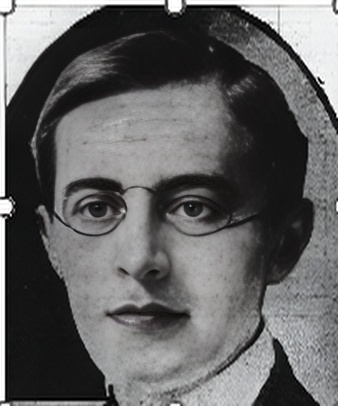
Early Life and Education Paul Gibert Thébaud Jr. grew up in the wealthy Catholic merchant family that had been prominent in New York society since the early nineteenth century. He attended the Pomfret School in Connecticut, a fashionable preparatory academy for sons of the upper elite. At seventeen he was living at the family estate, Hillair, in White Plains, New York, when an event occurred that became one of the most sensational domestic crimes in Westchester County’s history.
The Hillair Shooting (1907) The Thébaud family had recently endured a string of misfortunes—first the theft of Mrs. Thébaud’s jewels by their valet, Edward Kern, in 1901, and now, in 1907, a far darker episode.
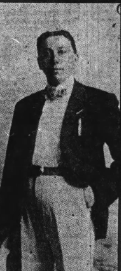
The household tutor was John Bjorlin, a 36-year-old Swede from Stockholm. Born into a prosperous family, Bjorlin had studied at Uppsala University, where he graduated summa cum laude and became fluent in seven languages: Swedish, Russian, English, French, German, Spanish, and Italian. Despite his intelligence and refinement, his later life was marred by what newspapers vaguely termed “inclinations and habits” developed in Paris that led his father to disown him. By the time he reached New York, he was an educated but penniless man earning his living as a courier and valet. In 1904 he had briefly married Kate Bobb in Philadelphia, deserting her three months later.
The Thébauds hired Bjorlin as tutor and companion to young Paul Jr., impressed by his erudition and cosmopolitan polish. He accompanied Paul Sr. on business trips as interpreter for the family’s import-export firm, Thébaud Bros. Over time, however, his demeanor changed. He became withdrawn, moody, and increasingly dependent on alcohol. The family allowed him to keep a revolver for protection, as burglaries were then common in Westchester—and memories of the earlier jewel theft were fresh.
In the early hours of November 11, 1907, tragedy struck. The night watchman, making his rounds at 5:50 a.m., roused Bjorlin, who, wearing only a bathrobe, went directly to young Paul’s bedroom and locked the door. Moments later, two gunshots shattered the dawn quiet.
Inside the room, Paul Jr., exhausted from a day spent riding his motorcycle, lay asleep when Bjorlin approached. The tutor placed the revolver to the boy’s forehead and fired. He then turned the gun on himself, sending a bullet through his own brain.
Theories and Evidence: Newspapers across the country seized on the sensational case, and multiple explanations circulated:
That Bjorlin was delirious from alcohol and insanity.
That he mistook the sleeping boy for a burglar.
That he accidentally discharged the gun while joking before a hunt.
That he intended to kill another servant.
That both were victims of a burglar.
However, the facts pointed elsewhere. Investigators found on Bjorlin’s desk a hastily written will and, more chillingly, a list of intended victims—the entire household, with “Paul” listed as “No. 1.”
The New York Times and other papers reported that Bjorlin had shown “a great fondness for Paul Thébaud. They became almost inseparable companions.” Servants told reporters that he “scowled and fumed if the boy spoke kindly to anyone but him” and had “threatened to thrash the stablemen” for being friendly with Paul. Friends of the family described their relationship as “strangely close for master and servant.”
The most probable explanation, never officially stated but widely inferred, was that Bjorlin had developed an obsessive, possibly romantic infatuation with the boy. Facing dismissal and separation, he chose to kill the youth he idolized and then himself. In the moral climate of 1907, such motives were publicly unmentionable. Detectives quickly settled on the implausible theory that Bjorlin had meant to shoot another servant by mistake, thus sparing the Thébaud family further scandal.
Survival and Aftermath Miraculously, Paul Jr. survived. The bullet had grazed his skull, knocking him unconscious but sparing his life. When he awoke, his family at first told him he had fallen and struck a radiator. Only later did he learn the truth. He never recalled any quarrel or cause for the shooting.
Later Life and Career Paul Jr. recovered fully and retained his adventurous temperament. Fascinated by machinery, he became a race-car and motorcycle enthusiast, later serving in World War I in a specialized motorcycle corps that operated machine guns mounted on sidecars—an innovation in mechanized warfare. Even in advanced age, he was known to travel by motorcycle with sidecar from his home in Greenwich, Connecticut, to Woods Hole, Massachusetts, en route to his summer residence on Nantucket.
On February 5, 1914, he married Dorothy Crawford Vander Hooge in a small ceremony at St. Agnes Church, Manhattan. They had six daughters and divided their time between New York, Connecticut, and Nantucket.
Public Life Paul G. Thébaud became active in New York civic and historical societies, notably serving as President of the St. Nicholas Society of the City of New York, a hereditary organization of descendants of early Dutch settlers.
During his presidency, he presided over public commemorations, including the dedication of Sunnyside, the Tarrytown home of Washington Irving, restored through the efforts of John D. Rockefeller Jr. Thébaud is seen in photographs wearing the society’s traditional sash, seated beside Rockefeller and Irving’s descendants.
Legacy Paul Gibert Thébaud Jr. survived both extraordinary violence and public tragedy to live more than seventy years beyond the attempt on his life. His composure, discretion, and understated endurance marked a quieter chapter in the long Thébaud saga—a family whose wealth, eccentricities, and misfortunes reflected both the glitter and the fragility of America’s upper class in the early twentieth century.