The Gables, The, also Gusty Gables
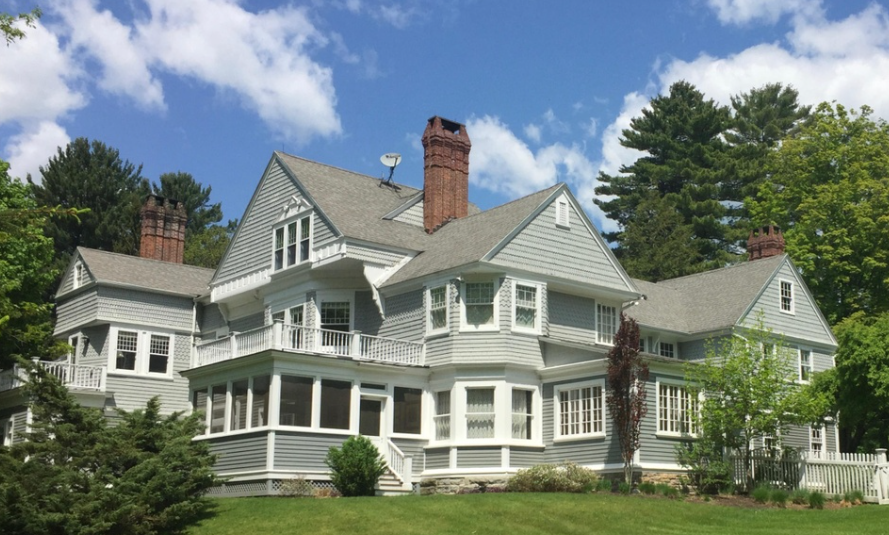
Architectural Description The Gables is a two-story, wood-framed house with clapboard and shingle siding, prominently sited atop a small rise. It combines elements of the Shingle Style and Queen Anne architecture, with an asymmetrical façade, irregular footprint, and cross-gabled roof punctuated by multiple dormers. A dentil band encircles the cornice, and four massive brick chimneystacks with multiple flues rise from the roofline. The exterior displays an elaborate variety of shingles: scalloped shingles with incised circles in the front gables; alternating sawtooth and tongue shingles in the right gable; and layered notched shingles over rectangular courses on the second floor. Scroll-sawn brackets support all projecting gables.
The front façade is dominated by two projecting gabled bays. The larger, on the right, features a distinctive trio of attic windows unified by a broken pediment, a motif repeated on the right elevation. Below is a second-floor canted bay window and a one-story sun porch with a balcony above. The left pavilion echoes this composition on a smaller scale, with a single attic window and a French door opening onto a balcony above a later one-story addition that obscures the original front entry. The main entrance was relocated to the north side and is marked by a porch with plain columns and pilasters, spindled balustrade, corner finials, and a door surround with fanlight and sidelights. Rear additions include a substantial two-story extension added in 1885 and a one-story ell. Window types are varied, including original Queen Anne sash with small panes framing larger lights and multi-paned transoms, contributing to the house’s richly textured architectural character.
Interior (2017 Photographs)
Entrance Hall and Stair
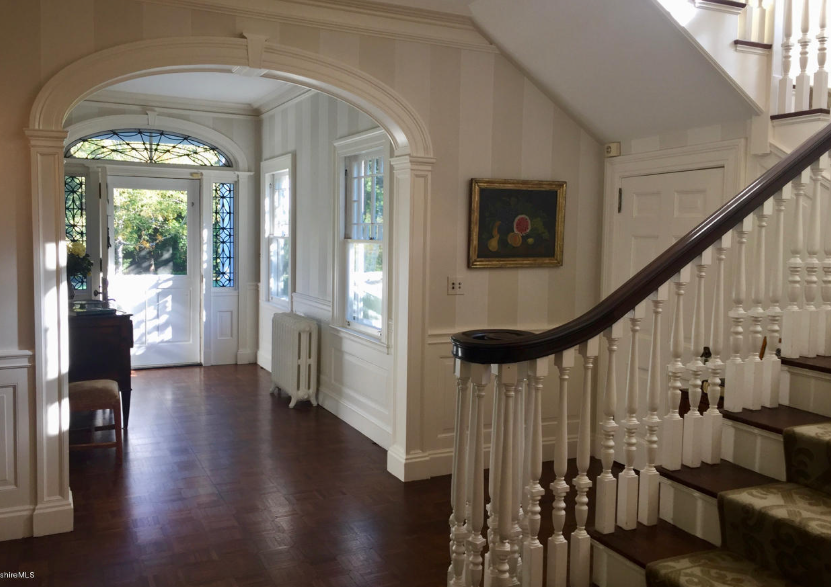
The entrance hall today preserves McKim’s arched opening and principal stair, with white-painted woodwork and dark floors continuing the original spatial hierarchy of arrival and movement.
Staircase
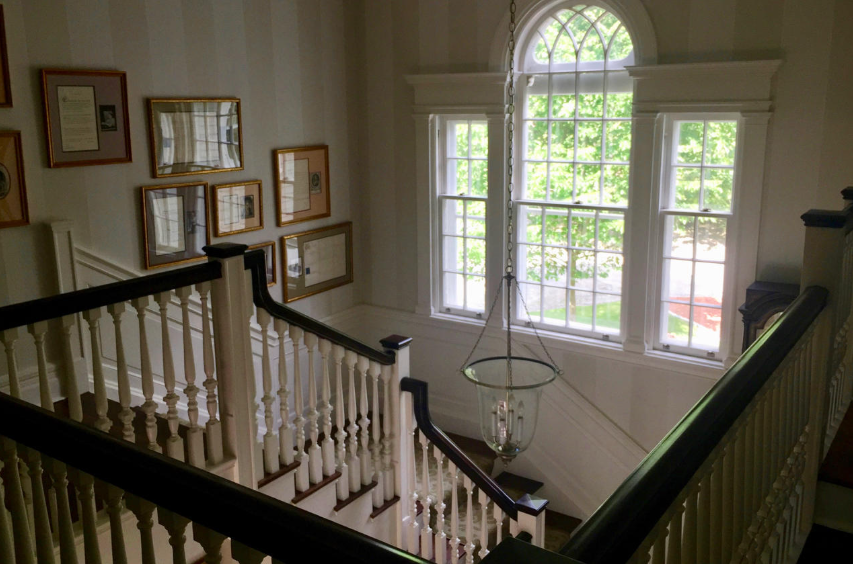
The principal staircase rises in a broad, measured turn, its white balusters and dark handrails framing a tall Palladian-derived window that floods the stairwell with light. The arched central sash and flanking sidelights emphasize verticality and symmetry, making the stair not merely a passage but a carefully composed architectural feature.
Parlor
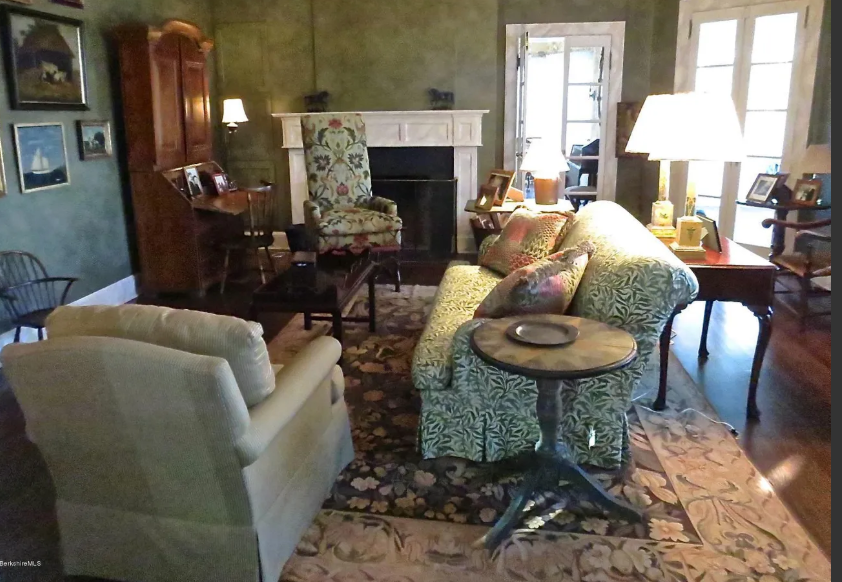
The parlor today is arranged as a comfortable living room centered on the fireplace, with the original mantel and door openings clearly legible beneath later finishes. Current furnishings and textiles emphasize warmth and informality while allowing the room’s proportions and circulation to remain apparent.
Sleeping porch
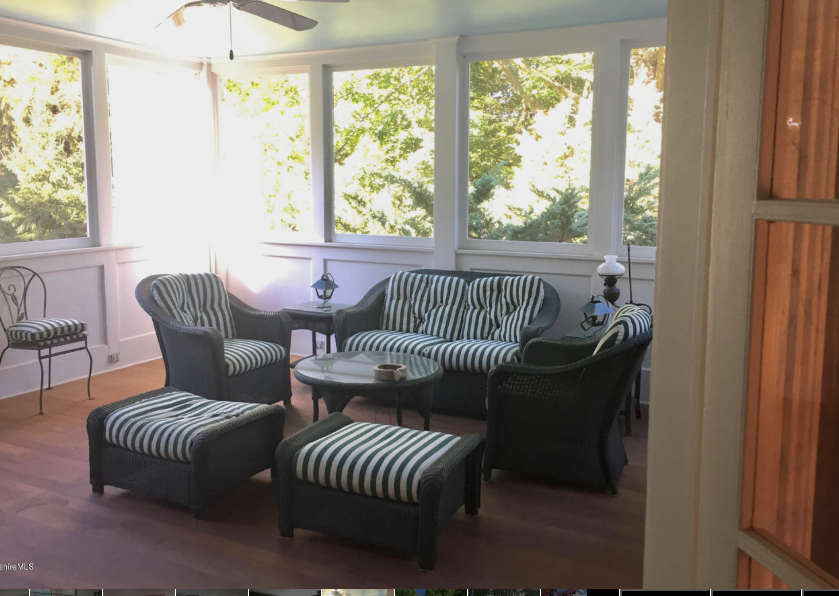
The sleeping porch remains a light-filled, seasonal room, enclosed by broad bands of windows that open the space to air and views of the surrounding trees. Today it serves as an informal sitting area, preserving the porch’s original character as a place of rest and retreat during the summer months.
Ownership and Social History
Designed by Charles F. McKim and built in 1879 for Miss Mary DePeyster Carey. The DePeysters are also connected to the Lawrences and Remsens. In 1917 the house was sold to Mr. and Mrs. Thomas Strong, and in 1931 it was acquired by Miss Anna Remsen Alexandre, daughter of John Alexandre, builder of Spring Lawn. During her ownership, Miss Alexandre used the house as a center of summer social life in Lenox, entertaining family and friends such as members of the Bayard Hoppin, Buffin, Gould, and Morgan families, as well as figures from the arts including D. W. Griffith and Cornelia Otis Skinner. Luncheon parties for thirty to forty guests were not uncommon. In May 1939 the house was burglarized and ransacked, an incident noted in local accounts. In 1955 Miss Alexandre sold The Gables to Dr. and Mrs. Milos Krofta and moved to a smaller Lenox residence, The Homestead, which she renamed Strawberry House, at 9 Cliffwood Street, Lenox, Massachusetts.