Thébaud, Joseph (1772–1811)
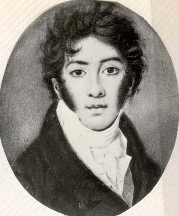
Early Life and Emigration Joseph Thébaud was born in Nantes in 1772, the son of a prosperous merchant family. Like many Frenchmen of his generation, his life was shaped by the upheavals of the French Revolution. He left France in the 1790s and emigrated to the United States, first settling in Boston and later in New Haven, Connecticut. In New Haven he married Marie Thérèse Félicité Le Breton, whose family belonged to the French planter class of Martinique and maintained connections in both the Caribbean and France.
Commercial Career in New York Around 1795 Thébaud moved to New York City, where he founded the mercantile house of Thébaud Brothers. His firm became one of the most respected and enduring commercial establishments of the early Republic, trading in fine French and West Indian goods such as silks, wines, sugar, and spices. Through his network of French émigré contacts, he developed strong commercial ties with both France and the French Antilles.
Thébaud resided at 121 Beekman Street, near the East River, convenient to the docks and warehouses that supported his trade. His counting-room stood directly opposite his home at No. 11 Beekman Street.
Personal Interests and Social Life Thébaud was widely known in New York society for his refinement and love of nature. An accomplished amateur botanist, he maintained elaborate greenhouses on his country property, located on land that later became Orchard Street. Contemporary observers described his gardens as among the most beautiful in the city and noted his enthusiasm for cultivating rare and exotic plants imported from Europe and the Caribbean.
Public and Philanthropic Service In addition to his mercantile pursuits, Thébaud was active in civic and charitable life. He was one of the founders of the Société Française de Bienfaisance (French Benevolent Society of New York), which offered relief and support to impoverished French immigrants and exiles in the years following the Revolution. He also served as a director of the Mechanics’ Bank, an early financial institution that supported merchants and craftsmen in New York’s expanding economy.
Legacy Joseph Thébaud’s combination of commercial success, philanthropy, and cultural sophistication made him one of the leading figures among New York’s French community in the early nineteenth century. Through his son Edward T. Thébaud and his descendants, including Admiral Leo Hewlett Thébaud and Rear Admiral Cynthia McCulley Thébaud, his family continued to play a notable role in American business, philanthropy, and public service.