Speyer, Sir Edgar (1862–1932)
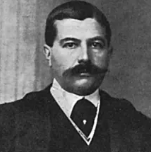
Early Life and Education
Sir Edgar Speyer was born in New York City into the wealthy German-Jewish banking dynasty of Speyer Brothers, whose operations extended across New York, Frankfurt, and London. His father, Gustav Speyer, was a partner in the firm, which financed major railroad and industrial ventures throughout Europe and the Americas. Edgar was educated in Germany and trained in finance, preparing him for a career in the family enterprise.
Career in Finance
In 1887 Speyer became head of the London branch of Speyer Brothers. He was naturalized as a British citizen in 1892 and was created a baronet in 1906 in recognition of his contributions to British commerce and culture. A financier of unusual energy and imagination, he played a major role in expanding the London Underground, underwriting the Great Northern & City Railway and supporting other key transportation projects.
He also held substantial railway interests in the United States and Latin America and sat on the boards of numerous companies, becoming an influential figure in Edwardian finance and civic life.
Patronage of Music and the Arts
Speyer’s greatest and most enduring legacy lay in his patronage of music. In 1897 he married the American-born violinist Leonora von Stosch, whose extensive training in Brussels, Paris, and Leipzig had prepared her for a distinguished artistic life. Speyer transformed two adjacent houses on Grosvenor Street into a single residence, where he and Leonora presided over one of London’s most celebrated musical salons.
The music room featured John Singer Sargent’s portrait of Lady Speyer, showing her playing the violin before Marie Antoinette’s harpsichord—a work widely admired in Sargent’s oeuvre. The Speyer home became a gathering place for musicians of the highest rank, including Percy Grainger, Richard Strauss, Edward Elgar, and many others.
In 1906 Edvard Grieg, visiting England to receive an honorary degree from Oxford, stayed with the Speyers and was struck by their graciousness and refinement. In January 1910 Elgar dined at Grosvenor Street, where Leonora and the composer read through the slow movement of the violin concerto he was writing; she was the first to play it privately. In May she rehearsed the first movement with him.
Support for Concert Life
Speyer’s patronage went far beyond hospitality. When Robert Newman, founder of the Queen’s Hall Orchestra and the Promenade Concerts, faced bankruptcy in 1902, Speyer stepped forward and underwrote the deficits. By 1914 he had invested £26,000 in the Queen’s Hall Orchestra Company Ltd., effectively saving the Proms and assuring their continuation under Sir Henry Wood.
He financed the premiere of Elgar’s Second Symphony, brought Debussy to London in 1908 and 1909, and in 1902 invited Richard Strauss to conduct the first London performance of Ein Heldenleben. Strauss later dedicated his opera Salome to him. Members of the royal family attended concerts at the Speyer home, and Edgar Speyer’s name became synonymous with enlightened artistic patronage.
World War I and Accusations
This brilliant public career was shattered by wartime xenophobia. Despite decades of service to Britain, Speyer’s German birth made him a target during the anti-German hysteria of World War I. Correspondence with his brother in Frankfurt concerning business matters was seized upon as supposed evidence of treason. A hostile crowd gathered outside his Grosvenor Square residence, forcing the family to flee hurriedly, leaving behind their possessions and even their children’s toys.
The Speyers took refuge in the United States, but suspicion pursued them. When Speyer purchased a seaside home, rumors circulated that he was signaling German submarines. Under the Aliens Act of 1918, he was summoned before a judicial inquiry in 1921, which found him guilty of “disloyalty and disaffection” and of “communicating with the enemy.” He was stripped of his British citizenship and removed from the Privy Council, a humiliation that ended his public life.
Later Years and Death
Speyer spent his remaining years quietly in the United States and Europe. He died in 1932 in Germany, where he had traveled for surgery. His treatment by the British government and press has come to be recognized as one of the most unjust episodes of wartime hysteria. Antony Lentin’s study Banker, Traitor, Scapegoat, Spy? The Troublesome Case of Sir Edgar Speyer (Oxford University Press, 2013) provides the fullest account of the case.