Lawson, Lawrence Milton (1880–1969)
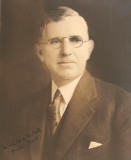
Family Background Lawrence Milton Lawson was born in Tennessee on June 29, 1880. His mother, Laura Lawrence, was the daughter of Horace Lawrence (1814–1851), who in turn was the son of Samuel Adams Lawrence (1775–1851), linking him to the Lawrence family of Queens, New York. His father, Captain Gaines Lawson, served with distinction in the Union Army during the Civil War and was awarded the Congressional Medal of Honor for his actions at Minville, Tennessee, on November 29, 1863.
Medal of Honor Citation Captain Gaines Lawson received the Congressional Medal of Honor for gallantry at Minville, Tennessee, risking his life under heavy fire to rescue wounded comrades from the battlefield. After the Civil War, he continued his military service in the West, including participation in the 1876–77 campaigns involving the Lakota and the aftermath of the Battle of the Little Big Horn.
Education Lawson attended private schools in California and graduated from Stanford University. His education prepared him for a professional career in engineering and public works.
Career Lawson began his professional life as a civil engineer, working on water and irrigation projects throughout the American Southwest during a period of substantial development in reclamation and river-management infrastructure.
President Calvin Coolidge appointed Lawson as United States Commissioner of the International Boundary Commission, the bi-national body responsible for maintaining the boundary between the United States and Mexico. His tenure was notable for its continuity: he retained his position through successive presidential administrations, serving through the New Deal era and into the Eisenhower administration.
The International Boundary Commission The International Boundary Commission, established by the 1889 convention between the United States and Mexico, was responsible for surveying, marking, and maintaining the international boundary and for resolving disputes arising from changes in the course of boundary rivers. During Lawson’s tenure, the Commission focused on the rectification of the Rio Grande, transforming shifting meanders into a stabilized channel to prevent border disputes, improve flood control, and aid local development. His supervision of the El Paso–Juárez segment was considered one of the most technically and diplomatically sensitive phases of the project.
Later Life and Death After his retirement from federal service, Lawson resided in California. He died on February 19, 1969, in San Diego.