Lawrence, Isaac (1768–1841)
Early Life and Education
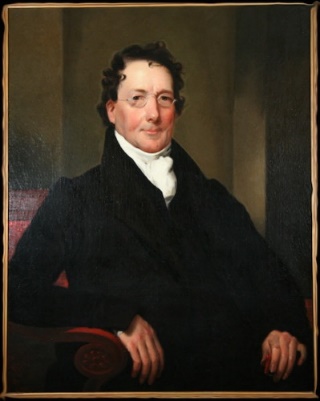
Isaac Lawrence was born into a well-established New York family of Dutch and English descent, with roots in both the colonial mercantile community and the early settlement of Long Island. He attended Princeton College, where he intended to study law, but fragile health compelled him to abandon that plan and turn instead to commerce.
Mercantile Career
During the Revolutionary War period, the Lawrence family was engaged in business in New York. Isaac’s elder brother, John Lawrence, conducted his trade from 162 Queen Street (later Pearl Street). In 1795, after two years serving as a clerk, Isaac formally entered the firm, and the new sign of John & Isaac Lawrence was raised at 154 Water Street, corner of Fly Market.
The firm prospered. John & Isaac Lawrence became importers and shippers, conducting an extensive West India trade. Their success was aided by family connections in the Caribbean, including their brother William Lawrence (1770–1803), who owned a plantation in Demerara, British Guiana, and died there. Another brother, Richard Lawrence, was also engaged in commerce, with a country seat at Hell Gate, where he died in 1816.
The partnership of John & Isaac Lawrence dissolved in 1803. At the time of dissolution, the store was located at 208 Pearl Street. Isaac remained in business at the same address until 1814, after which he retired temporarily from active mercantile pursuits.
Banking and Public Life
Isaac returned to public life in 1817 when he became President of the United States Branch Bank newly established in New York City. The bank’s office was located at 65 Broadway. Before this appointment, he had served—as had his brother John—as a director of the earlier United States Bank in New York. Isaac’s position placed him among the leading financial men of the city during a period of expanding national banking organization.
His residences reflected his rising circumstances. At the time of his bank presidency, he was living at 480 Broadway. Later, he built and occupied a handsome house at 498 Broadway, above Broome Street, then a fashionable area of the growing metropolis.
Family
Isaac married Cornelia Beach in 1799. She survived him by sixteen years. Of their children, the most distinguished was William Beach Lawrence (1800–1881), diplomat, jurist, Lieutenant Governor of Rhode Island, and a noted writer on international law and Newport history (see his separate entry). Their daughters married within circles reflecting the family’s social standing in New York and Rhode Island.
Assessment
Isaac Lawrence represents the type of quietly influential New York merchant who bridged the period between the Revolution and the early Republic. Though not a public figure in the manner of his more prominent son, he contributed to the commercial life of New York during its formative growth and later played a role in the establishment and management of early federal banking institutions in the city. His career reflects the continuity of the Lawrence family’s engagement in mercantile and financial leadership across generations.