Lawrence House at 45 East 29th Street
Built: c 1850
Architectural Description
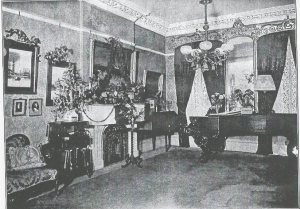
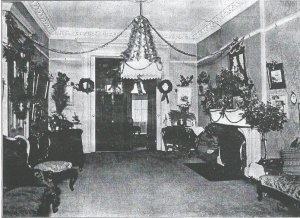
The house was a three-story brick row house of a type common among prosperous mid-Victorian families in Manhattan. Its interiors included a formal parlor with a marble mantel, upholstered seating, framed paintings, and decorative finishes consistent with the taste of the 1850s–1870s. Surviving photographs show richly furnished rooms capable of accommodating both social gatherings and amateur theatrical performances. The scale and layout allowed parlors to be temporarily transformed into performance spaces, reflecting the flexibility of elite domestic architecture of the period.
The parlor at Christmas
Ownership and Occupancy In 1851, Newbold Lawrence and his wife, Anna Hough Trotter Lawrence, moved into 45 East 29th Street and established it as their winter residence. They occupied the house seasonally, spending winters in Manhattan while maintaining other residences elsewhere. Both remained associated with the house until their deaths, after which it continued to be occupied by members of the Lawrence family. The property remained in family hands into the twentieth century, with Caroline Trotter Lawrence (1852–1937) as its final long-term resident.
Home Dramatic Society and Theatricals
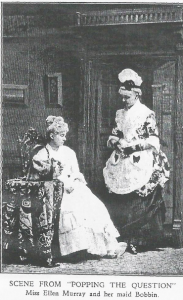
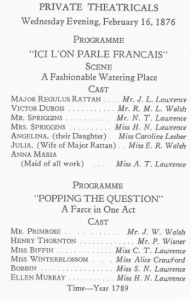
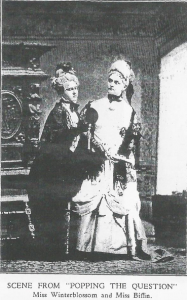
One of the most distinctive features of life at 45 East 29th Street was the Lawrence family’s Home Dramatic Society. Amateur theatrical performances were staged within the house, particularly during the 1870s, engaging children and young adults in structured cultural activity. In 1876, the family mounted several productions, including Ici l’on parle français, a fashionable drawing-room scene, and Popping the Question, a one-act farce set in 1799. Printed programs list multiple Lawrence family members in the casts, demonstrating the participatory nature of these events.
The theatricals were carefully staged and costumed, with surviving photographs showing performers posed in period dress. These productions reinforced public speaking skills, historical awareness, and social confidence, and aligned the family with a broader nineteenth-century tradition of elite amateur theatricals practiced in affluent urban homes.
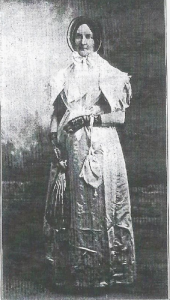
Later Years and Caroline Trotter Lawrence As siblings married and established their own households, Caroline Trotter Lawrence remained in residence. Unmarried throughout her life, she became the last family member to live in the house. One account records a surprise party given in her honor, at which gifts of silver were presented so that she might share symbolically in the generosity associated with the marriages and anniversaries of her sisters.
A notable photograph (left) shows Caroline wearing her grandmother Ann Hough’s Quaker wedding dress, a gesture that consciously linked generations and reflected the family’s reverence for ancestry and tradition.
Final Family Gathering The last recorded Lawrence family function in the house took place in 1924, when it hosted a wedding reception for a granddaughter. Contemporary descriptions emphasize the deliberate preservation of tradition: the rooms were illuminated only by candlelight and richly decorated with flowers. As the bride and groom descended the staircase, guests showered them with rose petals, which afterward lay “inches deep on the floor.” This event marked a ceremonial conclusion to more than seventy years of continuous Lawrence family life within the house.