Lawrence, Francis Effingham, Rev. (1827–1879)
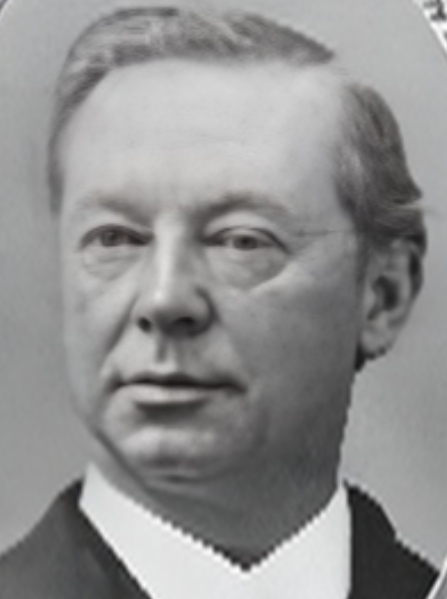
Early Life and Education Francis Effingham Lawrence was born in 1827 into the Lawrence and Prince families of New York. He entered the ministry of the Protestant Episcopal Church at a time of theological ferment, when American Anglicanism was negotiating the influence of both Evangelical piety and the Oxford Movement. He was ordained deacon in 1853 and priest in 1854.
Clerical Career and Churchmanship In 1854 he was appointed assistant at the Church of the Holy Communion in Manhattan, founded by the Rev. Dr. William Augustus Muhlenberg, the foremost advocate of “Evangelical Catholic” churchmanship in the United States. Muhlenberg, like the English Ritualists, believed that beauty, music, and symbolism in worship were aids to devotion, particularly for the poor, who found bare churches and long doctrinal sermons spiritually uninviting.
Lawrence remained at Holy Communion throughout his ministry. In 1877, upon Muhlenberg’s death, he succeeded him as rector and continued his distinctive liturgical and pastoral ethos. Under Muhlenberg’s influence, the Church of the Holy Communion had been the first in New York to place flowers upon the altar at Easter. After the service, the congregation processed with the flowers to the church’s hospital, delivering them to the sick—a gesture of charity and cheer that captured the spirit of the parish. This became the seed of the New York custom that later evolved into the public Easter Parade.
Reflections on Liturgical Practice As the custom spread beyond its original charitable purpose, Lawrence viewed with unease the increasing extravagance with which Easter flowers were displayed. In his funeral sermon for Muhlenberg in 1877, he remarked:
“…a practice now indeed carried to such a silly and wasteful extreme, many churches seeming rather flower–shops at Easter than Sanctuaries of the Almighty, that he almost regretted that he had introduced the custom.”
The charitable procession eventually yielded to the Fifth Avenue promenade—more social than devotional. Irving Berlin’s later lyrics, immortalized by Judy Garland and Fred Astaire, captured the transformation into a spectacle of fashion and status. The custom spread beyond New York; the Baltimore Sun reported in 1927 that nearly 100,000 Baltimoreans participated in the Easter Parade on Charles Street, a tradition that still persisted in 1950.
Personal Life Lawrence never married, a circumstance that, in the social climate of the nineteenth century, drew mild comment. His bachelor status, coupled with his refined churchmanship and aesthetic sensibilities, made him the subject of occasional parish gossip, though nothing discreditable was ever attached to his name. He lived quietly and with dignity, devoted to his parish, its charitable work, and the cultivation of reverent worship.
Later Years and Death He remained rector of the Church of the Holy Communion until his death in 1879. His life and writings reflect the aspiration of nineteenth-century American Anglicanism to unite beauty in worship with service to the poor, while guarding against the temptations of religious display.