Lawrence, Abraham Riker (1832–1917)
Justice of the Supreme Court of New York
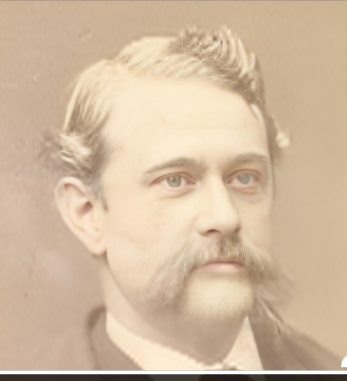
Parents: John Lawrence Lawrence (1785–1849) and Sarah Augusta Smith (1794–1877). Spouse: Elizabeth “Eliza” Williams Miner (1838–1915). Children: William Miner Lawrence (1861–1935) and Ruth Woodhull Lawrence (1866–1956). Kinship: Brother-in-law of the third great-granduncle of the post–World War II Smith generation.
Early Life and Education Abraham Riker Lawrence was born into a prominent New York family long associated with public service. He attended private schools and then studied law at Ballston Spa Law School in Ballston Spa, New York. He was admitted to the bar in 1853.
Early Legal and Public Career Shortly after his admission to the bar, Lawrence was appointed Assistant Corporation Counsel of New York City, serving from 1853 to 1856 and again from 1857 to 1858. In 1859 he published Compilation of the Tax Laws of the State of New York, with Notes of Cases, which became a useful reference work for lawyers and legislators.
He entered state-level public service in 1867 as a member of the New York State Constitutional Convention. He was also a founder of the Association of the Bar of the City of New York in 1870, and later served as a vice-president of the Association in 1905 and 1906.
Political Activity and Mayoral Candidacy In 1870 Lawrence was a leading member of Apollo Hall, the Democratic reform movement established by State Senator James O’Brien to combat the corruption of Boss Tweed’s Tammany Hall. His support for reform did not prevent both Tammany Hall and the Greeleyites from selecting him in 1872 as the Democratic candidate for mayor of New York City. At the time he maintained a law practice at 25 Nassau Street. He finished second in that race, losing to the Republican candidate, William Frederick Havemeyer.
Judicial Career Lawrence was elected a Justice of the Supreme Court of New York in 1873. He served with distinction for twenty–eight years, until December 31, 1901, and was re–elected in 1887. After his formal retirement, he continued to serve in a judicial capacity as the official Referee of the Supreme Court from 1911 until his death.
Notable Case: “M’Liss” Litigation During his tenure on the bench, Lawrence heard a number of widely followed cases. One was connected indirectly to his cousin, Joseph Effingham Lawrence, through a theatrical rights dispute originating in San Francisco involving dramatizations of Bret Harte’s story M’Liss. In Widmer v. Greene & Thompson, 56 How. Pr. 91 (N.Y. Sup. Ct., filed Sept. 15, 1878), Lawrence continued a temporary injunction against a rival production of M’Liss while the matter was tried. Contemporary theatrical reporting noted that on September 14, 1878, “Judge Lawrence of the Supreme Court” heard arguments on the injunction. For background on how the controversy originated on the West Coast, see Bret Harte, Mark Twain and The Golden Era.
Affiliations and Honors Judge Lawrence was active in leading New York societies and cultural institutions. He was a member of the Union Club, the Century Club, and the Manhattan Club. He belonged to the Society of Colonial Wars, serving as Chancellor in 1895, and was involved with the American Rifle Association. He also served as the twenty–fifth president of the Saint Nicholas Society of the City of New York from 1882 to 1883.
In recognition of his long service, a dinner was held in his honor at Delmonico’s upon his retirement from the bench, hosted by John Edward Parsons, then president of the Bar Association.
Death and Burial Abraham Riker Lawrence died at his home at 69 Washington Place in New York City on February 14, 1917. He was buried at the Lawrence Family Cemetery.