Kennedy, Walter Truesdale (1861–1924)
Engineer and Imperial Advisor in China
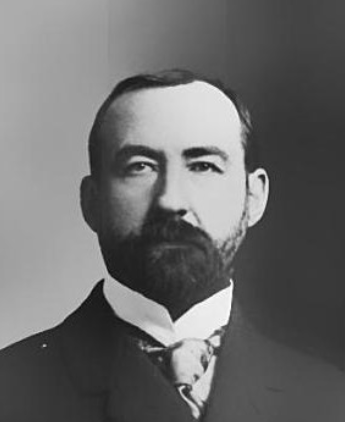
Parents: Thomas Walker Kennedy (1824–1896) and Margaret Truesdale (1824–1907). Married: Mary Anne McCutcheon (1854–1922). Children: Mary Francis Kennedy (1887– ); Rachel Kennedy (1888–1890); Walter Truesdale Kennedy (1892–1960); Martha Ellen Lou Kennedy (1894–1943). Kinship: Great-granduncle of the post–World War II Smith generation.
Early Life and Training Walter Truesdale Kennedy was born on the family farm in Poland, Ohio, the fourth of the seven Kennedy sons. Like his brothers, he attended local schools and was trained from adolescence in the blast furnaces of the Mahoning Valley. Beginning as an apprentice workman, he rose quickly through skill and determination to become superintendent of Carnegie’s Lucy Furnace, one of the major metallurgical operations in Pittsburgh. He later held senior positions with several steel companies in Steubenville before establishing himself as an independent consulting engineer.
Mission to China In 1896 Senator Calvin S. Brice and J. Pierpont Morgan engaged Kennedy to travel to China in anticipation of securing a railway concession. Although Brice died and the scheme collapsed, Kennedy remained in China, accepting employment with the Imperial Government. His letters and later recollections reveal the profound cultural adjustments required of a Western engineer in late Qing China. He later remarked that during his first two weeks he could scarcely sleep because of the “shocking scenes” he witnessed.
At first he enjoyed the full confidence of Imperial officials. He managed the iron and steel works at Han Yang and the arsenal at Wu Chan Fu, and was placed in charge of Mining and Metallurgical Work for the Empire. His responsibilities expanded further when he was appointed First Secretary of the Chinese Imperial Railway.
Cultural Challenges and Danger Kennedy’s accounts vividly describe the obstacles faced by foreign engineers operating within traditional Chinese administrative structures. He noted that many officials believed that altering the natural landscape violated divine order, concluding that “anything which God has made shall not be disturbed by the hand of man.” Engineering projects could be halted if they were thought to offend the feng shui, the spiritual force governing natural harmony. Even a proposed chimney was rejected because it was believed to interfere with the feng shui.
Life and work were perilous. Kennedy discovered that he had no authority over hiring and firing; those decisions were made by Mandarin officials who took payments from workers in lieu of salaries. Attempts by sympathetic workers to assist him were met with brutal reprisals. He recalled that several of his employees were beheaded merely for working with an American, and he himself fell into a state of extreme stress, losing more than sixty pounds.
His status at court alternated between privilege and captivity. On inspection tours he traveled with strikingly elaborate retinues: an Imperial guard of twenty-five soldiers, three mandarins, 139 chair carriers, and “an innumerable caravan of coolies, cooks, etc.” He had a government launch at his disposal and was assigned 208 servants, yet possessed little real autonomy. When appointed Secretary of the Imperial Railway, he was effectively imprisoned; he was forbidden to return to the mill even to retrieve his clothing and cut off from communication with the United States. His family feared he had been executed. Eventually he succeeded in escaping his situation and returned home deeply grateful for the protections of the United States government.
Later Career and Writings After returning from China, Kennedy resumed his work as a consulting engineer for steel firms in the United States and Canada. He explored the feasibility of establishing steel mills in San Diego and Utah and authored “A Century of Blast Furnace Practice” for The Industrial World (1901). His experience in China led him, in 1912, to warn American manufacturers of the potential rise of Chinese industrial capacity. Citing the country’s immense resources and extremely low labor costs, he predicted that China would eventually become a formidable competitor and argued that high tariffs were the only protection for American industry.
Personal Life Kennedy lived at 15 West McIntyre Avenue in Pittsburgh and was a member of the First United Presbyterian Church, Northside. His life, marked by intense technical achievement and extraordinary adventure abroad, reflects the global reach of American engineering at the turn of the twentieth century and the distinctive ambitions of the Kennedy family.