Kennedy, James (1853–1928)
Congressman
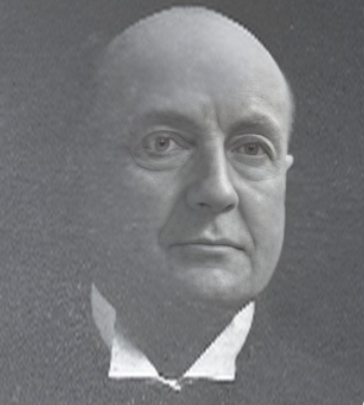
Parents: Thomas Walker Kennedy (1824–1896) and Margaret Truesdale (1824–1907). Married: Phoebe Jane Irwin (1860–1923). Children: Grace M. Kennedy (1890–1970). Kinship: Great-granduncle of the post–World War II Smith generation.
Early Life and Education James Kennedy was born September 3, 1853, in Lowellville, Mahoning County, Ohio. He prepared for college at Poland Union Seminary and graduated from Westminster College in New Wilmington, Pennsylvania, in 1876. He studied law and was admitted to the bar in March 1879.
Career in Law and Local Politics Kennedy began practicing law in Youngstown, Ohio, where he also served on the city council from April 1886 to November 1888. He was active in Republican politics and in 1894 chaired the Republican State Convention at Steubenville.
Congressional Service Kennedy was elected as a Republican to the Fifty-eighth and three succeeding Congresses (March 4, 1903 – March 3, 1911). He was known as a strong protectionist, arguing that reductions in tariffs caused widespread unemployment in Ohio’s manufacturing centers. In the House, he was a consistent supporter of Speaker Joseph Cannon and defended the party’s control of committee organization during the 1910 revolt against Cannon’s leadership.
Kennedy’s congressional record included attention to industrial policy, pensions, and the regulation of public lands. His floor statements emphasized that economic stability in the Mahoning Valley depended on steel and iron tariffs that protected domestic labor.
He was an unsuccessful candidate for reelection in 1910 and returned to the practice of law in Youngstown.
Later Life In 1916 Kennedy joined the Democratic Party and ran unsuccessfully for Congress in 1926 as a Democrat. He continued his legal work until his death.
Death James Kennedy died November 9, 1928, in Youngstown, Ohio, and was buried in Riverside Cemetery, Poland, Ohio.
Assessment James Kennedy’s career reflected the trajectory of many late-nineteenth-century Midwestern Republicans—self-educated professionals whose political identity centered on industrial protectionism and civic order. His eventual shift to the Democratic Party illustrates the regional political realignments that followed the decline of the old industrial tariff consensus after 1912.