Jagger, Thomas Augustus Jr. (1871–1953)
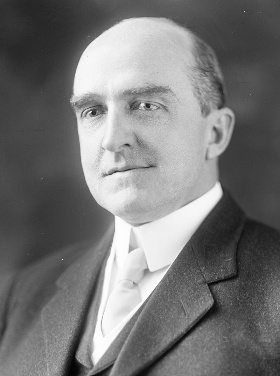
Early Life and Education Thomas Augustus Jagger Jr. was born in Philadelphia, Pennsylvania, in 1871, while his father served as rector of the Church of the Holy Trinity. He grew up in a clerical and intellectual household, moving among prominent Episcopal circles in New York, Philadelphia, and Boston. Educated at Harvard University, he earned his A.B. in 1893 and his Ph.D. in geology in 1897.
Scientific Career After completing his doctorate, Jagger studied volcanic activity in the West Indies and Iceland, establishing himself as one of America’s foremost geologists. He joined the faculty of the Massachusetts Institute of Technology, where he taught geology from 1899 to 1902. Following the devastating eruption of Mount Pelée in Martinique in 1902, Jagger became determined to apply scientific study to understanding and predicting volcanic hazards.
Hawaiian Volcano Observatory In 1912, he founded the Hawaiian Volcano Observatory (HVO) at Kīlauea, under the auspices of the Massachusetts Institute of Technology and later the U.S. Geological Survey. As its first director, Jagger pioneered the systematic observation of volcanic phenomena, developing instruments to measure temperature, gas emissions, seismic activity, and lava flow. He coined the phrase “The Volcano is a laboratory of the Earth,” emphasizing both scientific rigor and public safety.
Later Life and Legacy Jagger directed the HVO for nearly three decades, retiring in 1940. During his tenure, he became internationally recognized for his research into eruption forecasting and his advocacy of civil defense measures in volcanic regions. He was a fellow of the Geological Society of America and an honorary member of the Seismological Society of Japan.
After retirement, Jagger lived quietly in Honolulu, continuing to write and consult. He died there on January 17, 1953. His ashes were scattered at the rim of Kīlauea Volcano, symbolically uniting his life’s work with the forces he had devoted himself to understanding.
Commemoration The Thomas A. Jagger Museum, established at Hawai‘i Volcanoes National Park, preserves his legacy and contributions to volcanology. He is regarded as the founder of modern volcano monitoring and a pioneer of applied geophysical science.