Islesmere Farm, now Arrow Park
Architect
Bowen Bancroft Smith (1869–1932) was a Beaux-Arts–trained architect whose work was closely associated with the country-house culture of New York’s elite in the early twentieth century. Educated at the Massachusetts Institute of Technology and the Atelier Paul Blondel in Paris, Smith brought formal academic training to the design of large suburban and rural estates, often blending Italianate and French Renaissance forms with Arts and Crafts influences. Early in his career he was a partner in the New York firm of Welch, Smith & Provot, which produced prominent Beaux-Arts residences on Manhattan’s Upper East Side for families such as the Halls and Dukes. Practicing independently after 1900, Smith designed numerous country houses in Tuxedo Park and the Hudson Valley, including the 1909 Schieffelin estate at Islesmere Farm (later Arrow Park), noted for its dramatic siting, textured materials, and richly articulated interiors. Though never as widely known as the largest architectural firms of his era, Smith was respected among contemporaries for his refined planning, decorative interiors, and ability to adapt academic design principles to picturesque American landscapes.
Architectural description
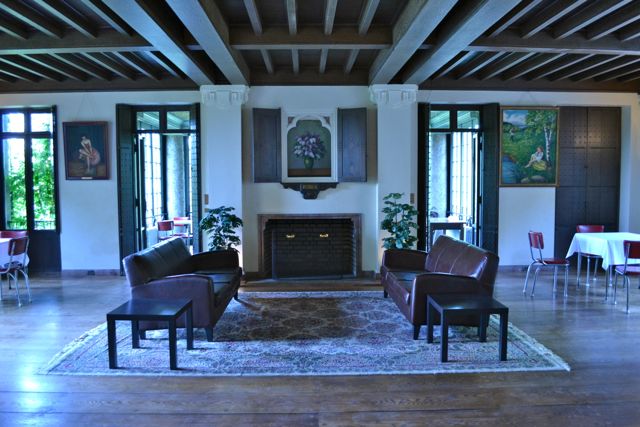
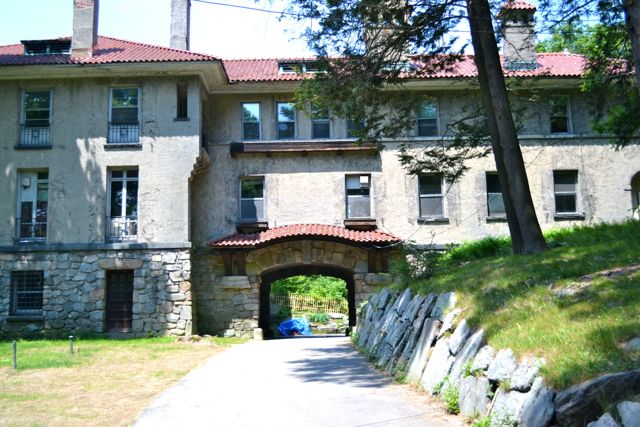
Smith designed the main residence as an Italianate villa incorporating Arts and Crafts influences, with an emphasis on massing, textured surfaces, and carefully articulated interiors. Contemporary architectural journals noted the estate for its decorative interior treatments, including experimental concrete wall finishes.
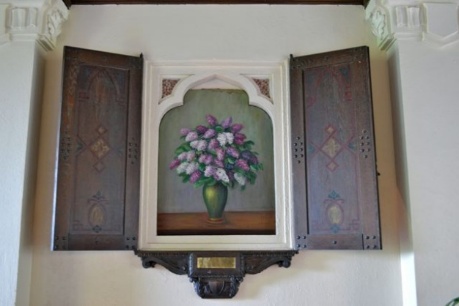
Islesmere Farm was developed in the early twentieth century as a country estate in Monroe, Orange County, New York. The property occupies a bowl-shaped hollow overlooking a small lake along what is now Orange Turnpike (Route 17M), a setting deliberately chosen for its pastoral and picturesque qualities.
The estate was created in 1909 by Schuyler Schieffelin and his wife Julia Cooper Schieffelin, a member of the Cooper family associated with Cooper Union in New York City. The Schieffelins purchased the land from railroad magnate E. H. Harriman.
Alongside its function as a summer residence, the property operated as a working dairy farm, known as Islesmere Farm, producing milk and farm goods; surviving dairy artifacts bearing the Islesmere name attest to this phase of its history.
The Schieffelin family retained the property through the early decades of the twentieth century, using it as both a retreat and an expression of Gilded Age pastoral idealism. By the 1940s, however, changing social and economic conditions led to a dramatic transformation in the estate’s use.
In 1948, the property was purchased by a cooperative of New York City–based immigrant workers associated with the American Russian Organized Workers (AROW). Pooling their resources, the families acquired the house and grounds as a collective summer retreat and cultural center. Under cooperative ownership, the estate was renamed Arrow Park. Families rotated summer stays and shared responsibility for maintenance, agriculture, and daily operations. Remarkably, little was altered architecturally during this period, preserving much of the original house and landscape.
In the 1970s, a trust acquired the property, buying out the remaining cooperative members. The estate returned to private management while retaining its historic fabric. In the late twentieth and early twenty-first centuries, Arrow Park evolved into a retreat, event venue, and bed-and-breakfast, gaining recognition as one of the Hudson Valley’s most intact early twentieth-century country estates. The house and grounds have also served as filming locations and continue to be valued for their architectural integrity and layered social history.