Gilman, (Arthur) Lawrence (1878–1939)
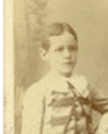
Early Life and Education Arthur Lawrence Gilman, who always published under the name Lawrence Gilman, was born in 1878. He studied art at the Collins Street Classical School in Hartford, Connecticut, under the painter William M. Chase, and taught himself music in both theory and practice, mastering the organ and piano. His parents were devoted Wagnerians, and the household’s musical standards were high; this early exposure shaped his lifelong musical convictions and uncompromising tastes.
Career as Critic and Writer Gilman was one of the most influential and stylistically distinctive American music critics of the early twentieth century. He began as a journalist for the New York Herald from 1896 to 1898, later joining Harper’s Weekly (1901–1913), where he advanced to managing editor. From 1915 to 1923 he wrote for the North American Review, and from 1925 onward for the New York Herald Tribune. He also annotated concert programs for the New York Philharmonic-Symphony Orchestra and the Philadelphia Orchestra and served as the radio commentator for Philharmonic broadcasts. His lucid, often poetic commentaries became part of the tradition of American musical criticism and are still occasionally quoted in modern program notes.
Gilman’s published books included Phases of Modern Music (1904), The Music of Tomorrow (1906), Stories of Symphonic Music (1907), A Guide to Strauss’s “Salome” (1907), A Guide to Debussy’s “Pelléas et Mélisande” (1907), Edward MacDowell: A Study (1909), Aspects of Modern Opera (1908), Nature in Music (1914), A Christmas Meditation (1916), Music and the Cultivated Man (1929), Wagner’s Operas (1937), and Toscanini and Great Music (1938). He also composed several musical works, including “A Dream of Death” (1903), “The Heart of a Woman” (1903), and “The Curlew” (1904).
Critical Style and Opinions Lawrence Gilman’s prose was elegant, precise, and often merciless. One contemporary described him as “a suave, sensitive, and rather morose individual of extremely aesthetic appearance who wore a fur-collared overcoat, worked for hours over each carefully turned paragraph, and produced a type of elegantly tortured prose that many New York concertgoers regarded as literature.” He was said to wear cotton in his ears at all times except during concerts, which he attended with ritual solemnity—removing his earplugs only to listen.
A devoted Wagnerian, Gilman believed that operatic progress had ended with Wagner: “Since that day when, a quarter of a century ago, Richard Wagner ceased to be a dynamic figure in the life of the world, the history of operatic art has been, save for a few conspicuous exceptions, a barren and unprofitable page.” He had little patience for the bel canto revival: “The melodic style of the Young Italian opera-makers…gives the singers opportunity to pour out their voices in that lavish volume and intensity which provoke applause as infallibly as horseradish provokes tears.”
He loathed the new atonality of Webern, whose "Five Pieces" he described as “scarcely perceptible tonal wraiths, mere wisps and shreds of sound, fugitive astral vapors…though once or twice there are briefly vehement outbursts, as of a gnat enraged.” Stravinsky fared no better: “The History of a Soldier is tenth-rate Stravinsky… probably the nearest that any composer of consequence has ever come to achieving almost complete infantilism.”
Gershwin, in Gilman’s view, was unworthy of serious consideration. Of "Porgy and Bess" he wrote: “Listening to such sure-fire rubbish as the duet between Porgy and Bess, ‘You is my woman now,’ you wonder how the composer could stoop to such easy and needless conquests.” Of "Rhapsody in Blue" he said, “How trite and feeble and conventional the tunes are; how sentimental and vapid the harmonic treatment, under its guise of fussy and futile counterpoint.”
Massenet he dismissed with unmatched venom: “This intrepid composer, gifted with the spiritual distinction of a butler, the compassionate understanding of a telephone girl, and the expressive capacity of an amorous tomtit, had the courage to choose as a subject for music the greatest of all tragi-comedies… and with it he did his worst.”
He found Puccini’s "Madame Butterfly" nearly comic: “It would scarcely seem to require elaborate argument to demonstrate that the presence in a highly emotional lyric-drama of a gentleman named Benjamin Franklin Pinkerton—a gentleman who is, moreover, the hero of the piece—is, to put it briefly, a little inharmonious.”
Controversy and Retaliation Gilman’s own invective often provoked retaliation. After he repeated a popular but false story that a Church Council had once debated whether women had souls, the Jesuit magazine America responded with gleeful ferocity, asking, “But who is Mr. Lawrence Gilman?” It described him as “a gentleman with a weakness for music, a young-eyed cherub, fond of harmony… said to play prettily upon the organ and piano.” It mocked his mingling of music and metaphysics and concluded that his credulous repetition of the legend showed “a trusting gentle nature… devoid of the critical spirit; his head is in the clouds.”
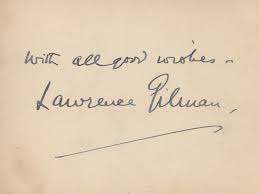
Death and Legacy Lawrence Gilman died on September 8, 1939, at Sugar Hill in Grafton, New Hampshire. On October 22, 1939, the New York Philharmonic broadcast a memorial concert in his honor, featuring Siegfried’s Funeral March and the closing scene of Götterdämmerung.
Brilliant, exacting, and frequently caustic, Lawrence Gilman embodied the era of the literary music critic—when the sharpness of one’s pen could still shape reputations and musical taste.