Dwight, Jonathan IV (1831–1910)
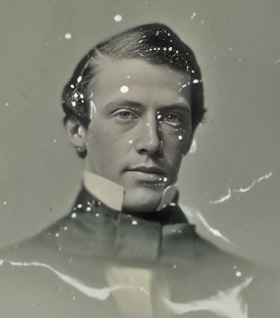
Family Background and Education The Dwights were an old New England family of considerable distinction, long settled in Massachusetts and Connecticut and noted for their connection with Yale College. Jonathan Dwight IV was a second cousin of Timothy Dwight (1752–1817), the celebrated theologian and president of Yale. Born in 1831, Jonathan IV attended Harvard College, where he graduated with the class of 1852. While an undergraduate he took part in the first intercollegiate athletic contest in American history—the Harvard–Yale rowing race on Lake Winnipesaukee, held on August 3, 1852. He rowed in the Harvard boat Oneida, which won the race.
Dwight’s Harvard years were not without incident. He was suspended—or, in the collegiate phrase of the time, “rusticated”—for seventeen months for what he later described as “the expression of my love to a certain College officer.” After leaving Harvard he entered the United States Military Academy at West Point to study civil engineering, laying the foundation for his later professional career.
Marriage and European Travel In 1857 Dwight married Julia Lawrence Hasbrouck, whose mother, Julia Lawrence, was of the prominent Lawrence family of New York and a descendant of the Flushing Quakers. Soon after their marriage the couple spent two years travelling in Europe, a tour that reflected both their means and their cosmopolitan outlook.
Engineering Career Dwight devoted his life to large-scale engineering and construction projects. He was active in railroad building during the great age of American expansion, specializing in bridges. He helped construct one of the first bridges over the Mississippi River and supervised many of the bridgeworks for the New York Central Railroad—a company later headed by his distant kinsman James Henry Rutter (1836–1885).
Dwight also played a notable part in several of the major public works of late nineteenth-century New York. He directed the construction of the foundations for the Statue of Liberty on Bedloe’s Island and later assisted in the early phases of the New York subway system. As chief engineer of the New York and New Haven Railroad, he supervised the complex operation of raising the railway to an elevated grade without interrupting service, managing the passage of some 120 trains daily without accident.
Later Life and Character Jonathan Dwight’s combination of technical skill and administrative steadiness earned him a reputation among engineers as a man of quiet competence. His later years were clouded by the death of his younger son, Arthur, who died at twenty-one shortly after graduating from Columbia with honors in 1885. Friends observed that Jonathan never fully recovered from the loss. He continued to reside in New York until his death in 1910.