Ding Dong House
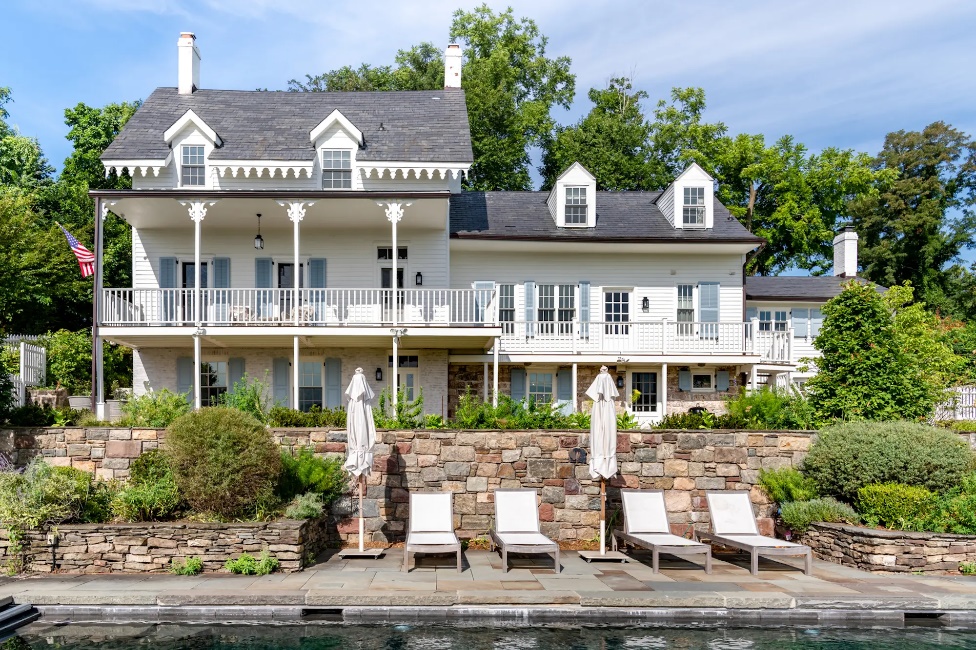
Architectural Description
The Ding Dong House is rooted in the vernacular tradition of the Hudson River Valley Dutch farmhouse. The original mid-eighteenth-century section was built for durability and practicality, with simple massing and restrained detailing appropriate to a rural riverside settlement.
The nineteenth-century additions enlarged the house without overwhelming the original core, resulting in a layered structure that reads as historically evolved rather than formally planned. In later descriptions, the house has sometimes been characterized as a bracketed farmhouse, reflecting modest decorative embellishments added during the Victorian period.
History
The oldest portion of the Ding Dong House was built around 1750 by John Sneden, a member of the family that founded and operated Sneden’s Ferry, a vital Hudson River crossing that gave its name to Snedens Landing. The Sneden family played a central role in the early development of the hamlet, which remained a small, semi-isolated riverside community well into the nineteenth century.
The Sneden family occupied the house for nearly two centuries. During its early history, the house also served a communal role; local tradition holds that it functioned at one time as the settlement’s first library, reinforcing its place as a social as well as domestic center.
In the mid-nineteenth century, around the 1860s, the house was substantially expanded, enlarging its footprint while retaining the character of the original structure. These additions reflect the gradual prosperity and changing domestic needs of the period rather than any single comprehensive redesign.
In the twentieth century, the Ding Dong House became part of the artistic and intellectual milieu for which Snedens Landing became known. The hamlet attracted writers, musicians, actors, and visual artists seeking privacy and inspiration within easy reach of New York City. Among the notable figures associated with the house at various times were composer Aaron Copland, choreographer Jerome Robbins, and actress Margot Kidder. In the late twentieth and early twenty-first centuries, it was owned jointly by actors Uma Thurman and Ethan Hawke.
Mary Trimble Lawrence Tonetti also lived in the Ding Dong House, adding the property to the network of residences associated with the Lawrence family and its descendants along the Hudson River.